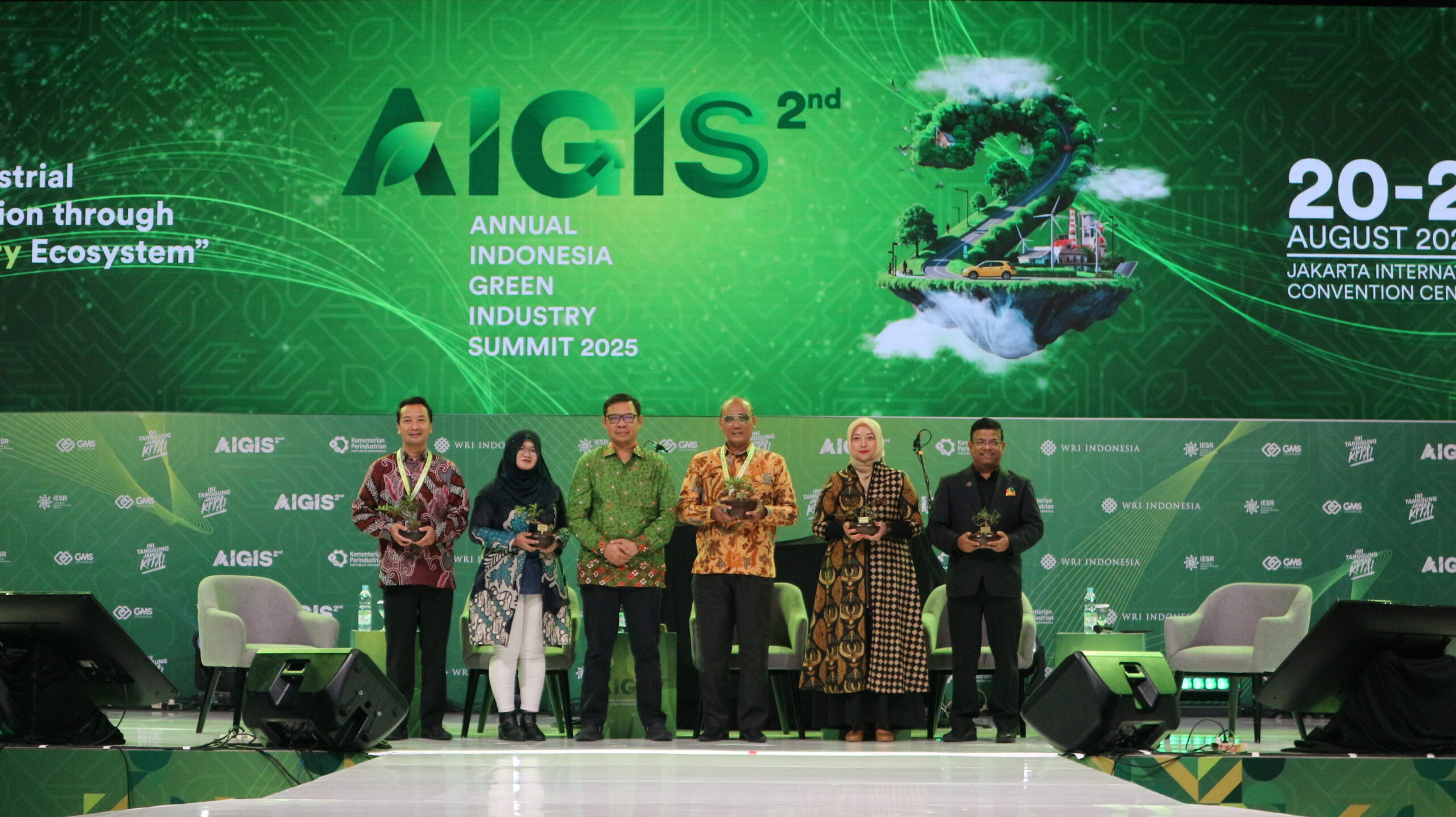
Jakarta, August 22, 2025 — The Annual Indonesia Green Industry Summit (AIGIS) 2025, organized by the Ministry of Industry at the Jakarta Convention Center, featured a special session titled “Transformation Stories from Green Industry Award Winners.” This panel provided a platform for industry leaders and local governments to share real-life experiences in driving transformation toward green industry practices — ranging from multinational corporations and chemical industries to small and medium enterprises (SMEs).
Moderated by Sachin V. Gopalan, Founder & CEO of Indonesia Economic Forum, the session brought together four panelists: Shita Amelia (Operation Nature Lead, Danone Indonesia), Drs. Arif Khamzah (Head of Industrial Empowerment Division, East Java Provincial Department of Industry and Trade), Endang Sylvia (Climate Resilience Section Manager, PT Chandra Asri Pacific), and Muhammad Karim (General Manager, Paradise Batik).
Corporate Transformation: Danone Indonesia’s Commitment
Shita Amelia emphasized that the achievement of reducing emissions by nearly 96% at the SGM Prambanan plant was not only the result of technology, but also of strong management support.
“With management support, financial commitment, and consistent operational strategies, we have proven that ambitious targets are not just rhetoric, but achievable,” she said.
She further added that green transformation cannot be achieved in isolation, but requires cross-sector collaboration.
“Major change can only happen when companies, government, and society move together. That is the essence of Danone’s journey toward a green industry,” Shita explained.
The Role of Local Government: East Java as a Green Industry Driver
Drs. Arif Khamzah stressed that East Java is committed to increasing the number of certified green industries through the Jatim Lestari program and the Green Industry Forum.
“Green industry is the future, and in East Java we want to become the locomotive of sustainable development on the path to Indonesia Emas 2045,” Arif stated.
He also underscored the importance of local government support in changing industry mindsets.
“We continue to encourage business actors’ awareness, because without a change in mindset, policies will remain only on paper,” he added.
Innovation in the Chemical Industry: Chandra Asri Pacific
Endang Sylvia explained that Chandra Asri places sustainability at the core of its business, not merely as a matter of compliance.
“Sustainability is not only a compliance obligation, but the core of Chandra Asri’s long-term business strategy,” Endang stressed.
In addition to energy efficiency and the use of renewable energy, the company is also developing plastic recycling solutions.
“We want to demonstrate that the chemical industry can also be part of the solution, through innovations that protect the climate and the environment,” she said.
Inspiration from SMEs: Paradise Batik
Muhammad Karim shared that Paradise Batik is guided by three pillars: awareness, internal governance, and market utilization.
“Small industries can also contribute. Every small step we take for the environment is part of a greater effort to protect the Earth,” Karim remarked.
He added that winning the Green Industry Award serves as moral encouragement for other SMEs to transform.
“This award is not the end, but the beginning of a long journey. We want to inspire other SMEs that limitations are not an excuse for not going green,” he said.
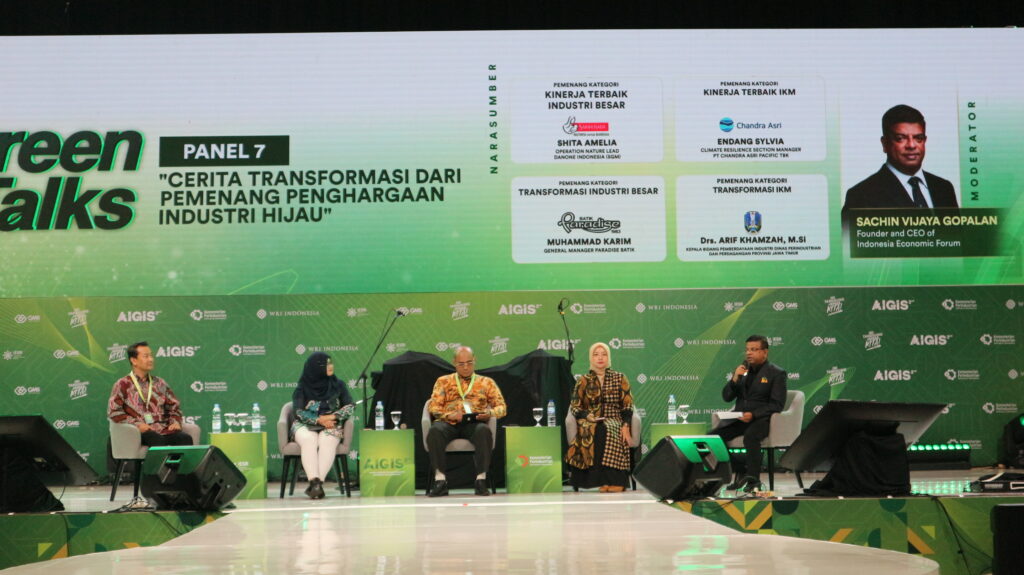
Showcasing Real Proof
As moderator, Sachin V. Gopalan underlined the importance of real stories from industry players.
“These stories are crucial because they show that the green transition is not only discussed in regulations, but is truly happening on the ground,” he noted.
He further highlighted that transformation stories like these have the power to mobilize more stakeholders.
“When the public sees real proof, they will feel more confident to join the change. This is the power of storytelling in driving the green industry movement,” Sachin concluded.
Green Talks Panel 7 demonstrated that green transformation can be realized across all scales — from large corporations to SMEs — united by a common vision of building industries that are efficient, competitive, and environmentally responsible. The stories of these Green Industry Award winners affirm that Indonesia’s sustainable transition is not merely discourse, but an evolving reality.