


Gravenia Rahma Safira, Jakarta – September 11, 2025
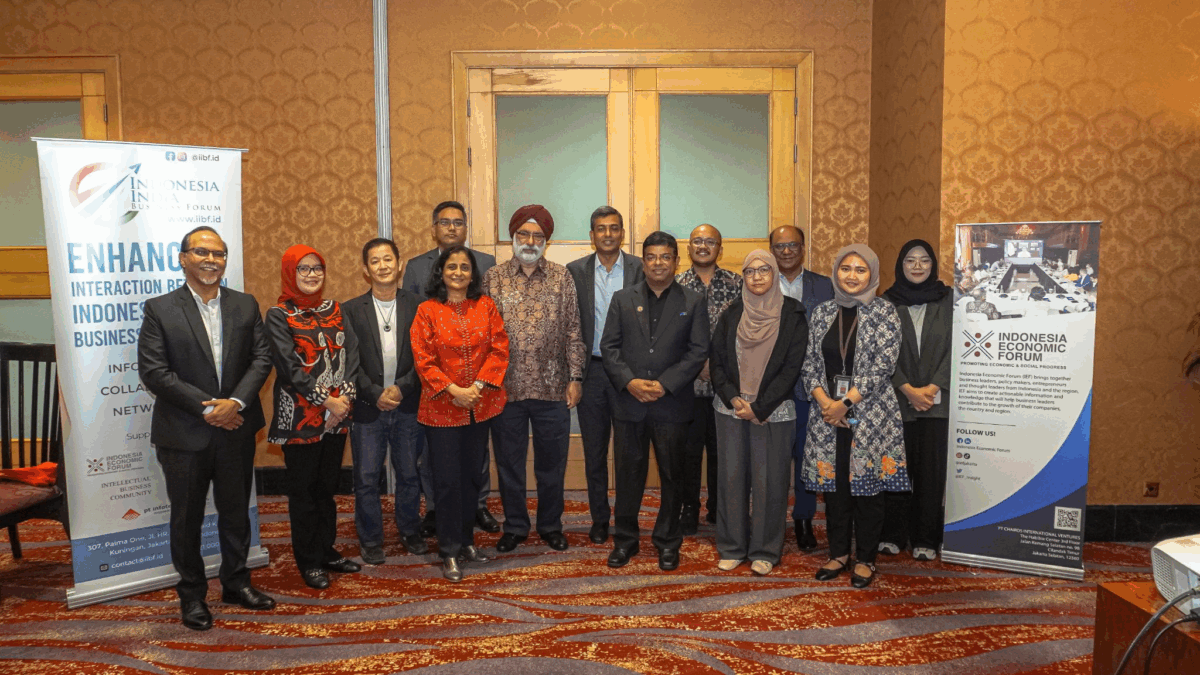
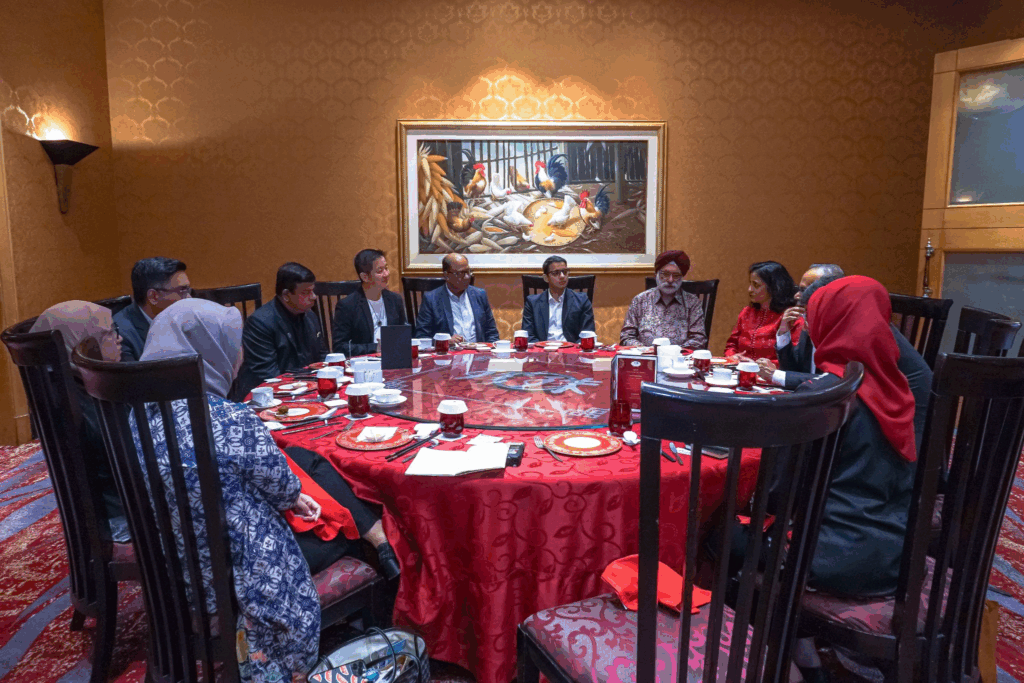
The Indonesia Economic Forum (IEF) hosted the Indonesia Net Zero Forum – Power Lunch in Jakarta, bringing together government leaders, business executives, researchers, and international partners to accelerate Indonesia’s journey to Net Zero. Organized in partnership with Intellecap, a part of the Aavishkaar Group, the session carried the theme “SDG Investment Opportunities in Indonesia” and highlighted practical pathways to scale climate action through policy, finance, and technology collaboration. The Power Lunch was attended by 12 distinguished participants, including representatives from the Government of Indonesia Anggi Setiawani (Head of Planner, Directorate of Environment, Bappenas) and Rizka (Industrial Management Administrator, Center for Green Industry, Ministry of Industry) as well as leading private sector figures such as Rabi Pillai (President Director, PT. Thermax International Indonesia), Abhishek Yadav (Co-Founder, iMoto Technologies), and Leonard Ho (Founder & CEO, Green Energy Asia). Research and civil society were represented by Ayu Pratiwi (ERIA), Poonam Sagar (Chairperson, Indonesia India Business Forum), and Sachin Gopalan (Founder & CEO, Indonesia Economic Forum).
The Forum also welcomed senior representatives from Intellecap and the Aavishkaar Group, including H.E. Gurjit Singh (Chairman, Intellecap and Former Ambassador of India to Indonesia & ASEAN), Mr. Santosh Kumar Singh (Managing Director), Mr. Ashim Ranu (Managing Director), and Mr. Susmit Datta (Partner).
“Indonesia and India share not only historical ties but also the urgent challenge of climate resilience,” said H.E. Gurjit Singh, Chairman of Intellecap and Former Ambassador of India to Indonesia & ASEAN. His remarks emphasized the importance of South–South cooperation, noting that proven approaches from India such as carbon market frameworks and innovative climate finance models can be adapted for Indonesia to ensure that local communities directly benefit from global investment flows.
“Our vision is to cultivate a network of Green Champions across Indonesia’s 38 provinces,” said Sachin Gopalan, Founder & CEO of IEF. He explained that the Forum aims to begin with 200 companies across nine priority carbon-intensive sectors and expand to 10,000 enterprises nationwide. This strategy seeks to accelerate decarbonization within three to four years, transforming Net Zero from a policy aspiration into a practical driver of industrial competitiveness and inclusive economic growth.
“The Forum demonstrates how public and private sectors can work together across borders,” said Poonam Sagar, Chairperson of the Indonesia–India Business Forum. She highlighted that international partnerships are vital to unlocking capital, technology, and human talent. The cross-sectoral collaboration showcased at the Power Lunch, she added, provides a model for how Indonesia and India can collectively drive sustainable growth.
From the government side, Anggi Setiawani, Head of Planner at Bappenas, reminded participants of the importance of integration. “Net Zero, the circular economy, and biodiversity all need to be built into our national planning and that requires cooperation with industry,” she said, underscoring how platforms like the Net Zero Forum help connect strategy with execution. Anggi underscored the role of government in aligning long-term development strategies with sustainability goals, while also pointing out the importance of platforms such as the Net Zero Forum in ensuring that policies are effectively translated into action at the industry level.
The Ministry of Industry echoed this view. “Our focus is to decarbonize industries that contribute 70 percent of emissions,” said Rizka, Industrial Management Administrator at the Center for Green Industry. She explained that the Ministry is working with multilateral financiers on a consortium model worth more than USD 600 million to help showcase green industry leaders across provinces. She explained that the Ministry is pursuing a consortium-based approach, supported by more than USD 600 million in multilateral financing, to showcase provincial-level green industry leaders and to scale up industrial decarbonization through global partnerships.
From the Intellecap team, Santosh Kumar Singh, Managing Director, described why Indonesia is a priority for their work. “At Intellecap, we see climate action as both a necessity and an opportunity. We want to bring our global experience in green financing and carbon markets to support Indonesian entrepreneurs,” he said. Santosh described how Intellecap is leveraging its 22-year track record in impact investing and climate finance to support Indonesia. This includes promoting bundled financing, sustainability-as-a-service, and knowledge-sharing from India’s industrial decarbonization programs.
Private sector innovators highlighted how technology and financing can accelerate Indonesia’s green transition. “Building Indonesia’s EV ecosystem requires not only technology but also affordable financing models,” said Abhishek Yadav, Co-Founder of iMoto Technologies. He explained that iMoto’s electric two-wheeler and battery production facility in Cikarang is designed to localize production while offering new financing schemes that can make clean mobility accessible to a wider population.
Industry leaders with decades of local experience also emphasized practical solutions already in place. “With over three decades in Indonesia, we know that biomass and renewable solutions can deliver both economic and environmental benefits,” noted Rabi Pillai, President Director of PT. Thermax International Indonesia. He stressed that Thermax is working closely with the Ministry of Industry’s Center for Green Industry to provide technologies in biomass energy, renewable heating, and pollution control that can serve as immediate pathways for decarbonization.
Researchers contributed a regional perspective on policy and implementation gaps. “Regional carbon markets will only succeed if industries are aware of their responsibilities,” said Ayu Pratiwi, Research Associate at ERIA. She explained that while ASEAN-level carbon market guidelines are being developed, many Indonesian firms remain unfamiliar with emissions measurement and compliance, making awareness and capacity building urgent priorities.
The role of digital innovation in enabling sustainable growth was also underlined. “Digital integration is the backbone of sustainable supply chains,” remarked Leonard Ho, Founder & CEO of Green Energy Asia. He pointed out that GEA’s platforms connect manufacturers and mobility providers, allowing companies to track emissions, improve efficiency, and embed sustainability into their operations.
The dialogue concluded with agreement on several next steps: follow-up workshops between Intellecap and the Ministry of Industry, pilot initiatives for innovative green financing models, knowledge exchange on India’s carbon market experience, and potential Sankalp Forum activities in Jakarta to align with the Net Zero Forum agenda.
Participants reaffirmed their shared commitment to align climate finance, technology innovation, and inclusive growth in pursuit of Indonesia’s Net Zero ambitions. The event highlighted how Indonesia–India collaboration can serve as a model for the Global South in achieving the Sustainable Development Goals.