
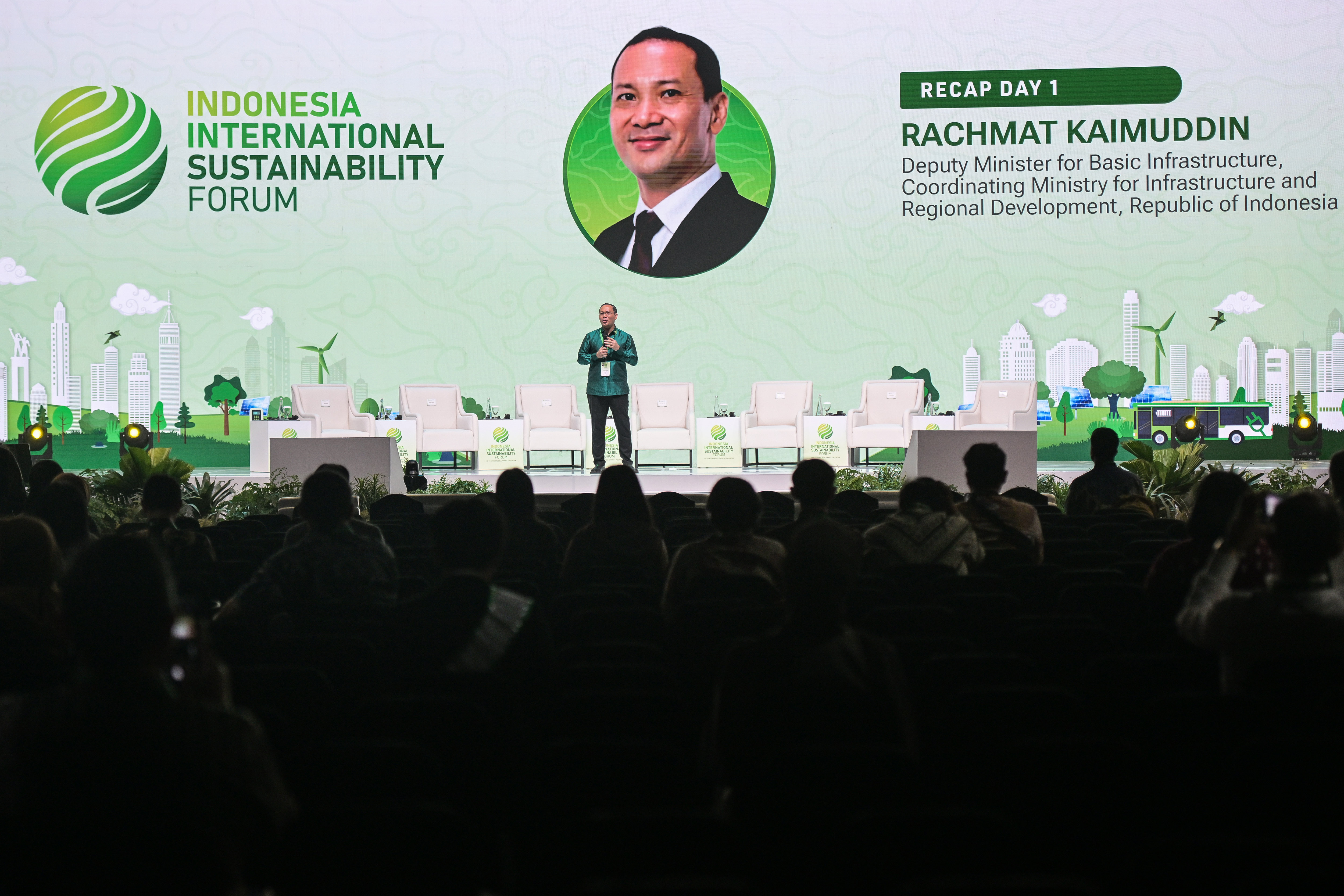

Jakarta, October 11, 2025 — The second day of the Indonesia International Sustainability Forum (ISF) 2025 began with an address by Rachmat Kaimuddin, Deputy Minister for Basic Infrastructure at the Coordinating Ministry for Infrastructure and Regional Development of Indonesia, who emphasized the importance of collaboration and clear regulations in driving sustainable infrastructure development.
Opening his remarks, Rachmat expressed optimism as participants entered the forum’s second day, following a productive first day filled with discussions on key sustainability issues. He offered a brief recap of the previous sessions, highlighting five major themes: water self-sufficiency, sustainable agriculture, nature-based solutions, renewable energy, and low-emission mobility.
He noted that while water resources are available in abundance, their uneven distribution across time, space, quantity, and quality calls for large-scale infrastructure investment. “The scale is big but achievable,” he said, emphasizing that capital for investment is available, yet clarity in regulation and business schemes remains crucial.
Turning to agriculture, Rachmat underscored the promise of precision farming, digital tools, and blended finance in empowering next-generation farmers and boosting productivity. However, he reminded attendees that massive investments are still needed to achieve truly sustainable agriculture.
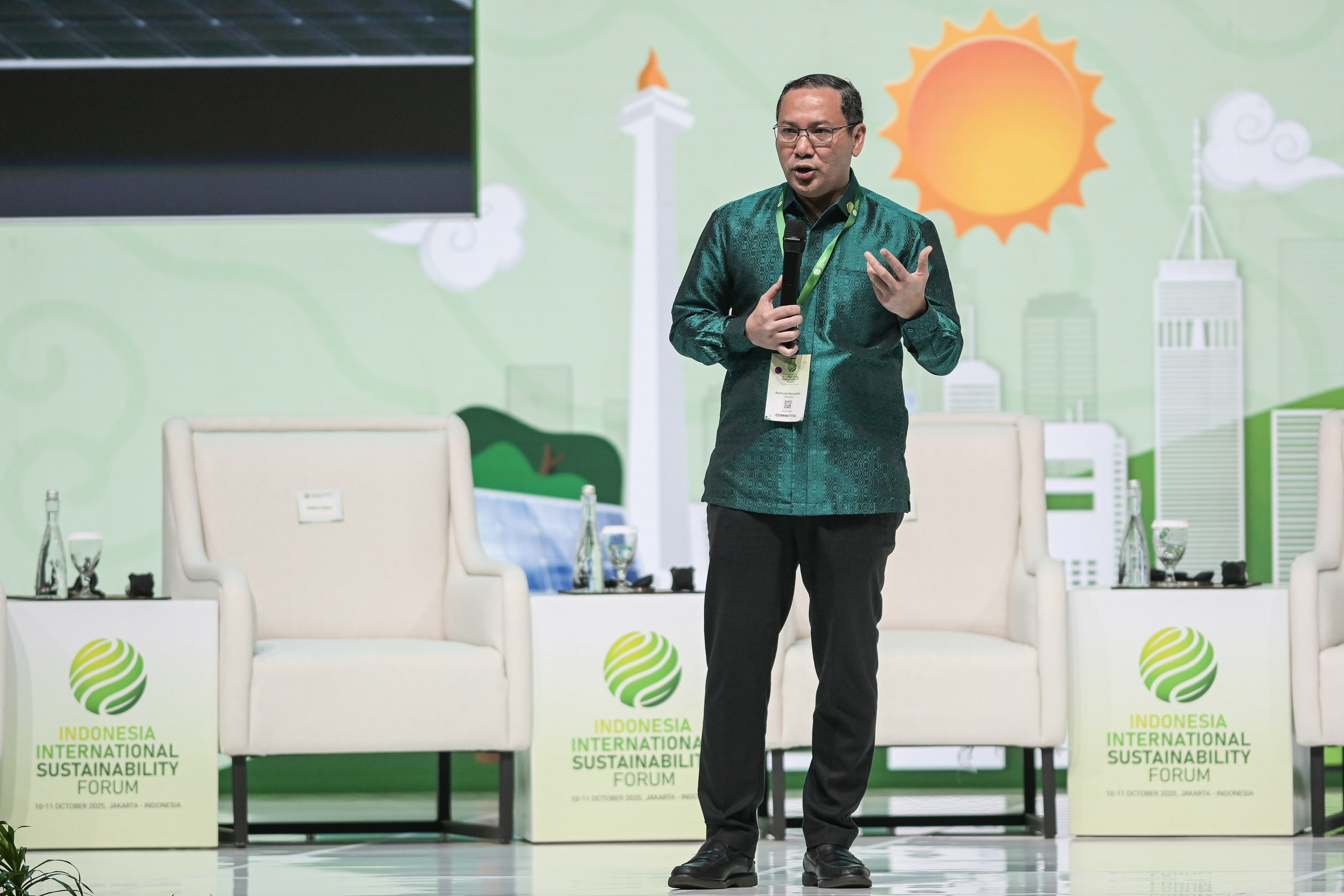
He also drew attention to the growing recognition of biodiversity and blue carbon as vital components of climate resilience, adding that while investment opportunities are emerging, a comprehensive strategy is necessary to halt nature loss. On renewable energy, he reiterated Indonesia’s commitment to nearly doubling its power capacity to 69.5 GW, with the majority sourced from renewables. “Clear and consistent regulations are essential to accelerate energy transition,” he stressed.
The recap concluded with insights on low-emission mobility, where Indonesia is working to make electric vehicles (EVs) more affordable and accessible, both for private and public transport. “Incentives and local production are key,” Rachmat added.
Reflecting on the broader discussions, he summarized the key takeaways with three essential words: collaboration, clarity, and capital. “The world is wealthy with resources. Infrastructure ensures we can enjoy those benefits, but it requires investment. Capital is available, but for it to turn into real investment, we need clear regulations and a strong ecosystem,” he said.
As ISF 2025 entered its second day, Rachmat invited participants to engage in deeper discussions on industrial decarbonization, sustainable financing, and human resource development, setting a constructive tone for the day ahead.