
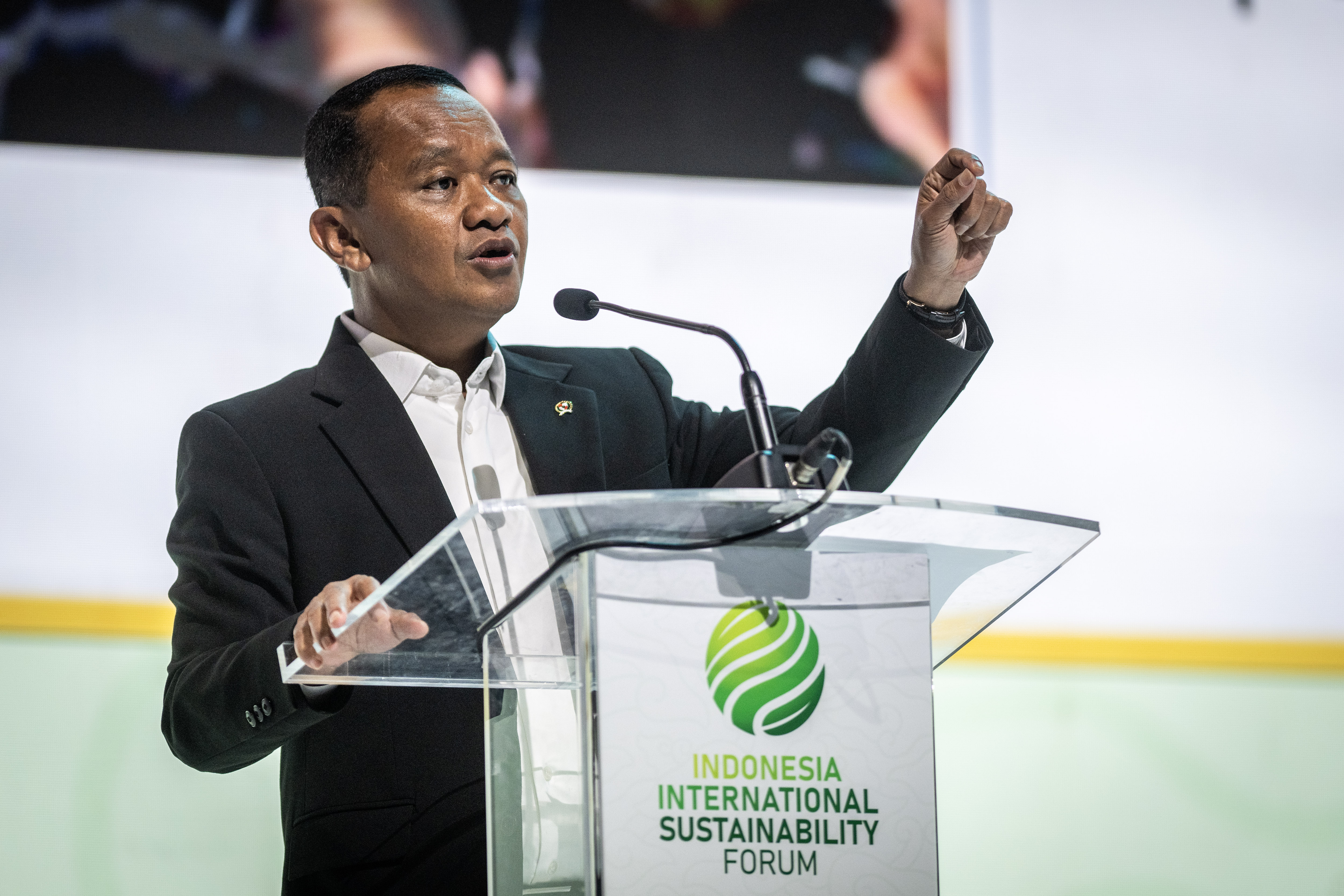

Jakarta, October 10, 2025 — In a keynote address at Indonesia Sustainability Forum 2025, His Excellency Bahlil Lahadalia set a decisive tone for Indonesia’s energy future: stay consistent on the energy transition, remove regulatory friction, and crowd in investment for renewables while pragmatically managing today’s energy realities. He framed the agenda against a backdrop of global uncertainty—from wars to wavering international commitments—yet stressed that Indonesia will keep moving: “The President’s will is clear; we will continue the energy transition and renewable energy.”
Indonesia’s oil lifting stands at approximately 580,000 barrels/day while consumption reaches 1.5–1.6 million barrels/day, forcing about 1 million barrels/day of imports. The annual import burden for fuel and crude is roughly Rp 776 trillion (≈ US$50 billion). To narrow the gap, Bahlil outlined three tracks: optimize existing wells with technology, accelerate work areas from exploration to production, and start new drilling (75 sites).
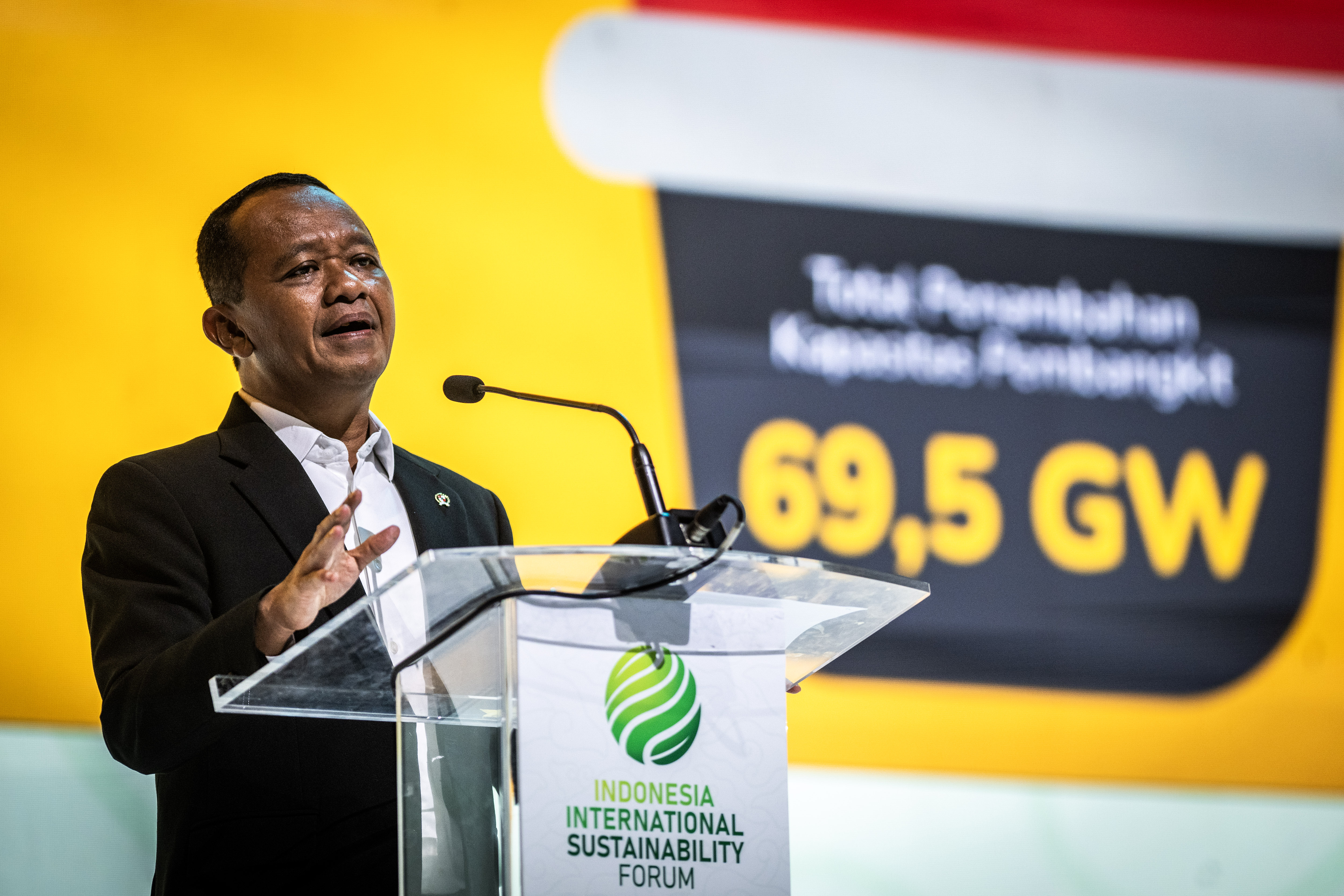
Indonesia holds world-class renewable potential—geothermal second only to the U.S., with a 500 MW target by 2027. Renewables already supply 14–15% of national electricity, with total capacity at ~100 GW. The next plan (RUPTL 2025–2034) earmarks 69.5 GW for renewables and a major grid build-out of about 47,758 circuit-kilometers (≈ 8,000 km of lines) so power can reach consumers. “Investors, don’t doubt Indonesia’s consistency,” he said, inviting participation across the archipelago.
Bahlil acknowledged the cost gap: coal is still cheaper than many renewables. Rather than deny current dependence, he argued for Carbon Capture, Utilization and Storage (CCUS) to cut emissions from coal while renewables scale—the aim is cleaner electricity now, without slowing the transition.
Bahlil floated a plan to install ~1 MW of solar in each village. With roughly 80,000 villages, the concept could create ~80 GW of distributed capacity.
To translate ambition into assets, regulation must move fast, easy, executable. The government is shortening permits, citing geothermal approvals reduced from up to one year to about three months, and tenders that no longer drag on. North star: pro-investment rules that remain strict on integrity—open for business, firm on the law.
Indonesia will also pursue electricity exports where it strengthens all sides. He noted an MoU with Singapore and plans to co-develop industrial zones across Batam–Karimun–Bintan, stressing that any deal must benefit Indonesia and respect both countries’ rules.
Policy consistency, renewable scaling, grid expansion, CCUS, village-scale solar, permit acceleration, and regional exports—all under a firm commitment to Net-Zero Emissions by 2060. The message to investors is clear: opportunity is real, the rules are getting faster, and Indonesia is open—strictly—under the law.