
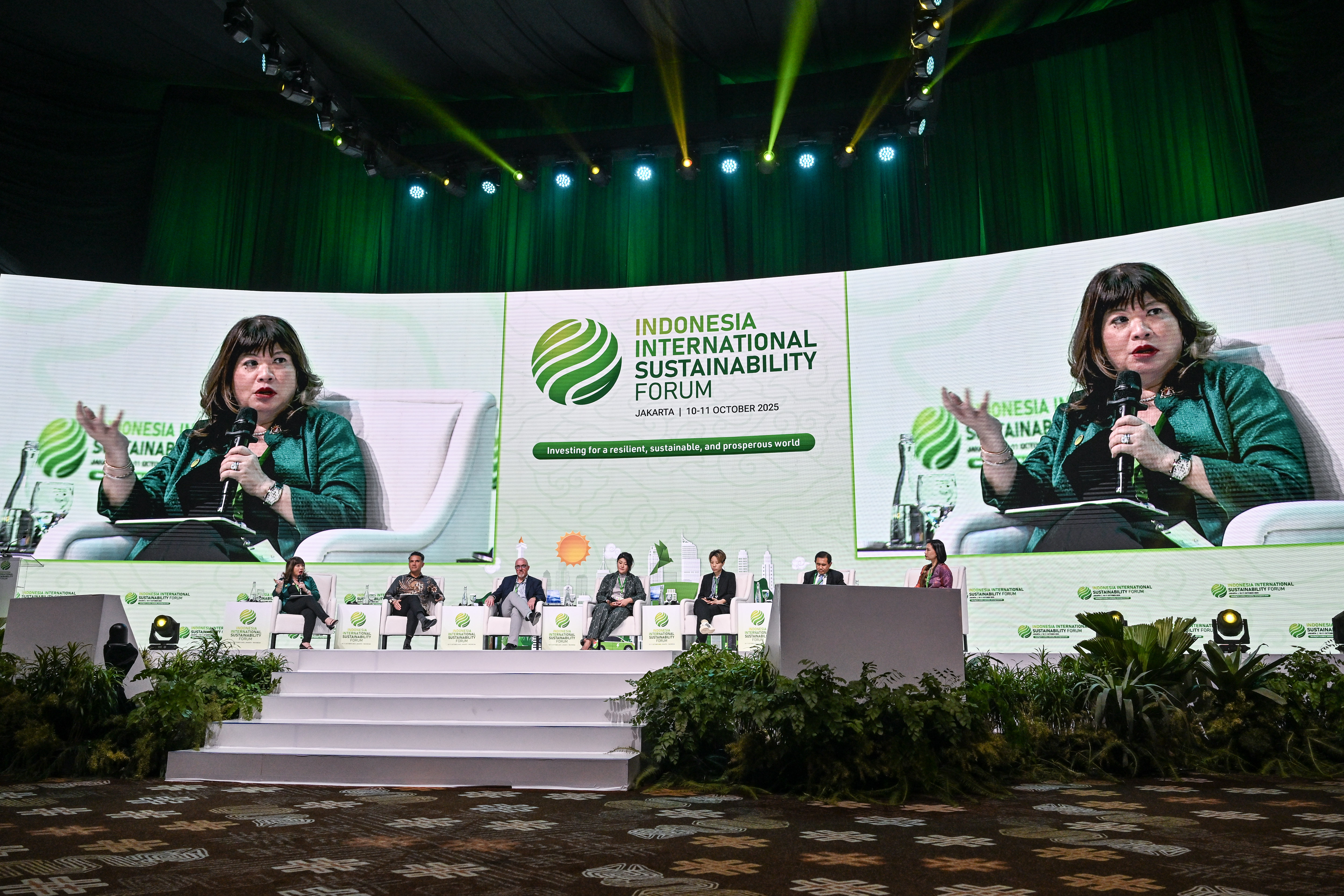

Jakarta, October 11, 2025 — The Indonesia International Sustainability Forum (ISF) 2025 plenary session “Advancing Industrial Decarbonization: Technology and Innovation for a Net-Zero Future” brought together global experts to explore how technology, innovation, and collaboration can accelerate industrial transformation toward net-zero emissions. The session was moderated by Tiza Mafira, Executive Director of Climate Policy Initiative (CPI), and featured Shinta Kamdani, Anthony Watanabe, John Coates, Sophie Lu, Karen Chan, and Lokita Prasetya.
Exploring Technological Frontiers in Carbon Capture

The panel discussed advancing industrial decarbonization: technology and innovation for a net-zero future. ANTARA PHOTO/Bayu Pratama S/sgd
Professor John Coates of UC Berkeley opened the discussion by presenting new developments in carbon capture and utilization. He distinguished between point-source carbon capture from industrial emissions and direct air capture technologies. Coates highlighted seaweed as a highly scalable natural carbon sink, noting that Indonesia’s aquaculture potential could capture up to 760 megatons of carbon annually and produce bioethanol valued at around 30 billion dollars.
Private Sector Leadership in Renewable Energy and Electrification
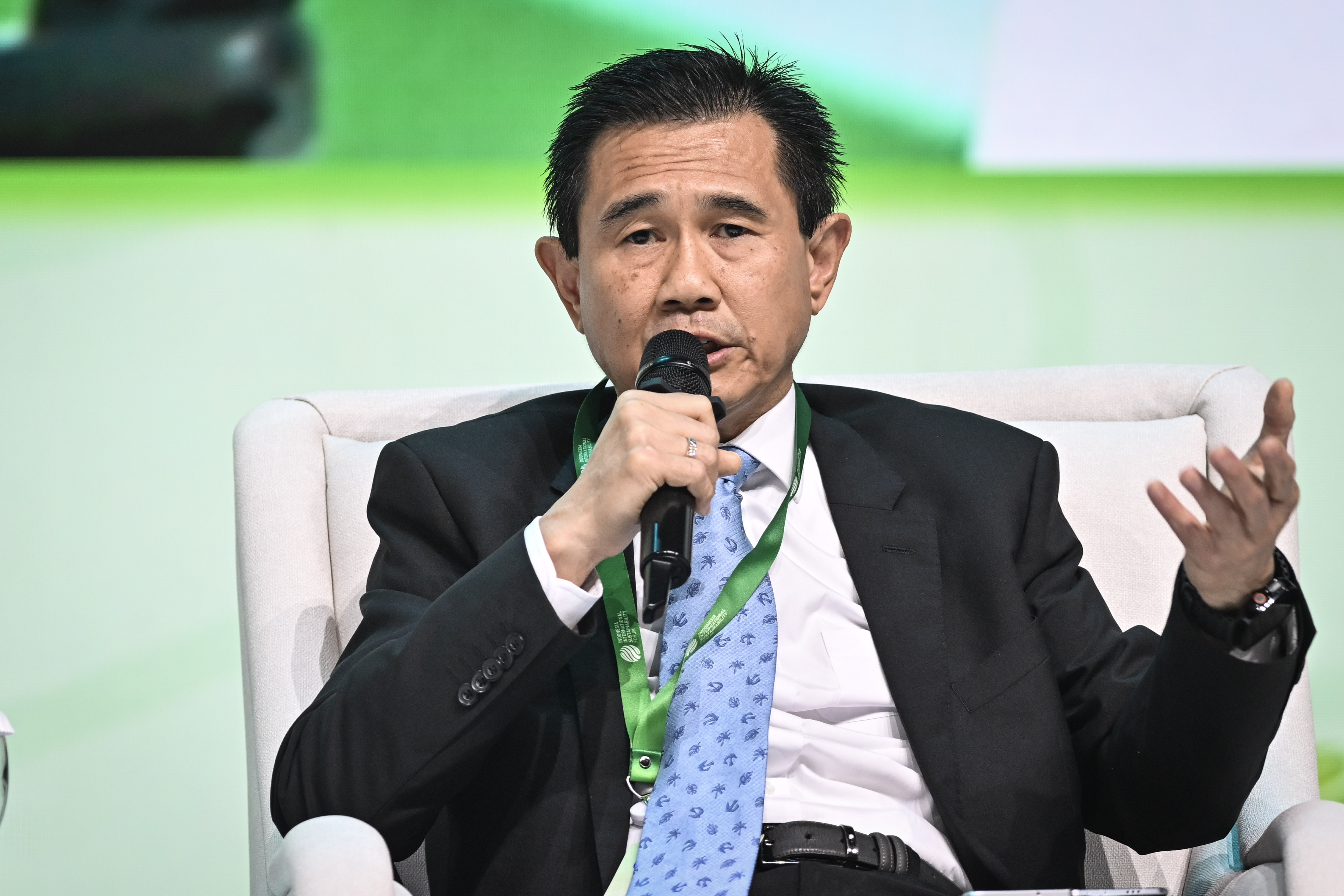
The panel discussed advancing industrial decarbonization: technology and innovation for a net-zero future. ANTARA PHOTO/Bayu Pratama S/sgd
Lokita Prasetya, Vice President Director of Dian Swastika Sentosa, shared how Sinar Mas Group is pursuing decarbonization through renewable energy projects and electrification in mining operations. He emphasized challenges in implementing CCUS, citing high capital costs and an imbalance between investment needs and current carbon pricing in Indonesia. Lokita called for stronger policy support to improve the economic feasibility of large-scale carbon reduction technologies.
Digitalization as a Driver of Industrial Efficiency

Anthony Watanabe, Chief Sustainability Officer of Indorama Ventures, discussed the crucial role of digital and data-driven solutions in reducing industrial emissions. He highlighted the company’s integration of digital twins, predictive maintenance, and centralized carbon management systems to optimize performance and sustainability reporting. Watanabe noted that digitalization not only improves operational efficiency but also enhances transparency and long-term decision-making.
Financing and Policy as Enablers of Decarbonization
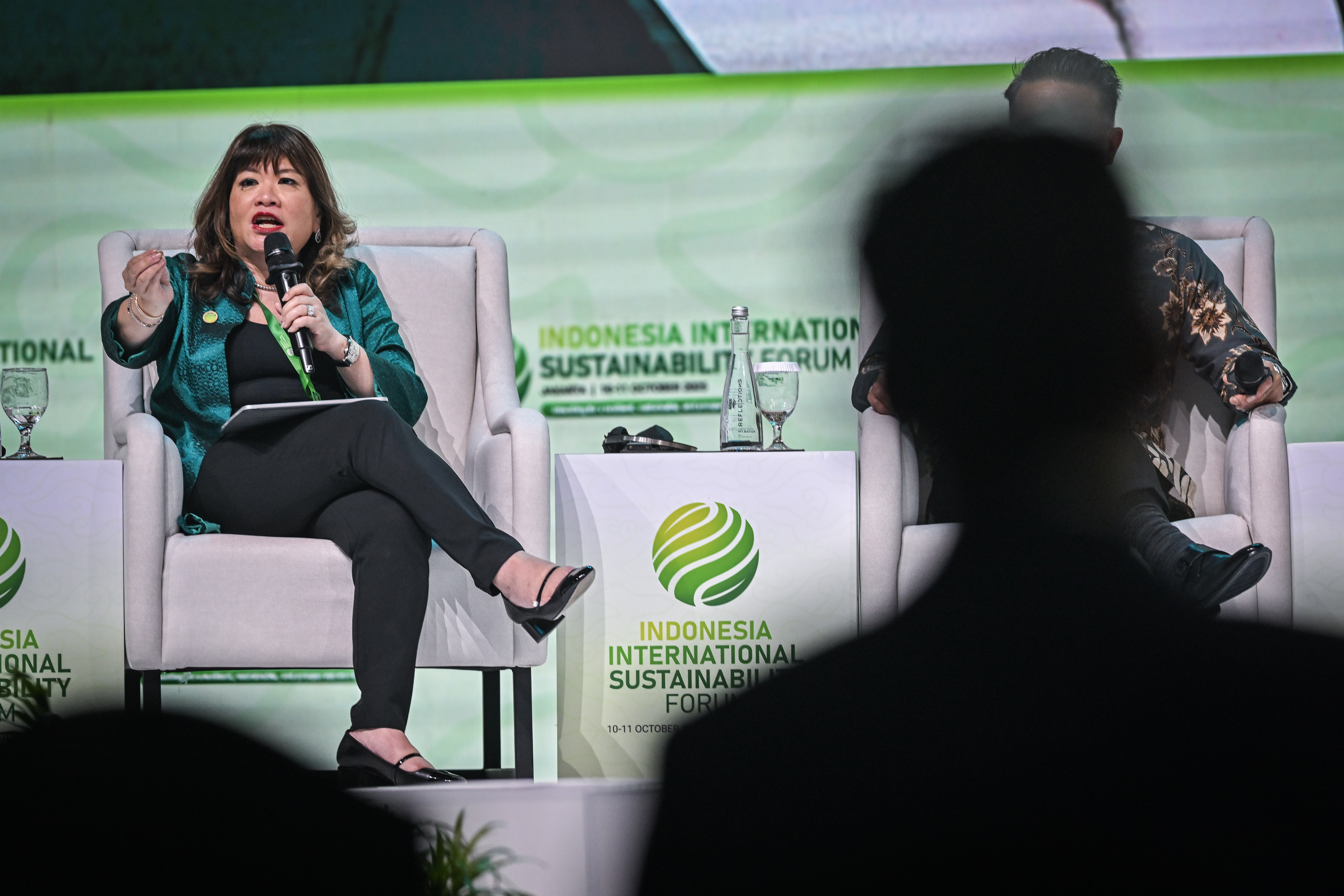
The panel discussed advancing industrial decarbonization: technology and innovation for a net-zero future. ANTARA PHOTO/Bayu Pratama S/sgd
Shinta Kamdani, CEO of Sintesa Group, underlined that industrial decarbonization must extend beyond large corporations to include small and medium enterprises. She identified three critical enablers for acceleration: financial and fiscal incentives, regulatory consistency, and human capital readiness. With Indonesia facing a 67 billion dollar financing gap to decarbonize the power sector, Shinta urged the creation of a stronger ecosystem combining public policy, market incentives, and education.
Global Finance and Cluster-Based Solutions

The panel discussed advancing industrial decarbonization: technology and innovation for a net-zero future. ANTARA PHOTO/Bayu Pratama S/sgd
From the financial sector, Sophie Lu, Global Head of Heavy Industry Decarbonisation at HSBC, emphasized the importance of robust carbon pricing and public incentives to scale carbon capture technologies. She referenced successful examples from the UK, France, and the US and recommended that Indonesia explore similar frameworks. Lu also promoted a cluster-based approach, where multiple emitters collaborate to lower capital costs and improve bankability for CCUS projects.
Supply Chain Collaboration and Brand Leadership

The panel discussed advancing industrial decarbonization: technology and innovation for a net-zero future. ANTARA PHOTO/Bayu Pratama S/sgd
Karen Chan, Senior Director Sourcing Sustainability at Adidas, stressed that demand-side actions are equally vital. She explained how Adidas now rewards suppliers that demonstrate measurable progress in decarbonization. Chan also called for deeper strategic alliances among brands, manufacturers, and technology partners, noting that sustainability has created new space for collaboration even among traditional competitors.
Collaboration as the Core of Industrial Transformation
In closing, moderator Tiza Mafira summarized that scaling up industrial decarbonization will require technology deployment, financial innovation, and shared commitment across sectors. “Sustainability is the one space where competitors can become partners,” she said, capturing the collective vision for a cooperative path toward a net-zero future.