Jakarta, 17 October 2025 – As Indonesia accelerates its pathway toward achieving Net Zero by 2060, Mitsubishi Heavy Industries (MHI) is deepening its collaboration with the government and industry leaders to help realize an energy transition that is both practical and inclusive.
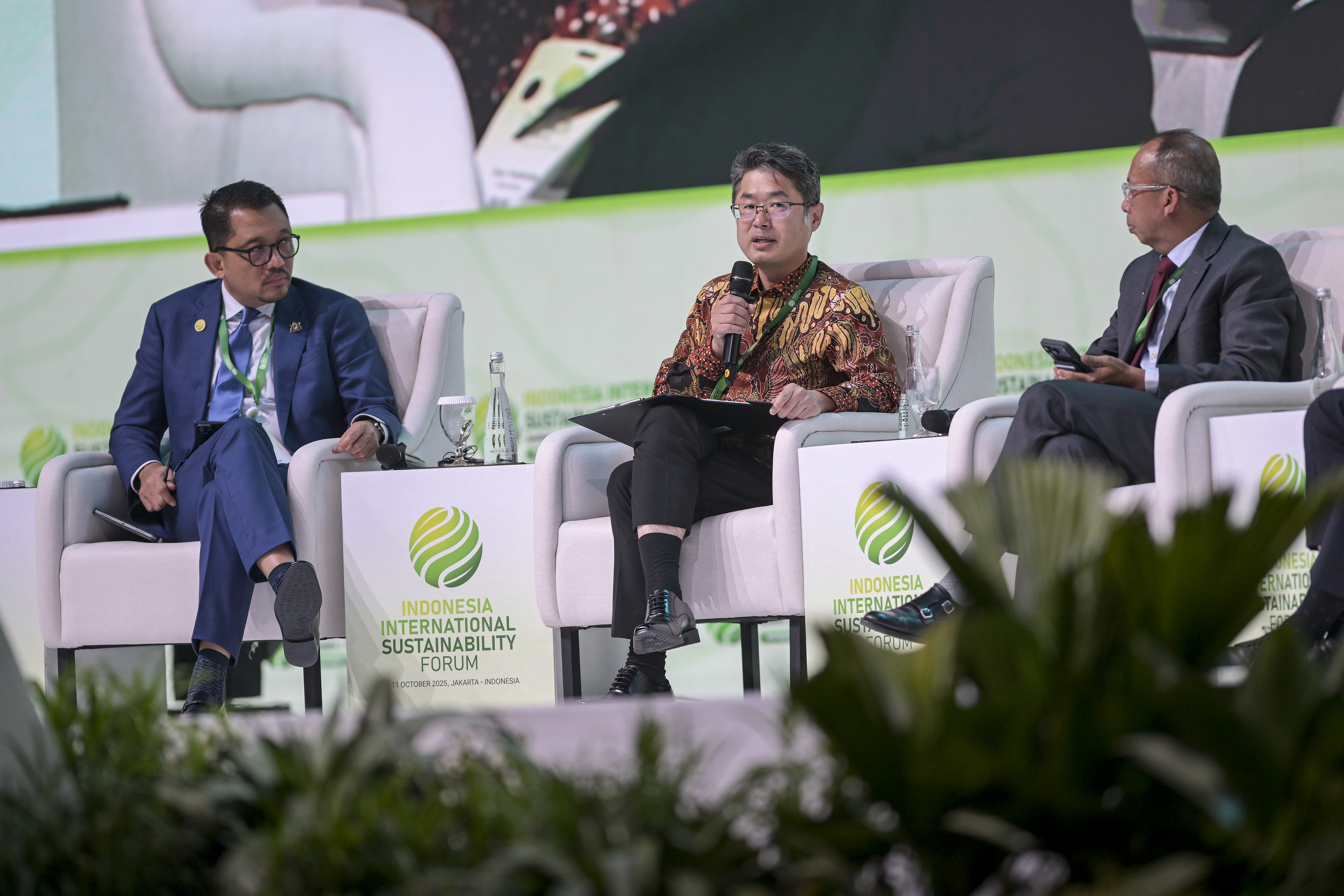
This commitment was further highlighted during the Indonesia Sustainability Forum (ISF) 2025, where Toru Yoshioka, President Director of Mitsubishi Heavy Industries Indonesia, spoke at a panel session on “Pemanfaatan Energi Terbarukan” (Utilization of Renewable Energy). Sharing insights alongside government officials and energy executives, Yoshioka emphasized that advancing Indonesia’s transition requires both technological readiness and pragmatic execution.
Toru Yoshioka underlined the role of geothermal: “Indonesia holds about 24 GW potential and has installed 2.7 GW. Retrofitting at plants like Darajat has lifted output, while adding ORC systems can harvest brine heat without new drilling, reducing risk and time. To balance intermittency from solar and wind, Mitsubishi Heavy Industries is exploring hydrogen-ready turbines and ammonia or biomass co-firing with local partners.”
In a separate discussion with the Indonesia Economic Forum, Yoshioka elaborated on how MHI’s technologies can further accelerate Indonesia’s renewable energy and industrial decarbonization efforts. “Indonesia has one of the world’s largest geothermal reserves, around 23.74 GW of potential and is already the second-largest geothermal electricity producer globally,” he explained. “We are proud to have delivered six units for geothermal power plants here, providing a total of 400 MW in output.”
With the Ministry of Energy and Mineral Resources targeting an additional 5.2 GW of geothermal capacity in the next decade, MHI sees significant opportunity in upgrading existing plants using its Organic Rankine Cycle (ORC) system. The ORC technology enables more power generation from existing geothermal resources by utilizing brine water to produce secondary vapor, reducing the need for new drilling and shortening construction timelines.
Beyond power generation, MHI is also exploring ways to support energy access in remote regions through its EBLOX hybrid system, which integrates solar, battery storage, and backup generators offering a cleaner, more reliable alternative to diesel-based systems.
At the corporate level, MHI remains committed to its MISSION NET ZERO, a goal to achieve carbon neutrality across its entire value chain by 2040. “Our approach recognizes that there is no one-size-fits-all pathway to decarbonization,” Yoshioka said. “We are focused on developing hydrogen, ammonia, and carbon capture ecosystems that address the diverse needs of each market, especially across Asia Pacific.”
In supporting Indonesia’s industrial decarbonization, MHI is aligning with the Ministry of Industry’s four priority sectors cement, fertilizer, pulp & paper, and metals each with distinct technological challenges and opportunities.
“Indonesia has enormous potential for decarbonization in each of these sectors,” Yoshioka said. “Through our technologies ranging from high-efficiency compressors and gas engines to steelmaking machinery and ORC systems for waste heat recovery we can provide tailored solutions that match each customer’s needs.”
As Yoshioka emphasized both during the ISF and in subsequent discussions, collaboration among government, industry, and investors will be crucial to ensure that Indonesia’s transition is just, reliable, and inclusive.
Through its ongoing initiatives and active participation in ISF 2025, Mitsubishi Heavy Industries reaffirms its commitment to advancing Indonesia’s sustainable transformation driving innovation, partnership, and progress on the journey toward Net Zero.