Indonesia Economic Forum Launches Indonesia Open Network (ION) as Inclusive Digital Infrastructure for MSMEs
Indonesia Economic Forum
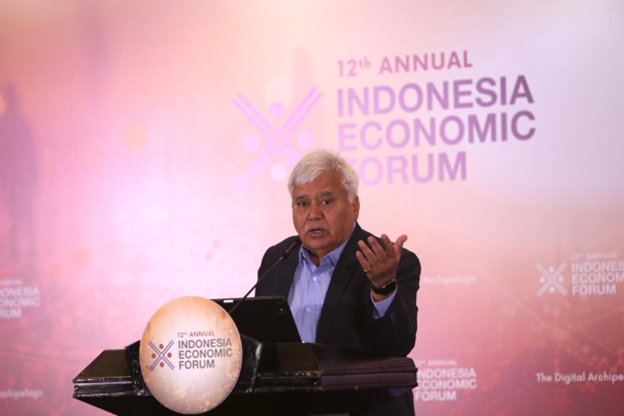
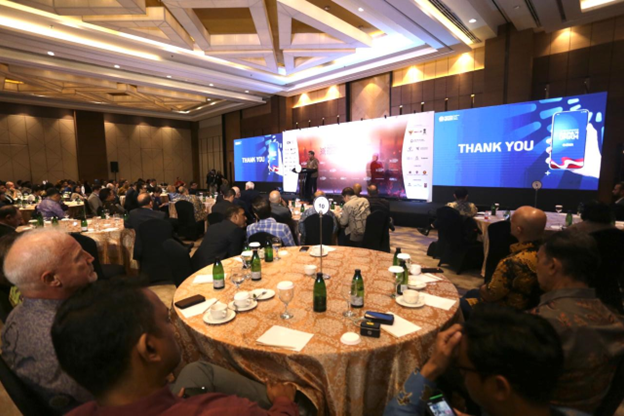
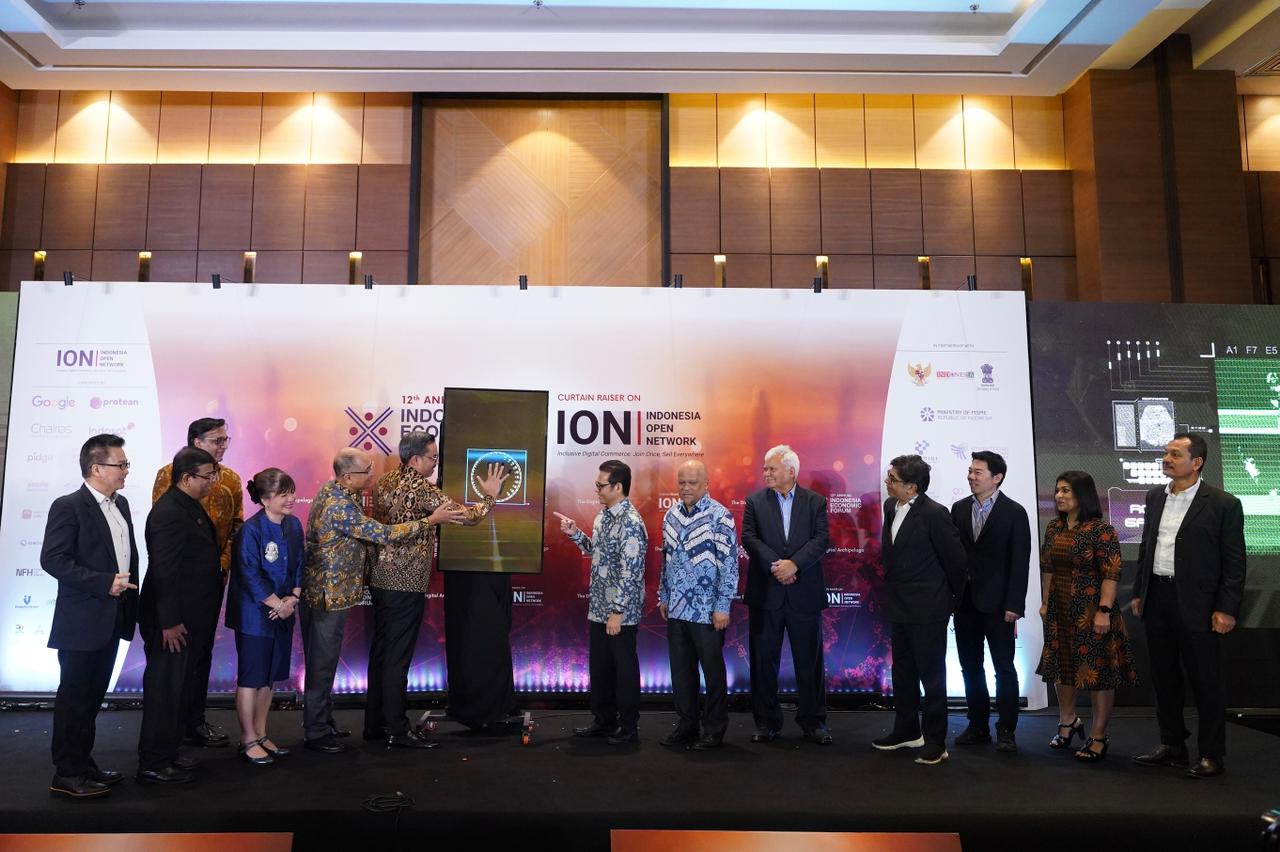
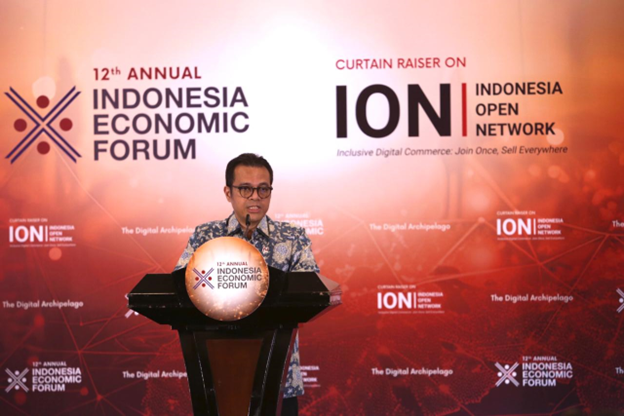
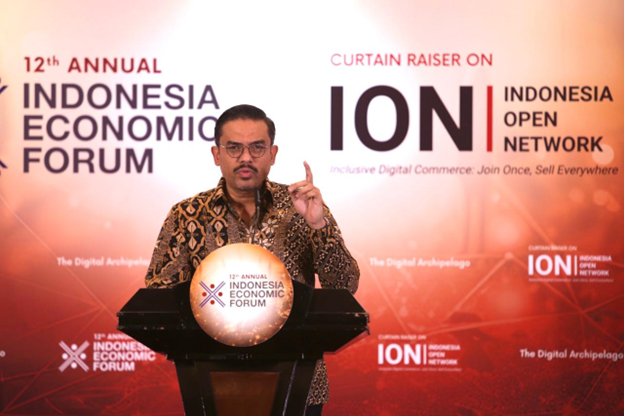
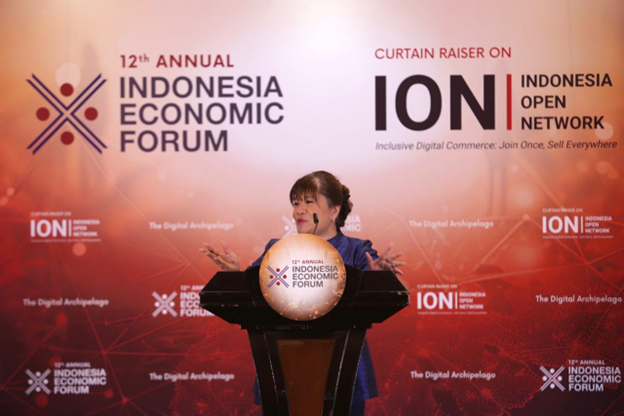
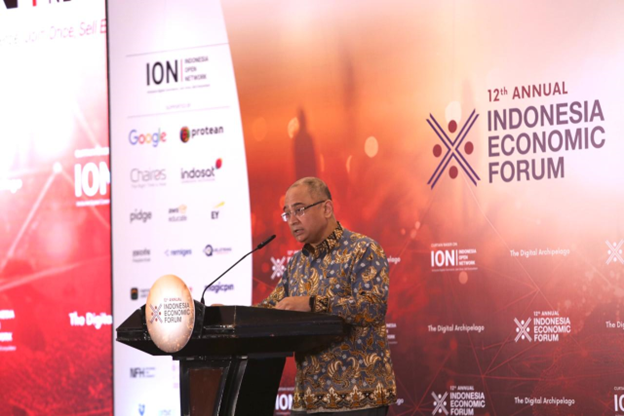
Jakarta, 5 February 2026 — The 12th annual Indonesia Economic Forum (IEF) was officially opened at Mangkuluhur ARTOTEL Suites, Jakarta, on Thursday (5/1/2026). The event was marked by the symbolic launch of the Indonesia Open Network (ION), an open digital infrastructure designed to expand market access, reduce transaction costs, and strengthen the competitiveness of Indonesian MSMEs in the digital economy.Under the theme “Digital Archipelago: Building Inclusive Digital Commerce in Indonesia,” the forum brought together government leaders, private sector representatives, and international partners from Indonesia and India to discuss the future of a digital economy based on interoperability, inclusion, and trust.Opening of IEF 2026: From Platforms to Open Networks The forum began with a welcoming address by Sachin V. Gopalan, CEO & Founder of Indonesia Economic Forum, who emphasized that Indonesia’s challenge today is no longer merely physical connectivity, but truly inclusive digital connectivity.“Digital infrastructure today is not just about speed or scale, but about inclusion, interoperability, and trust. ION is not a single platform, but a network of networks,” said Sachin.This was followed by a series of introductory speeches framed as a cross-sectoral vision dialogue. Dr. Ilham A. Habibie, Chairman of PII (Indonesian Engineers Association), stressed that Indonesia needs aligned technical and policy ecosystems to ensure digital innovation has real impact on national industry.In line with this, Suresh Sethi, Managing Director & CEO of Protean (India), highlighted the importance of open standards and interoperability in accelerating digital economic adoption, noting that Indonesia has significant potential to leapfrog by learning from India’s experience.From the digital infrastructure perspective, Siddharth Prakash, Head of Product Strategy for Emerging Markets at Google Cloud, emphasized that open networks like ION would accelerate data- and AI-driven technology adoption for MSMEs, not only large corporations.Meanwhile, Vikram Sinha, CEO of Indosat, underscored that equitable connectivity is a fundamental prerequisite to ensure that the benefits of ION reach even the most remote regions of the Indonesian archipelago.ION as the Foundation of Indonesia’s Digital EconomyIn his keynote address, Nezar Patria, Vice Minister of Communication and Digital of Indonesia, stated that ION is not merely a technological initiative, but a national strategy for digital economic inclusion.“ION is not a new super-app. It is an open and decentralized network that connects buyers, sellers, and logistics providers through interoperable standards. The goal is clear: more choice, greater visibility, and more control for MSMEs,” said Nezar.He added that ION would be integrated with the Garuda Spark program to support the emergence of two million Indonesian technopreneurs.ION Addresses Digital Inequality Maman Abdurahman, Minister of MSMEs of Indonesia, positioned ION as a critical breakthrough for the MSME sector.“Indonesia has 64.2 million MSMEs contributing more than 60 percent of GDP and absorbing 97 percent of the workforce. Yet many remain trapped in closed ecosystems with high costs. ION is designed to create fairer access,” he said.He added that the success of ION would be measured by how many small traders, neighborhood shops, and micro-enterprises are genuinely connected to the national digital market.Open Infrastructure as the Key to MSME ScalabilityDuring the ION presentation session, Shinta Kamdani, Chair of APINDO (Indonesian Employers Association), emphasized that MSME readiness must be supported by appropriate infrastructure.“MSME readiness is a starting point, but scalability can only be achieved through open digital infrastructure like ION. Without it, digitalization will not truly generate inclusive growth,” she said.Indonesia Could Become the Fastest Adopter of Open NetworksIn his keynote and media interaction, Sandeep Chakravorty, Ambassador of India to Indonesia, stated that ION represents the best adaptation of India’s experience with the Open Network for Digital Commerce (ONDC).“ION is built on the lessons from ONDC in India but tailored to Indonesia’s needs. Network fees will be much lower than conventional platforms that can charge up to 20 percent. On ION, fees are only around 2–3 percent.”He emphasized that the network would open market access for millions of small businesses.“Indonesia has more than 62 million MSMEs that need market access. ION will provide that market with low costs, minimal entry barriers, and open standards.”Regarding regulation, he expressed confidence in Indonesia’s enabling environment.“With full support from the government, APINDO, and the digital ecosystem, I see no significant regulatory barriers. In fact, all stakeholders are enthusiastic about joining this open network.”He also highlighted Indonesia’s potential to move faster than India.“If India was the first, Indonesia could be the fastest, learning from both our successes and challenges with ONDC.”From Closed Platforms to an ‘Internet of Transactions’T. Koshy, Founding CEO & Managing Director of ONDC, explained that ION represents a paradigm shift in digital commerce. “ION’s architecture is network-centric, not platform-centric. This means no single player dominates the market; instead, many actors are interconnected.”He noted that ION’s impact goes beyond goods trade. “Not only goods, but also services such as healthcare, education, agriculture, and financial services can be transacted. ION has the potential to become Indonesia’s ‘internet of transactions.’”On logistics, he added, “Logistics will be embedded within the network as a service, not a barrier. MSMEs in remote areas can reach national markets more efficiently.”Koshy concluded that Indonesia benefits from starting at a more advanced stage thanks to India’s experience.“Any mistakes we made in India will serve as valuable lessons for Indonesia, so ION does not start from zero but from three years of ONDC experience.”ION as the Foundation for AI and Digital InclusionDr. R.S. Sharma, former Chairman of ONDC India, linked ION to AI development and digital inclusion. “AI cannot stand alone. It requires digital transaction data. The more MSMEs participate in ION, the richer and more representative the data becomes.”He warned against data bias. “If AI is trained only on elite urban data, its benefits will be limited. ION enables data from street vendors, rural artisans, and remote island MSMEs to enter the digital ecosystem.”He emphasized that ION’s core objective is reducing costs and friction. “Digital enables small-value but high-volume transactions, which is essential for reaching grassroots communities.”Sharma also stressed the importance of Digital Public Infrastructure (DPI). “DPI like ION is best suited for Global South countries: inclusive, low-cost, and not disruptive to traditional economies. Technology should enhance the efficiency of small shops and family businesses, not replace them.”ION and Indonesia’s New Digital Transformation PathThe 12th Indonesia Economic Forum reaffirmed that ION is not merely a technology project, but a national economic transformation strategy toward becoming a Top 5 Global Economy by 2045.Through ION, Indonesia is not only building digital infrastructure but also shaping a more inclusive, competitive, and sustainable growth model. The open network is expected to reduce transaction costs, expand MSME market access, accelerate digital innovation, and strengthen data and economic sovereignty.With cross-sectoral support, strategic Indonesia–India partnership, and collaboration among government, industry, and the tech community, ION is projected to become the backbone of Indonesia’s digital economy. It will not only connect economic actors across the archipelago but also position Indonesia as a regional leader in digital public infrastructure based on open networks.Going forward, ION is expected to serve as a catalyst for inclusive growth, ensuring that digital transformation benefits not only large players but also empowers millions of MSMEs, small traders, and grassroots entrepreneurs to fully participate in Indonesia’s digital economy.

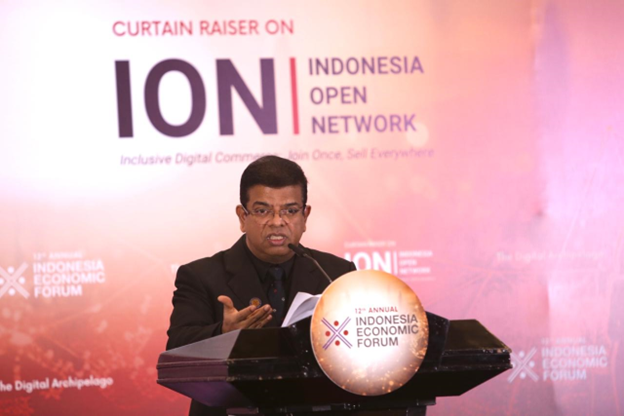
 T. Koshy, Founding CEO & Managing Director of ONDC, explained that ION represents a paradigm shift in digital commerce. “ION’s architecture is network-centric, not platform-centric. This means no single player dominates the market; instead, many actors are interconnected.”He noted that ION’s impact goes beyond goods trade. “Not only goods, but also services such as healthcare, education, agriculture, and financial services can be transacted. ION has the potential to become Indonesia’s ‘internet of transactions.’”On logistics, he added, “Logistics will be embedded within the network as a service, not a barrier. MSMEs in remote areas can reach national markets more efficiently.”Koshy concluded that Indonesia benefits from starting at a more advanced stage thanks to India’s experience.“Any mistakes we made in India will serve as valuable lessons for Indonesia, so ION does not start from zero but from three years of ONDC experience.”ION as the Foundation for AI and Digital Inclusion