
By Dr. Ilham A. Habibie, Chairman, Persatuan Insinyur Indonesia (The Institution of Engineers Indonesia)
When people speak about Indonesia and India, they often begin with history. They speak of ancient trade routes, shared civilizations, the Ramayana, maritime kingdoms, and cultural exchanges that have connected our peoples for more than two millennia. Those stories deserve to be remembered because they remind us that cooperation between our nations is not new—it is deeply embedded in our collective heritage.
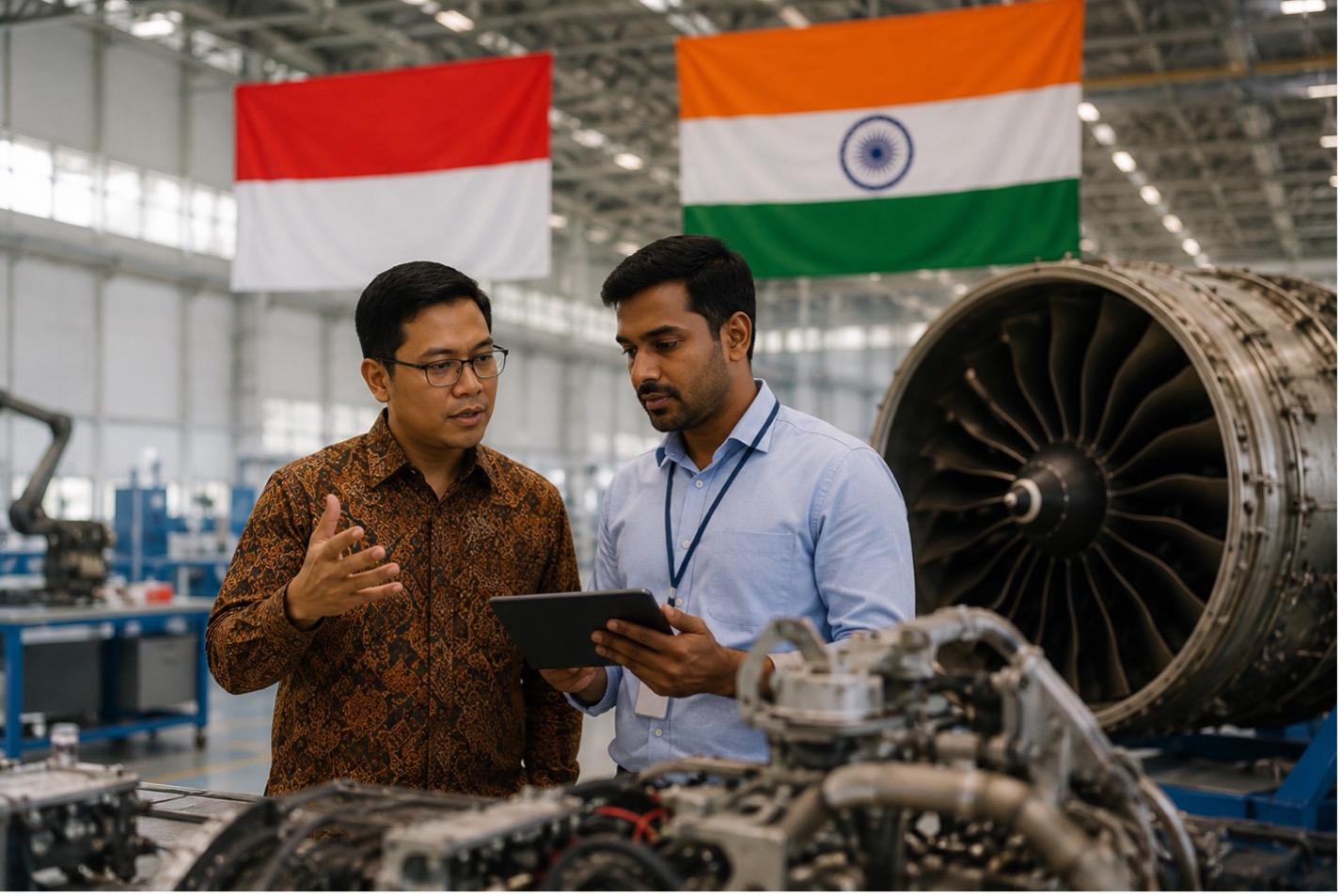
But history alone cannot build the future. The defining relationship between Indonesia and India over the next twenty years will not be written primarily by historians or diplomats. It will be engineered. Every major challenge confronting our two countries—from industrial competitiveness and energy security to healthcare, food resilience, aerospace, and artificial intelligence—is ultimately an engineering challenge. Every opportunity before us will require engineers, scientists, entrepreneurs and innovators working together across borders. That is why I believe Prime Minister Narendra Modi’s visit to Indonesia represents something more significant than another state visit. It is an opportunity to begin building an engineering partnership between two nations that are increasingly shaping the future of Asia.
Two Engineering Nations
Indonesia and India are often described as complementary economies. That is certainly true, but it is also incomplete. More importantly, they are complementary engineering nations, each having developed distinct capabilities shaped by geography, industrial evolution, national priorities and decades of investment in human capital.
Indonesia’s strengths extend far beyond its abundant natural resources. We possess one of the world’s most strategic geographic locations, connecting the Indian and Pacific Oceans, a young demographic profile, rich biodiversity and critical minerals that will underpin the global energy transition. Equally important, Indonesia has built internationally recognized capabilities in aerospace engineering, advanced manufacturing, telecommunications, energy systems, satellite operations and digital innovation. Our ambition today is not simply to participate in global value chains, but increasingly to move up them through technological mastery, engineering excellence and industrial innovation.
India brings equally compelling strengths. It combines a vast domestic market, a powerful demographic dividend, globally respected engineering institutions, technological leadership in software, digital public infrastructure, pharmaceuticals and space, together with one of the world’s most vibrant innovation ecosystems. Over the past three decades, India has demonstrated how engineering capability, entrepreneurship and public policy can reinforce one another to create globally competitive industries.
Neither country should therefore be viewed as a teacher, nor as a student. In some areas Indonesia has valuable experience to share. In others, India has travelled further. The greatest opportunity lies not in transferring knowledge in one direction, but in creating new knowledge together. That is the true meaning of a strategic engineering partnership.
Five Industries That Can Shape Asia
Rather than attempting to collaborate across every conceivable sector, I believe there are five industries where the opportunities are immediate, practical and potentially transformational.
Electric Mobility
Indonesia has set itself an ambitious objective—not merely assembling electric vehicles, but becoming one of the world’s centers of excellence for the complete battery ecosystem. From nickel mining and refining to battery cells, battery management systems, power electronics and electric drivetrains, Indonesia possesses the ingredients to build an integrated value chain.
India’s strengths are equally significant. Its rapidly expanding EV market has stimulated innovation in affordable vehicle engineering, software integration, mobility platforms and manufacturing scale. These capabilities complement Indonesia’s industrial ambitions remarkably well. Rather than competing, the two countries can jointly build resilient regional supply chains capable of serving not only domestic markets but the wider Indo-Pacific.
Aeronautics and Space
Aerospace has always been close to my heart because it demonstrates engineering at its highest level. Indonesia and India have followed different—but equally valuable—paths. India has achieved remarkable success in defence aerospace, launch systems and space exploration, while Indonesia has developed internationally respected expertise in civil aviation manufacturing and regional aircraft development. Neither path is superior. Together, they create complementary capabilities.
The same applies to space. India has shown the world that ambitious space programs can be delivered efficiently and economically. Indonesia contributes something equally valuable—its geography. Biak Island, located almost exactly on the equator, offers one of the world’s most attractive launch locations because the Earth’s rotational velocity reduces the energy required to place satellites into orbit. In an industry where every kilogram of payload matters, that natural advantage becomes a genuine engineering asset. Perhaps the next chapter of Asian space collaboration should begin there.
Digital Infrastructure
Digital infrastructure has become the nervous system of every modern economy. India has rightly earned global recognition for its Digital Public Infrastructure, digital identity, payment systems and large-scale public digital platforms. Indonesia has also made substantial progress in telecommunications, fintech, AI adoption, public digital services and digital entrepreneurship.
The next challenge is not simply digitalization—it is technological sovereignty. Indonesia’s ambition is to become not only a sophisticated adopter of technology but also a producer, innovator and exporter of advanced digital solutions. Artificial intelligence, semiconductor manufacturing, data centers and Digital Public Infrastructure should therefore become strategic pillars of future Indonesia–India cooperation. In a world increasingly concerned about supply-chain resilience, our collaboration can strengthen not only our own economies but also the broader regional technology ecosystem.
Pharmaceuticals and Life Sciences
Healthcare is entering an era where biology, engineering and artificial intelligence increasingly converge. Indonesia and India each possess rich traditions that deserve renewed scientific attention. India has Ayurveda, while Indonesia has Jamu. These are not competing philosophies, but complementary bodies of knowledge that modern science can help validate, refine and commercialize responsibly.
Beyond traditional medicine, both countries have developed important modern capabilities. India has become a global leader in generic pharmaceuticals, while Indonesia has earned international recognition in vaccine development and production. Together, they have an opportunity to make quality healthcare more affordable and accessible across Asia.
Agriculture
Food security will become one of Asia’s defining strategic priorities over the coming decades. Indonesia and India cultivate different crops under different climatic conditions, and that diversity should be viewed as an opportunity rather than a constraint.
India has developed sophisticated agricultural machinery, irrigation technologies and food-processing systems. Indonesia contributes strengths in tropical agriculture, fisheries and plantation commodities. Future cooperation should therefore focus not simply on producing more food, but on engineering smarter, more resilient food systems that improve productivity, reduce waste and strengthen rural prosperity.
Building Ecosystems, Not Projects
Industrial cooperation succeeds when ecosystems—not isolated projects—are built. Regardless of sector, six foundations deserve equal attention: education through university partnerships and vocational training; data science; the systematic sharing of best practices; collaboration between state-owned enterprises and the private sector; sustained investment in research and development; and the nurturing of startup ecosystems. Many of tomorrow’s industrial breakthroughs will emerge not from large corporations, but from young engineers and entrepreneurs solving practical problems in innovative ways.
Beyond Memoranda of Understanding
Governments create opportunities by signing agreements. Engineers transform those opportunities into reality. Aircraft do not fly because ministers sign memoranda of understanding—they fly because engineers design them. Satellites reach orbit because engineers calculate trajectories. Digital platforms transform economies because engineers build resilient systems. Battery technologies, AI platforms, bridges, hospitals, semiconductor fabrication plants and manufacturing facilities all begin with engineering.
The success of Indonesia–India relations should therefore not be measured by the number of agreements we announce, but by the number of engineers we exchange, laboratories we establish, patents we generate, startups we incubate and industries we build together.
History connected our civilizations. Engineering can connect our futures. As Prime Minister Narendra Modi visits Indonesia this week, we should remember that diplomacy opens doors, but it is engineers who ultimately build what lies beyond them. Because the future of Asia will not simply be negotiated.
It will be engineered.
About the Author

Dr. Ilham A. Habibie is Chairman of Persatuan Insinyur Indonesia (The Institution of Engineers Indonesia) and Chairman of the National ICT Council (Wantiknas). An aerospace engineer and technology leader, he is a prominent advocate for industrial innovation, engineering excellence and digital transformation.


