
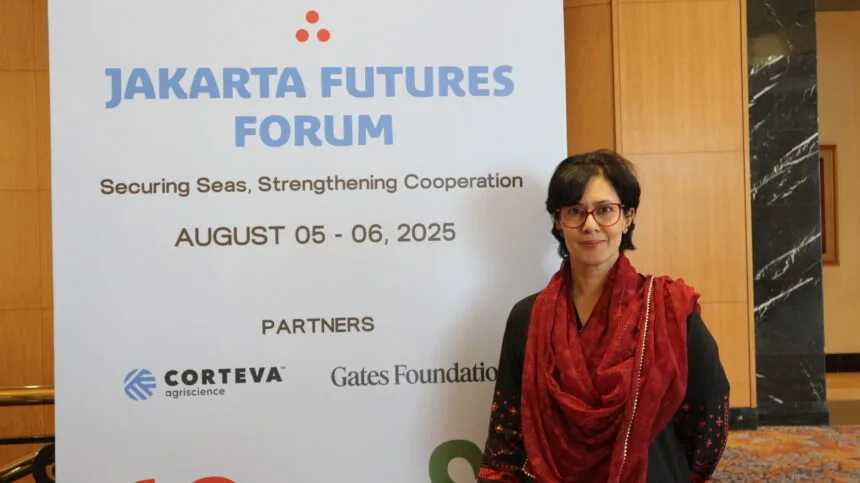

Jakarta, August 6, 2025 — Held at the JW Marriott Hotel in Jakarta, the Jakarta Futures Forum 2025 brought together global leaders, experts, and thinkers to discuss the future of international cooperation in the Indo-Pacific region. This year’s forum carried the theme “Securing Seas, Strengthening Cooperation”, focusing on maritime security, economic resilience, and the transformation of food systems. In one of the forum’s key sessions, titled “Seeds of Change: Rethinking Food Security in the Indo-Pacific”, Chhavi Rajawat, a grassroots leader and educator from India, took the stage as a keynote speaker, voicing the perspective of rural communities in building fair and sustainable food systems.
A former village head from the desert state of Rajasthan, Rajawat passionately discussed both the challenges and opportunities in building inclusive and resilient food systems across the Indo-Pacific. Through her panel remarks and exclusive interview, she emphasized the importance of community-driven solutions, technology literacy, and youth engagement in shaping the future of agriculture.
Smallholder Farmers Are Not Just Beneficiaries
Rajawat stressed that smallholder farmers must not be seen merely as recipients of aid but as co-creators of food systems.
“They are the ones truly feeding us all. They are not just beneficiaries but the backbone of national—and even global—food security,” she asserted.
She highlighted that the Indian government has actively supported the formation of Farmer Producer Organizations (FPOs) and women-led self-help groups in the agriculture sector. These initiatives, she noted, empower communities while integrating innovations such as drones and precision farming technologies.
Technology, Youth, and a Shift in Mindset
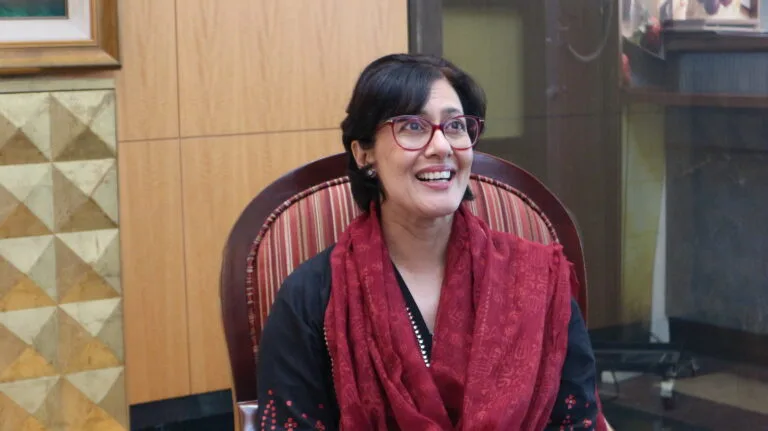
In her interview, Rajawat voiced concern over the growing disinterest among young people in farming, largely due to the perception that agriculture lacks economic and social prospects. To challenge this narrative, she established a women’s college in rural India that teaches agricultural science, digital technology, and climate awareness from an early age.
“Many see working with soil as dirty or undignified. But without farmers, who puts food on the world’s table?” she asked. She believes that by promoting digital, financial, and agricultural literacy, youth can begin to see farming as a meaningful and sustainable career path.
From Calories to Nutrition: A Policy Transformation
Rajawat also highlighted India’s policy shift from merely providing calories to ensuring nutritional value in food distribution. Programs such as the midday meal scheme have successfully used food as both an incentive for school attendance and a vehicle to improve children’s nutritional status in underserved areas.
She praised similar efforts underway in Indonesia and encouraged greater cross-country collaboration, noting the potential for mutual learning.
“We share a similar civilizational identity. It’s time we stop waiting for Western influence and start writing our own chapters,” she said during the panel.
A Collective Policy Approach for Global Challenges
When asked about concrete policies to strengthen regional food cooperation, Rajawat emphasized that there is no one-size-fits-all solution. Instead, she proposed several key priorities:
- Integrating regenerative agriculture, water management, and soil health into policy frameworks.
- Positioning farmers as creators, not just recipients of government aid.
- Developing data-driven early warning systems to anticipate food crises.
- Establishing national and regional safety nets to address climate impacts.
- Building cross-border digital trade corridors to monitor and secure trusted food distribution.
A Call for Regional Solidarity
Rajawat concluded with a strong call for Indo-Pacific countries to complement, not compete with each other.
“One region can grow rice, another pulses. Let’s not sacrifice local wisdom for short-term export gains,” she urged.
With her warm, clear, and principled voice, Chhavi Rajawat brought the grassroots perspective to a global platform—reminding the world that food security is not just about markets and technology, but about justice, solidarity, and a shared future.