

Jakarta, 05 February 2026 — Indonesia is gearing up to launch a new national digital commerce infrastructure aimed at democratizing access to digital markets and accelerating economic inclusion for small businesses across the archipelago.
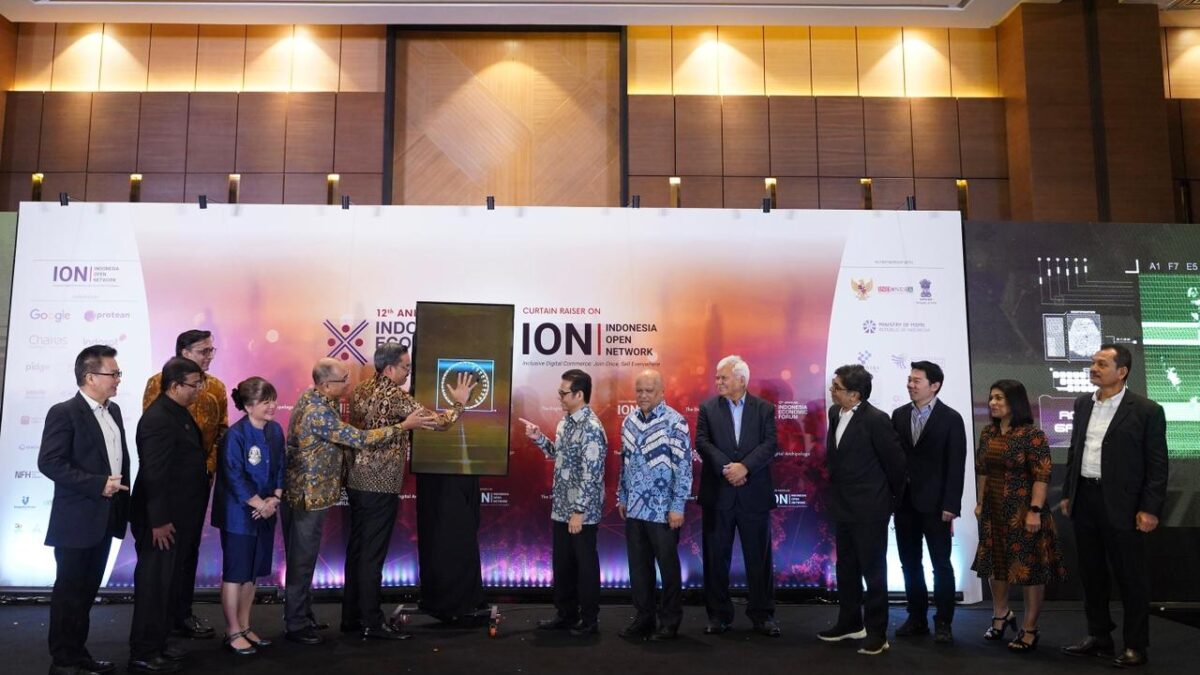
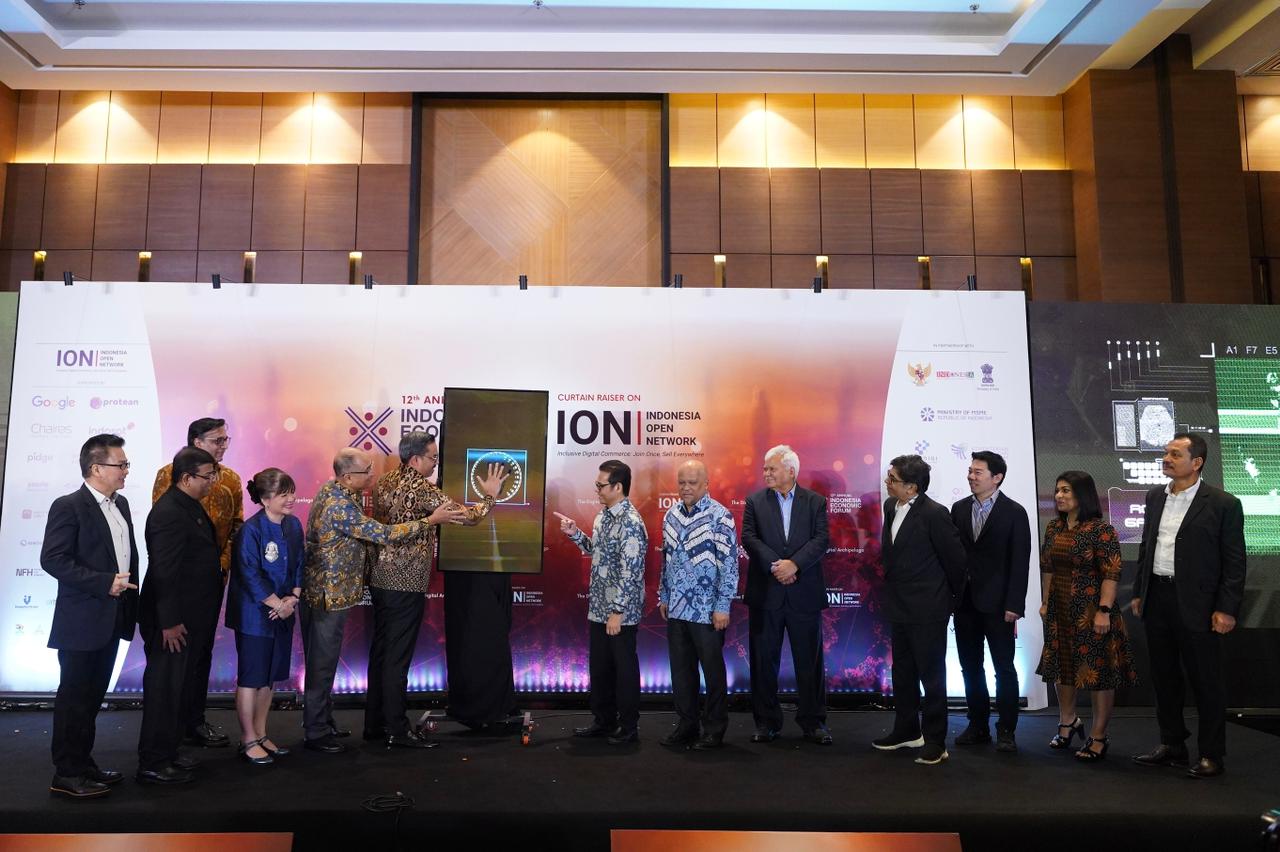
The Indonesia Economic Forum (IEF) announced today that it will host the “Curtain Raiser on Indonesia Open Network (ION)” on 5 February 2026 at Mangkuluhur ARTOTEL in Jakarta. The event, part of the 12th Annual Indonesia Economic Forum themed “The Digital Archipelago: Building Inclusive Digital Commerce Ecosystem,” will bring together senior government officials, global digital ecosystem leaders, and industry stakeholders.
The ceremony will be inaugurated by H.E. Mamman Abdurrahman, Indonesia’s Minister for Micro, Small and Medium Enterprises (MSMEs), accompanied by H.E. Nezar Patria, Vice Minister of Communications and Digital, and will feature high-profile panel discussions on financial services, logistics, and digital innovation, followed by a press conference.
ION is a direct outcome of the India–Indonesia technology partnership momentum catalyzed by the MoU on cooperation in Digital Development signed in New Delhi in January 2025 during the Prabowo–Modi visit, which created a strong diplomatic and implementation bridge for sharing proven Digital Public Infrastructure (DPI) approaches and open-network learnings. Building on that foundation, ION is being shaped as a private-sector, publicly purposed open digital commerce utility—guided by leaders who helped build India’s open-network movement (including ONDC’s founding leadership) and advanced through active collaboration with Indonesian ministries and ecosystem partners.
The prominent figures who have been inducted into the ION Advisory Council are Shinta Kamdani, Chairman of Indonesia Employers Association (APINDO), Dr Ilham A Habibie, Chairman of Indonesian Engineers Association (PII), Rudiantara, Former Minister of KomInfo & President Commissioner of Indosat Ooredoo Hutchison along with Sandeep Chakravorty, Ambassador of India to Indonesia, Dr R S Sharma, former Chairman ONDC and T Koshy, Founding MD & CEO of ONDC, with several others in process of confirmation. The ION Steering Committee of industry professionals are being put together to help in the creation, implementation and adoption of ION, such as Sachin V Gopalan, Ronald Walla, Primus Dorimulu, Dr Sonny H Sudaryana, Dr Bayu Prawira Hie, Dr. Rani Burchmore and more.
ION: A New Model for Inclusive Commerce
ION is conceived as an open, interoperable digital public infrastructure (DPI) designed to facilitate seamless connectivity among buyer applications, seller systems, logistics platforms, payment services, and other digital services—without locking participants into a single marketplace or proprietary platform. It aims to reduce fragmentation and create a neutral digital commerce layer that enables MSMEs, cooperatives, smallholders, artisans, and local enterprises to engage in the digital economy more equitably and at scale.
Unlike traditional e-commerce platforms that operate as closed marketplaces, open networks like ION use shared technical protocols and governance frameworks to enable interoperability across systems and services.
Global Precedents and Comparable Models
Indonesia’s push for an open commerce network draws inspiration from global efforts in digital public infrastructure and open-network commerce.
One of the most prominent examples is India’s Open Network for Digital Commerce (ONDC), launched in 2021. ONDC has been built to break down silos among e-commerce platforms by enabling buyers and sellers to transact across multiple apps and services using shared open protocols. Over its first four years, ONDC has facilitated hundreds of millions of transactions and expanded beyond retail into mobility, logistics, and financial services—helping small traders gain greater market access while fostering competition with established platforms.
A recent report tracking MSMEs in Tier II and Tier III Indian cities found that businesses saw an average of 20 percent increase in revenue after onboarding onto the ONDC network — an indicator of how digital market access via ONDC is translating into real economic gains for small sellers.
ONDC itself is part of a broader suite of Indian digital public infrastructure systems—often collectively referred to as India Stack, which includes open systems for identity verification, digital payments, document repositories, and data sharing.
Beyond South Asia, digital public infrastructure models have taken different forms. In Northern Europe, Estonia’s X-Road provides an open data exchange layer that enables secure and standardized information sharing across public and private services, facilitating interoperability among disparate systems.
In the European Union, initiatives such as Gaia-X are building federated data infrastructure aimed at fostering trusted data exchange across sectors while maintaining data sovereignty and interoperability.
In payments, Brazil’s Pix real-time payment system has become one of the most widely used digital rails in that country, supporting seamless, low-cost payments that underpin commerce and finance. Similarly, mobile money systems like M-Pesa in Kenya have effectively become de-facto digital infrastructure for economic activity even without direct government-led standards.
These examples highlight a global trend toward interoperable digital frameworks that lower barriers to participation, enhance competition, and support inclusion—especially for small businesses and underserved populations.
Strategic Partnerships and Operational Approach
Supported by partnerships with key public institutions as KemenUMKM, KomDigi, Kemendag, the Embassy of India, APINDO, and ALDEI, ION seeks to align Indonesia’s national MSME empowerment and digital ecosystem strategies with interoperable digital commerce infrastructure.
In its operational rollout, ION plans to (1) integrate with existing national and institutional digitization programs including SAPA UMKM, (2) attract major consumer ecosystems as on-network demand drivers, and (3) activate hyperlocal digital commerce through collaborations with KomDigi’s app ecosystem and logistics associations.
The network is being developed with technology and ecosystem partners such as Google, Protean e-Gov Technologies, Pidge, Networks for Humanity, COSS, SequelString, to ensure secure, scalable, and protocol-driven infrastructure capable of supporting nationwide digital commerce.
Looking Ahead
With ION, Indonesia is positioning itself at the forefront of a new generation of digital commerce infrastructure—one that seeks to combine public-interest governance with open standards to expand economic opportunity, enhance competition, and integrate millions of micro and small enterprises into the digital economy.