
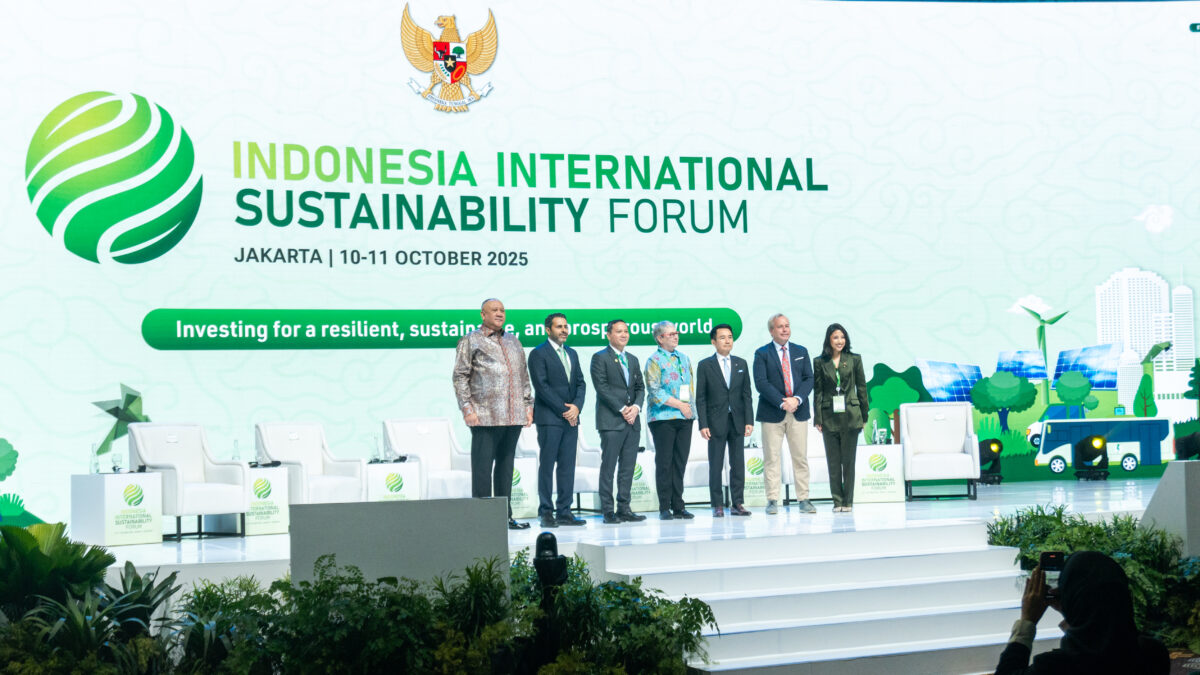

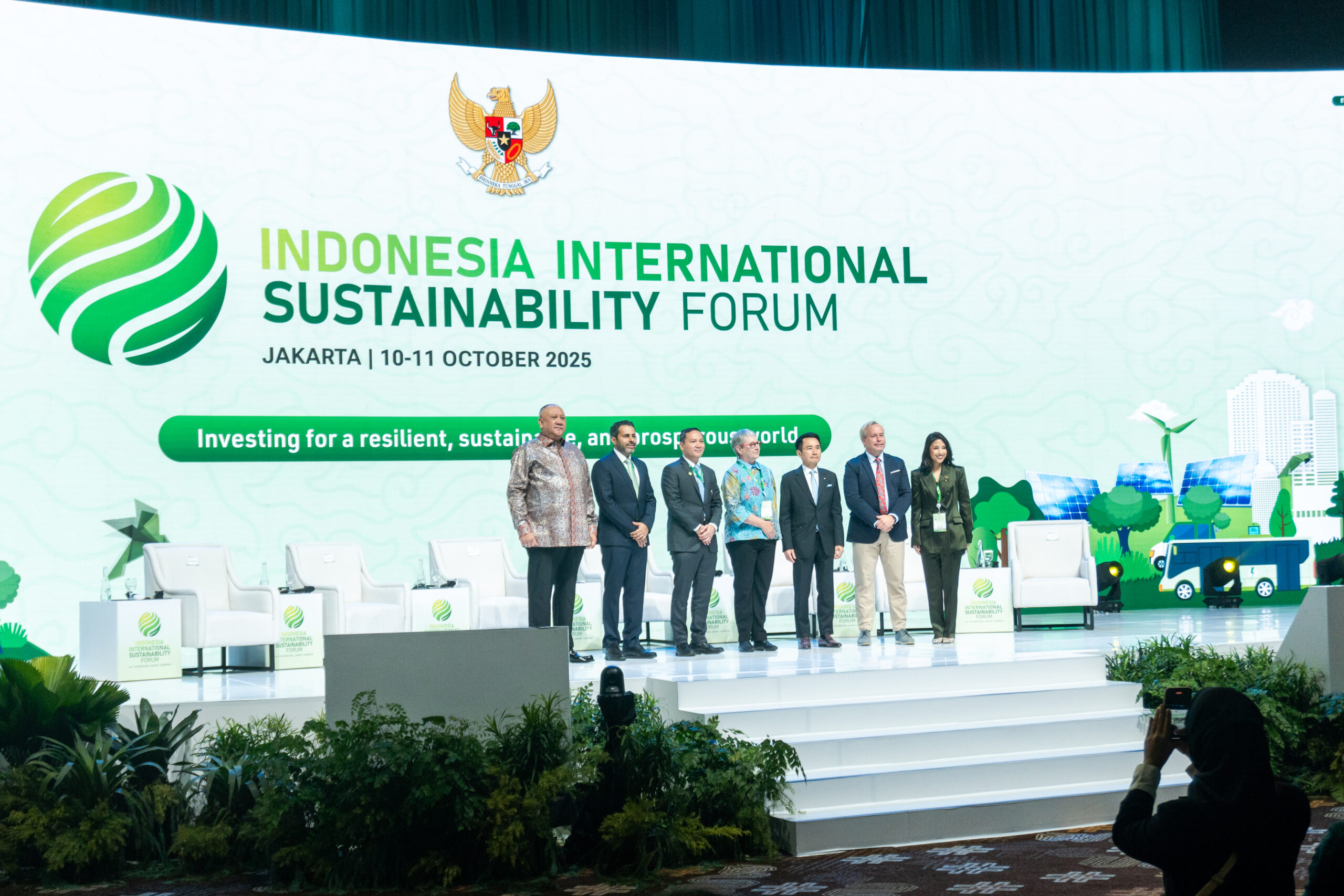
Jakarta, October 10, 2025 — The Indonesia International Sustainability Forum (ISF) 2025 officially opened today in Jakarta, reaffirming Indonesia’s leadership in charting a resilient and inclusive pathway toward a sustainable global economy.
Jointly organized by the Coordinating Ministry for Infrastructure and Regional Development, the Ministry of Investment and Downstream Industry/BKPM, and the Indonesian Chamber of Commerce and Industry (KADIN Indonesia), this year’s forum gathers over 250 global speakers, 100 business leaders, and philanthropic partners from around the world. The two-day event, themed “Investing for a Resilient, Sustainable, and Prosperous World,” is designed not only as a policy dialogue but as a concrete platform connecting global ambition with local opportunities.
The 2025 edition features high-level plenary discussions, thematic dialogues, investment roundtables, and an exhibition of Investment Projects Ready to Offer (IPRO), curated to accelerate collaboration and green investment across key sectors.
“Private Sector Must Lead Indonesia’s Green Growth” — Anindya Bakrie
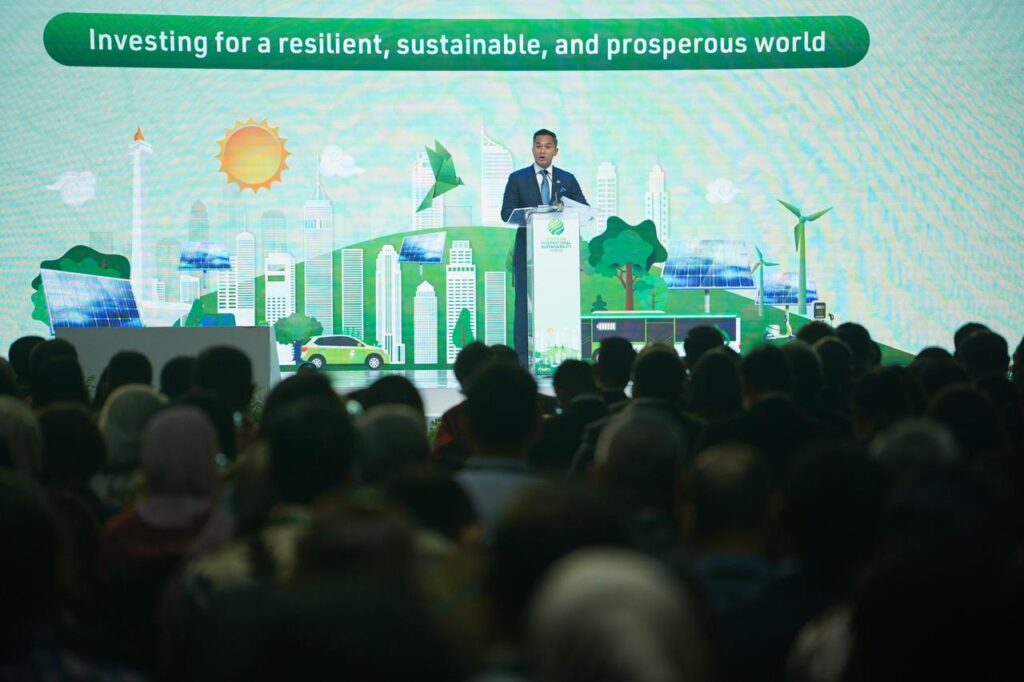
In his opening remarks, Anindya Bakrie, Chairman of KADIN Indonesia, emphasized that Indonesia’s growth story must align economic progress with environmental goals.
“This is not about choosing between economic and climate goals,” Bakrie said. “It is about aligning the two, unlocking new industries, innovating financing structures, and creating jobs that power both prosperity and sustainability.”
Citing data from Bloomberg New Energy Finance, Bakrie noted that achieving a net-zero Indonesia represents an investment opportunity worth USD 3.8 trillion, approximately 4% of the country’s cumulative GDP through 2050. He highlighted KADIN’s flagship initiatives, including the Net Zero Hub, the ASEAN Alliance on Carbon Markets, and the Regenerative Forest Business Hub, which are already translating sustainability ideas into real projects and partnerships.
“With the right coalitions within government and the private sector, Indonesia will not just participate in the global energy transition, we will lead it,” he concluded.
Agus Harimurthi Yudhoyono: “Sustainability Is Both a Moral Imperative and an Economic Strategy”
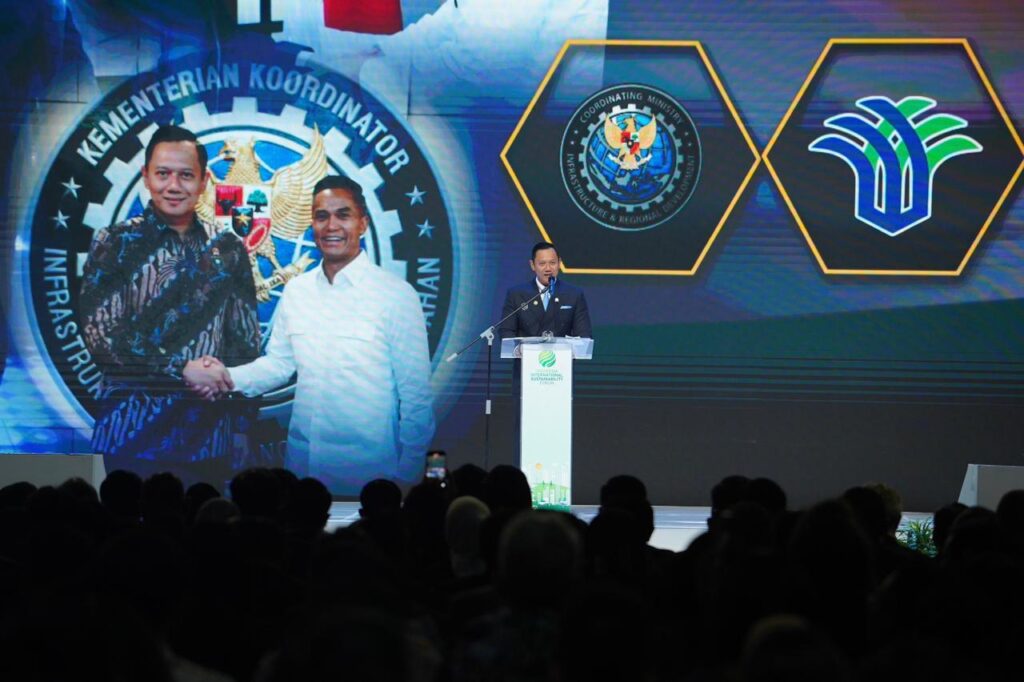
Delivering his keynote address, Agus Harimurthi Yudhoyono (AHY), the Coordinating Minister for Infrastructure and Regional Development, underscored that sustainability and economic growth are inseparable.
“We cannot afford to see climate and economic development as two separate agendas,” he said. “One cannot advance by sacrificing the other. We must achieve both.”
AHY outlined three foundational pillars of Indonesia’s sustainable development on food, water, and energy security, describing them as “the true foundation of sustainability.” He detailed government programs to expand food estates, revitalize irrigation networks, and achieve universal access to clean water by 2045, alongside the energy roadmap (RUPTL 2025–2034) which targets 69.5 gigawatts of new capacity, with 75% from renewable sources.
He also stressed the importance of downstream industrialization, decarbonization, and green investment as drivers of future growth, noting that Indonesia will need around USD 650 billion in infrastructure investment to sustain its development ambitions with USD 190 billion expected from private capital.
“Collaboration is the true engine of sustainable growth,” AHY said. “Our partnership with the Ministry of Investment and KADIN serves as the bridge between public policy and private execution.”
Rosan Roeslani: “Turning Vision into Execution”
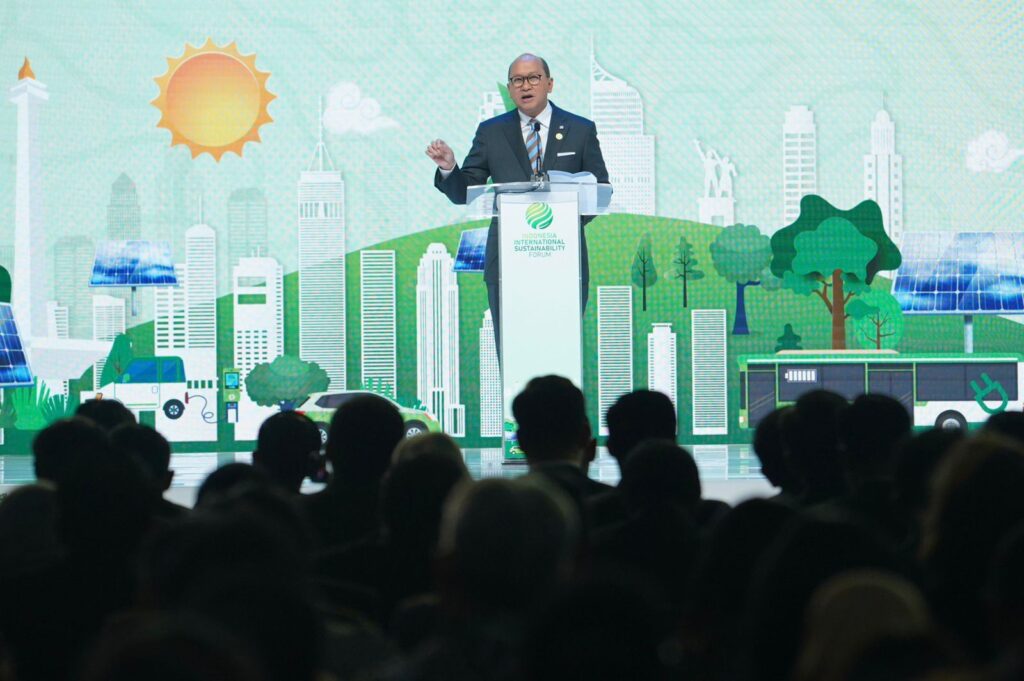
In officially opening the forum, Rosan Roeslani, Minister of Investment and Downstream Industry / Head of BKPM, reaffirmed Indonesia’s strong commitment to achieving net-zero emissions by 2060 or sooner, by 2050.
Highlighting Indonesia’s vast renewable potential with 3,700 gigawatts from solar, hydro, tidal, wind, and geothermal energy, Rosan also announced major initiatives in carbon capture and storage (CCS) and waste-to-energy development.
“Indonesia possesses one of the world’s largest CO₂ storage capacities, with an estimated 577 gigatons, enough for 200 years of storage,” he said. “We are building the foundation for Indonesia to become the CCS hub of Asia.”
He also announced the launch of a national waste-to-energy program in 33 cities, to begin implementation in November 2025, with an open and transparent bidding process.
“We know we cannot do this alone,” Rosan stressed. “We invite both local and international partners to work with us to turn vision into reality.”
He concluded by reaffirming the government’s commitment to regulatory reform and investment facilitation, noting that all business licenses and permits can now be processed through the Ministry of Investment simplifying procedures across 18 ministries.
With the recitation of Bismillahirrahmanirrahim, Rosan officially declared ISF 2025 open, calling it “a critical moment for execution” and collaboration.
Forging a Path to a Greener Future
Across all three speeches, one message resonated clearly: Indonesia’s sustainability transition must be collaborative, inclusive, and action-oriented. The ISF 2025 stands as a testament to the nation’s growing influence in global sustainability leadership, a bridge between the Global South’s aspirations and the world’s collective climate goals.
As Bakrie summed up, “The opportunity is clear. What matters now is execution.”