
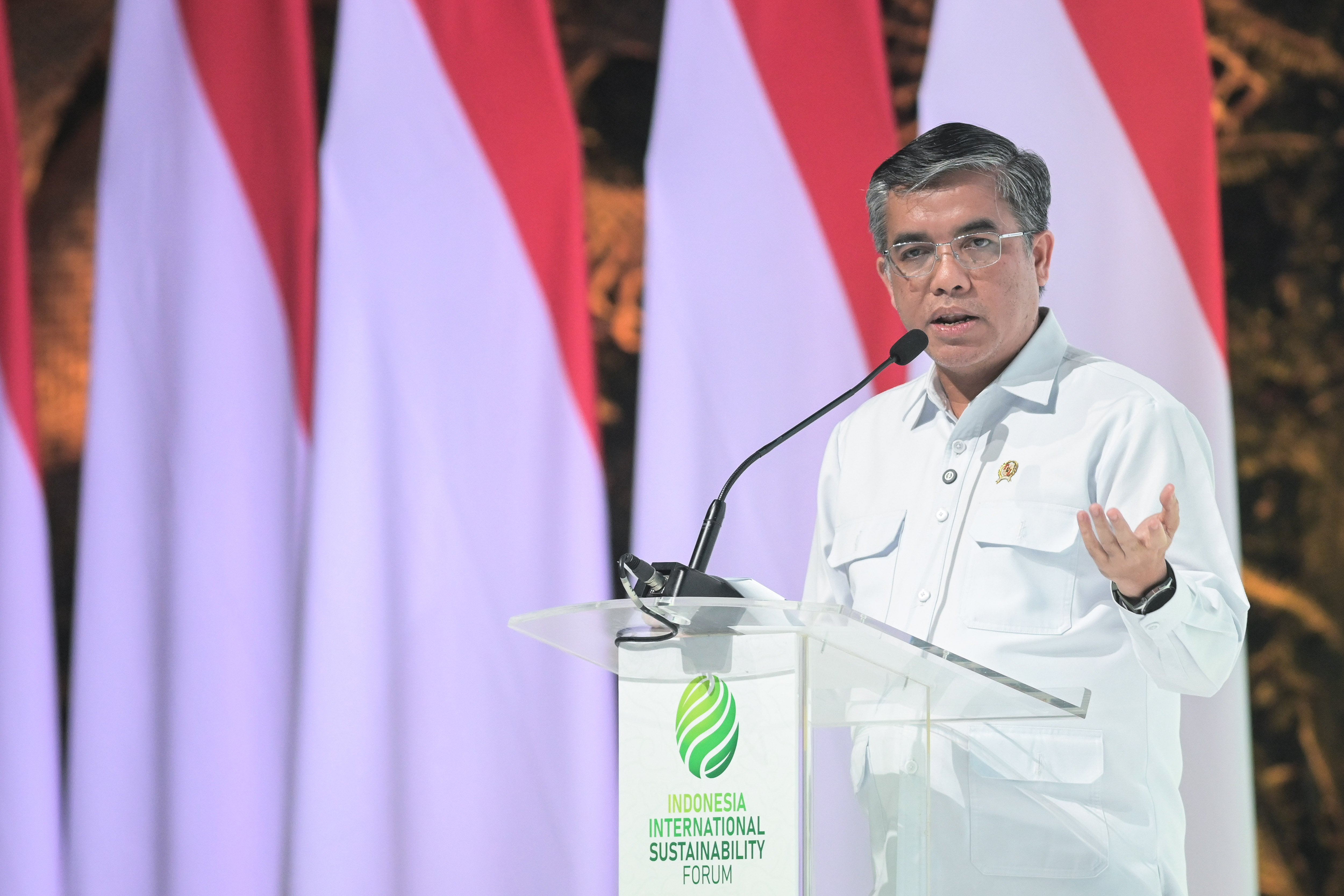

Jakarta, October 11, 2025 — Indonesia’s Minister of Manpower, Yassierli, emphasized that the country’s green transition will only succeed if its people are ready to meet the demands of a new, sustainable economy. Delivering his keynote address at the Indonesia International Sustainability Forum (ISF) 2025, he outlined the government’s commitment to preparing a skilled workforce for the era of green jobs.
He noted that climate change is not only an environmental challenge but also an economic risk. Without proper mitigation, the world could face an 18 percent decline in global GDP in the next three decades, equivalent to a potential loss of 38 trillion US dollars each year. In response, Indonesia has committed to achieving net-zero emissions by 2060 or earlier, and to reducing greenhouse gas emissions by 32 percent by 2030.
Yassierli stressed that the Ministry of Manpower is aligning its policies and programs with this national agenda by integrating green jobs into the country’s development plan, revising competency standards, and strengthening community-based training centers to deliver green skills at the grassroots level. The ministry has set an ambitious target to upskill and reskill at least one million people each year until 2029, ensuring that workers are prepared for new opportunities in the renewable energy and sustainability sectors.
Citing a study by the Ministry of Energy and Mineral Resources, he said that the transition will open nearly 2,000 new types of occupations by 2029, most of them in the power and electricity sectors. “We see this transition not as a threat but as an opportunity to create not only new jobs but also better jobs,” Yassierli said. The number of green jobs in the energy sector alone is projected to reach more than two million by 2029, a sixfold increase compared to 2022.
Despite these prospects, he acknowledged several key challenges in building Indonesia’s green workforce, including the mismatch between vocational curricula and industry needs, regional disparities in training access, outdated facilities and limited instructor experience, and the need to better connect green transition efforts with productivity growth. To overcome these challenges, the ministry is collaborating with the ASEAN Productivity Organization to develop a green productivity framework and dashboard to guide future policies and training programs.
Yassierli emphasized that Indonesia’s green transition must be people-centered and inclusive. It should protect workers’ rights and livelihoods while ensuring fair and safe working conditions, especially in high-risk and informal sectors. He also called for stronger investment in inclusive and adaptive vocational training, expanded social protection and re-skilling support, and better coordination across climate, labor, and fiscal policies.
He further shared the Ministry’s ongoing transformation of its vocational training centers, which include 34 national centers, nearly 300 regional ones, and more than 4,000 community-based centers, to support reskilling and upskilling in renewable energy industries such as solar panel installation, wind turbine operation, and battery storage systems.
“Indonesia is entering a decisive phase of its green transition, and the workforce must be ready to meet it,” Yassierli concluded. “The green transition is not just an environmental agenda. It is an opportunity to create better jobs, stronger communities, and a more inclusive future for Indonesia.”