
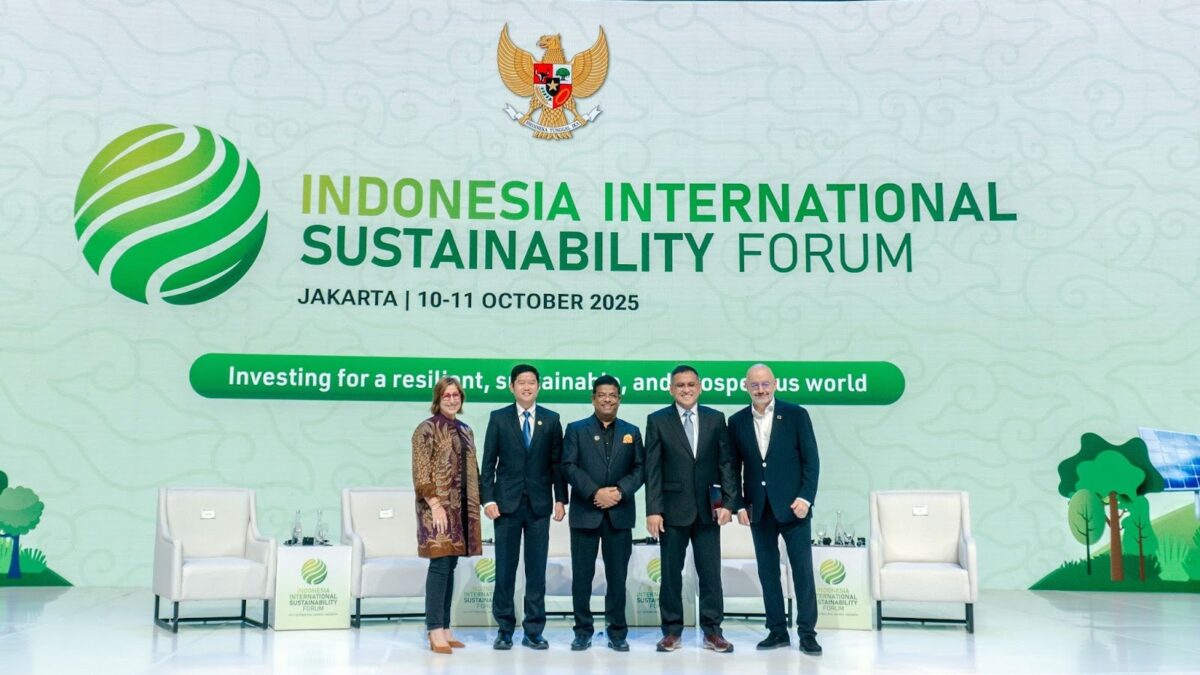

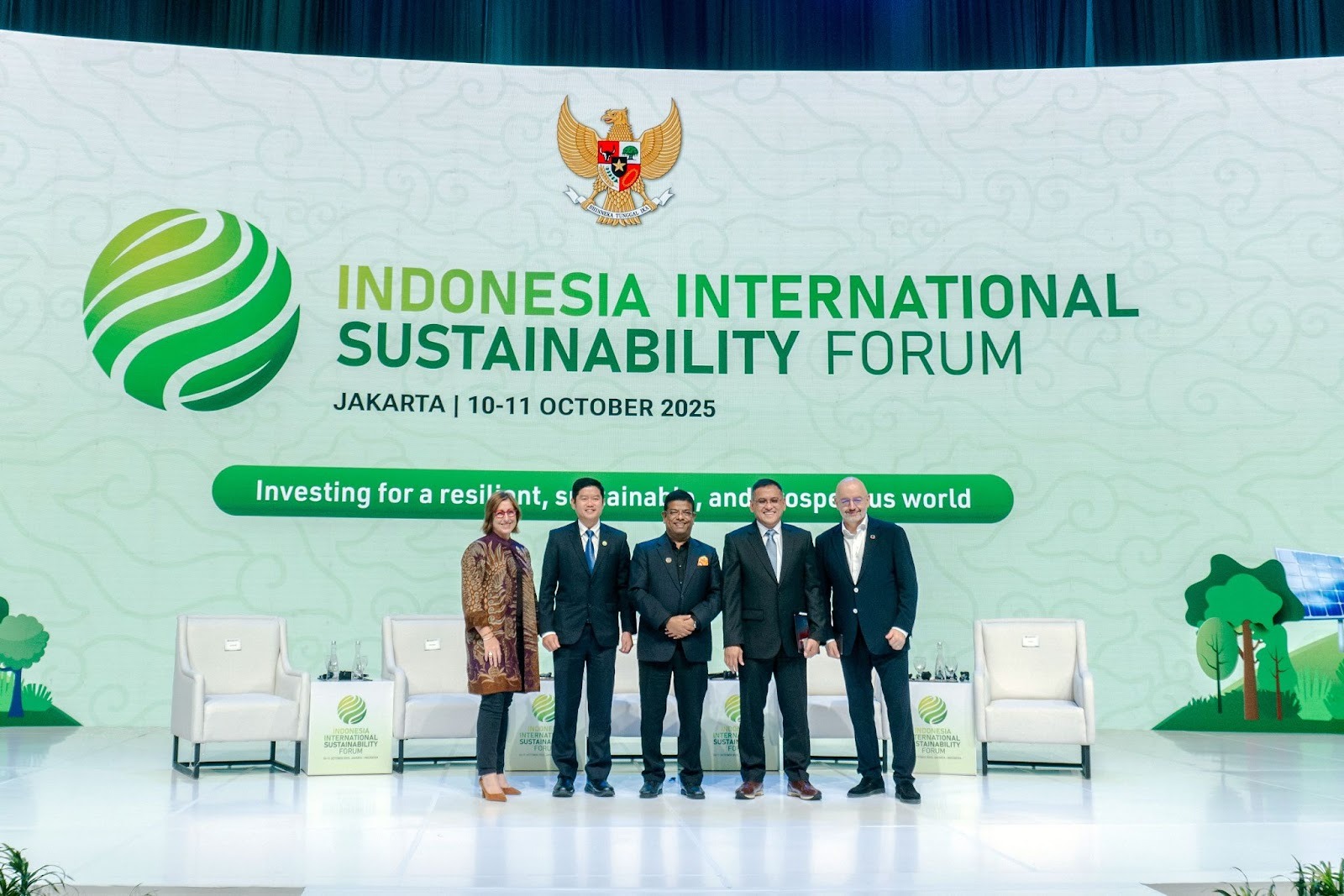
Jakarta, October 10, 2025 — At the Indonesia International Sustainability Forum (ISF) 2025, experts from leading agribusiness and sustainability organizations came together to discuss how innovation and collaboration can drive the transformation of the agricultural sector to ensure food security for future generations in a panel session titled “Feeding the Future: Sustainable Innovation to Boost Agriculture Productivity”. Moderated by Sachin Gopalan, CEO and founder of the Indonesia Economic Forum, the session featured Anita Neville of Sinar Mas Agro Resources and Technology (SMART), Peter Bakker of the World Business Council for Sustainable Development (WBCSD), Djap Tet Fa of Astra Agro Lestari, and Rahmad Pribadi of Pupuk Indonesia.
Collaboration as the Foundation for Food Security
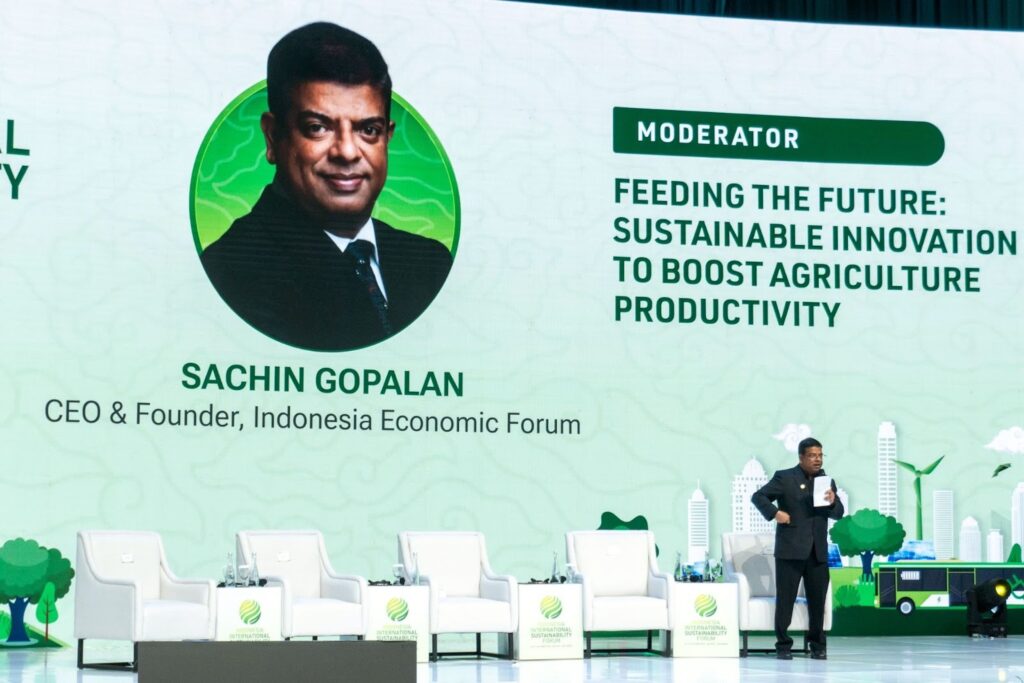
Opening the discussion, Sachin Gopalan highlighted the changing face of agriculture, where the younger generation is increasingly reluctant to pursue farming. He emphasized the urgent need for innovation and technology to make the sector more efficient, sustainable, and appealing to future farmers.
Djap Tet Fa underscored the importance of public-private partnerships in ensuring long-term food security. “Food security cannot be achieved by one sector alone. Governments, private companies, and communities must collaborate,” he said. He pointed to Astra Agro Lestari’s initiatives in replanting old plantations, developing bio-fertilizers, and supporting smallholders through access to financing, training, and technology. “No one should be left behind,” he added.
Strengthening Smallholders through Inclusive Growth
Building on the discussion, Anita Neville echoed the importance of partnership, stressing that smallholder farmers represent 40 percent of palm oil production in Indonesia. “Large companies like ours have a responsibility to support smaller actors. Through our inclusive closed-loop model, we help smallholders adopt sustainable practices, access better seeds, and improve productivity,” she said. She also emphasized the need for collective action and policy frameworks that support innovation and sustainable investment.
Boosting Productivity and Climate Resilience
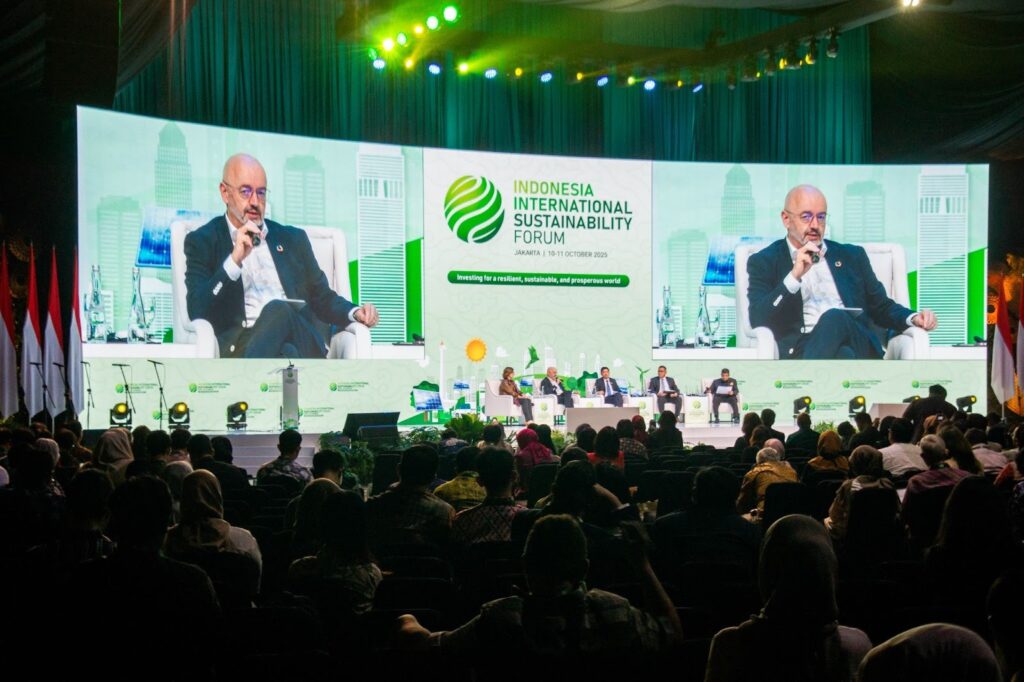
Peter Bakker provided a global perspective, citing findings from the new EAT-Lancet report and identifying three priority areas for the agriculture sector: regenerative farming, digital transformation, and resilience against climate impacts. He noted that “climate change is no longer a conceptual issue. The impacts are here now, and innovation must focus on both productivity and resilience.”
Rahmad Pribadi highlighted the crucial role of fertilizers in productivity, contributing more than 60 percent to agricultural yields. He discussed how smart precision farming and satellite-based systems are helping to optimize fertilizer use and reduce waste. “Sustainability is not only about agriculture but also about energy security. Agriculture can play a key role in supporting Indonesia’s transition to a low-carbon economy,” he said.
Investing in the Next Generation of Farmers
The panel concluded with a forward-looking discussion on scaling innovation and empowering youth in agriculture. Neville pointed out that most engagement programs target farmers aged 45 and above, overlooking the younger generation. “We need to rethink how we support 18-to-35-year-olds and treat them as small business owners, not just beneficiaries,” she said.
As the session closed, each speaker shared their vision for the next decade. From advancing R&D and regenerative agriculture to expanding digital tools and financing access, all agreed that innovation, collaboration, and sustainability must go hand in hand to feed the future.