
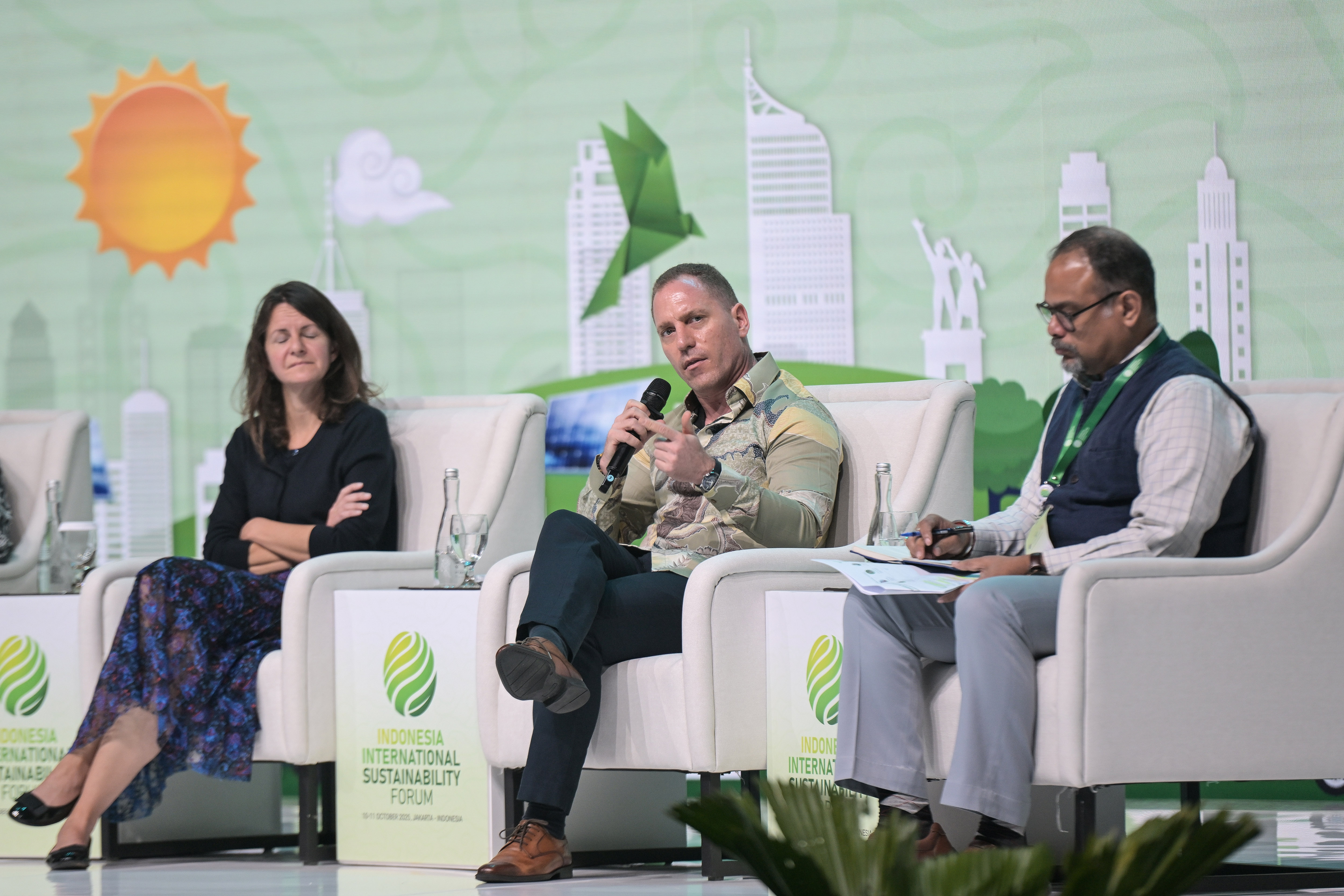

Jakarta, October 11, 2025 — The panel session “Next Generation Fuels: Scaling Biofuels and New Molecules to Bridge Energy Transition” at the Indonesia Sustainability Forum (ISF) 2025 brought together energy leaders and sustainability experts to discuss how emerging fuel technologies can accelerate Indonesia’s and the region’s transition toward a low-carbon future.
Moderated by Rijit Sengupta, CEO of the Centre for Responsible Business, the panel featured Agung Wicaksono, Director of Transformation and Business Sustainability at Pertamina; Raymond Naldi Rasfuldi, CEO of Tripatra Engineers and Construction; Fabby Tumiwa, Executive Director of IESR; Eveline Speelman, Partner and Board Member of Systemiq; and Mathieu Geze, Executive Director for APAC of HDF Energy.
Indonesia’s Biofuel Success Story and the Next Frontier

Opening the discussion, Agung Wicaksono shared Pertamina’s journey in biofuel transformation, from the initial B2.5 program to the current B40 blend, highlighting its dual economic and ecological benefits. “Indonesia has achieved zero diesel imports since implementing B20 and now B40,” he said. Pertamina’s expansion includes bioethanol for gasoline and sustainable aviation fuel (SAF) made from used cooking oil (minyak jelantah), which is already powering domestic flights. “This is not only about reducing carbon emissions but also building a circular economy where communities can turn waste into value,” Agung emphasized.
Systemic Shifts in Global Energy Use
Eveline Speelman provided a broader systems perspective, noting the global acceleration of renewable energy and electrification. As renewables dominate energy supply, the role of fuels will narrow but remain crucial in aviation, shipping, and heavy industry. “While electricity could cover up to 70% of final energy use, the remaining 30% still depends on advanced fuels and carbon molecules,” she explained, citing growing project pipelines in hydrogen, ammonia, and SAF globally, including several projects in Indonesia.
Hydrogen and Affordability
Representing HDF Energy, Mathieu Geze discussed hydrogen’s potential to support Indonesia’s energy resilience, especially in remote regions. “Hydrogen can replace imported diesel for power and maritime uses in eastern Indonesia,” he said, stressing the importance of balancing sustainability with affordability. “The challenge for developing economies is ensuring that clean energy remains competitive while supporting growth.”
Scaling Investment and Infrastructure

Raymond Naldi Rasfuldi of Tripatra addressed the challenges of scaling new fuel technologies, underscoring the need for “bankable demand” and sustainable feedstock ecosystems. He highlighted Indonesia’s potential to produce 16–17 million tons of biogenic-based fuels but warned that commercial viability hinges on reliable supply chains, traceability, and innovative financing. “A ‘book-and-claim’ platform could help decouple emissions reduction from physical fuel trade and enable carbon credit opportunities,” he noted.
International Cooperation and Financing
Fabby Tumiwa stressed that access to technology, finance, and capacity building are key for emerging economies to advance the energy transition. “Blended finance mechanisms and international partnerships can help reduce production costs and make new fuels competitive,” he said. He also called for stronger institutional capacity and adaptive regulation to support innovation. “We need bankable policies and implementation frameworks, not just targets,” Fabby added.
Toward an Enabling Ecosystem
The panel concluded that policy alignment, financial incentives, and partnerships are vital to unlocking next-generation fuels. As Speelman noted, “Each project requires a tailored enabling environment, from risk-sharing mechanisms to coordinated off-take agreements, to move from pilot to scale.”
Fabby echoed this sentiment, urging governments to move from target-setting to execution. “We are good at making national targets, but we need to back them with clear implementation plans, fiscal incentives, and risk-reduction mechanisms,” he said.
Closing the session, Rijit Sengupta summarized key takeaways: innovative financing, mission-driven implementation, collective action through ecosystem collaboration, and stronger development cooperation between nations and institutions.