
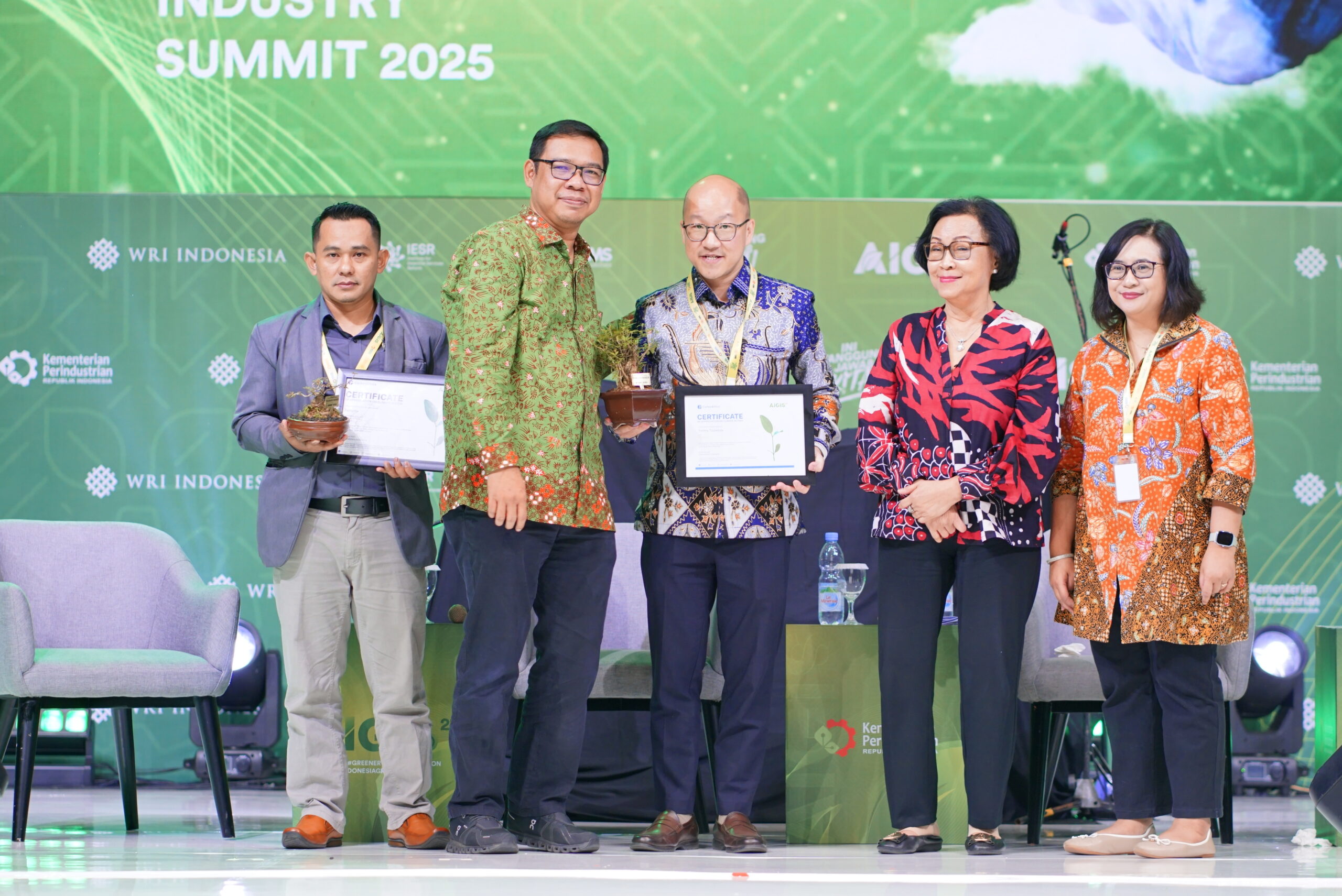

Jakarta, August 22, 2025 — The Annual Indonesia Green Industry Summit (AIGIS) 2025, organized by the Ministry of Industry at the Jakarta Convention Center (JCC) on August 20–22, concluded its Green Talks series with a panel titled “Closing the Loop, Opening Opportunities: Best Practices of Circular Economy in Indonesia.” The session showcased real-world examples from the pulp & paper sector, sustainable packaging innovators, and the textile industry that are driving circular transformation.
The session was moderated by Anandita Laksmi Susanto, Senior Advisor at GIZ, and featured three speakers: Liana Bratasida (Indonesian Pulp and Paper Association/APKI), Tommy Tjiptadjaja (Co-Founder & CEO, Greenhope), and Tamami (Compliance Manager, PT Kahatex).
Pulp and Paper Industry: Commitment to Circularity
Liana Bratasida highlighted the pulp and paper industry’s strategic role in advancing circular economy practices.
“Our industry has long applied the 5R principles — reduce, reuse, recycle, recover, and renew. Nearly 90% of pulp raw materials in Indonesia come from sustainably managed industrial plantations,” she explained.
She also emphasized the reuse of waste materials as part of the value chain.
“Paper waste is not only recycled but also utilized as a source of biomass energy. This ensures circularity across the entire value chain,” Liana added.
Eco-Friendly Innovation: Greenhope’s Solution
Tommy Tjiptadjaja shared how Greenhope is providing eco-friendly materials through biodegradable bioplastics.
“Conventional plastics only pollute, but with bioplastic technology, we can close the material loop while creating new economic opportunities for cassava farmers as raw material suppliers,” Tommy said.
He underlined that technology alone is not enough without systemic support.
“Technology without an ecosystem won’t succeed. We need clear regulations and consumer awareness to ensure that circular products have a sustainable market,” he added.
Textile Transformation: PT Kahatex
From the textile sector, Tamami presented PT Kahatex’s initiatives to reduce waste and improve energy efficiency.
“We recycle wastewater through treatment facilities that produce reusable water for production. This way, the water cycle within the factory is effectively closed,” he explained.
He also stressed the importance of certification and regulatory compliance.
“Green certification not only fulfills legal obligations but also enhances corporate reputation and access to global markets,” Tamami remarked.
Collaboration as the Key to Circular Economy
Moderator Anandita Laksmi Susanto closed the session by highlighting that the best practices across sectors conveyed one clear message: the circular economy can only be achieved through strong collaboration among industries, government, and society.
Green Talks Panel 10 reaffirmed that closing resource loops is not merely an obligation, but a major opportunity to open new markets, foster innovation, and strengthen the competitiveness of Indonesian industries in the green transition era.