


Jakarta, October 10, 2025 — The first panel session titled “Securing Water for All: Advancing Water Security and Clean Water Access” of the Indonesia International Sustainability Forum (ISF) 2025 convened experts from government, business, and global organizations to address one of humanity’s most urgent challenges, ensuring clean and sustainable water access for all.
Water as a Fundamental Right
Opening the session, moderator Nadia Habibie, Executive Board of The Habibie Center, emphasized that water is not merely a resource but a basic human right. Yet billions around the world still lack access to safe water, and even fast-growing economies like Indonesia continue to face mounting stress on their water systems. “This conversation speaks to the essence of life itself,” she said.
The Indonesian Challenge: Abundance and Inequality

Rachmat Kaimuddin, Deputy Coordination on Basic Infrastructure at the Coordinating Ministry for Infrastructure and Regional Development, highlighted that Indonesia has an abundance of water but faces critical issues in its distribution and quality. “In Indonesia, we call it warung jamu, abbreviation for time, space, quantity, and quality,” he said. “Java Island is already under water stress, while other regions experience floods and droughts. It’s a storage, distribution, and treatment problem.”
He added that private sector participation is vital to bridge the investment gap. “The amount of investment needed is far beyond what public fiscal space can bear,” he noted.
Global Perspective: Governance and Local Empowerment

From the international standpoint, Nathalie Dorflinger, Watershed Science and Stewardship Director at Danone Waters, shared that water challenges are global, spanning from floods in Europe to droughts in Morocco and Mexico. She underlined the importance of local governance and community-based solutions.
“Water security must be managed at the local level,” she said, pointing to Indonesia’s watershed forums as an example of effective collaboration. “Protecting water means protecting livelihoods.”
Technological Breakthroughs: Desalination and AI Innovation

Salman Baray, Vice President Southeast Asia of ACWA Power, introduced lessons from Saudi Arabia’s large-scale desalination projects. “Sixty to seventy percent of our water comes from desalination,” he explained. “The cost has dropped by more than half in the last two decades thanks to technological innovation and operational efficiency.”
Complementing this view, Montgomery Simus, Global Director of Public Affairs, Policy, and Blue Finance at The Ocean Cleanup, presented how artificial intelligence is transforming water management. “We use AI to monitor and predict the movement of plastic waste in rivers and oceans,” he said. “This not only improves cleanup efficiency but also supports data-driven policymaking.”
Financing Water Infrastructure
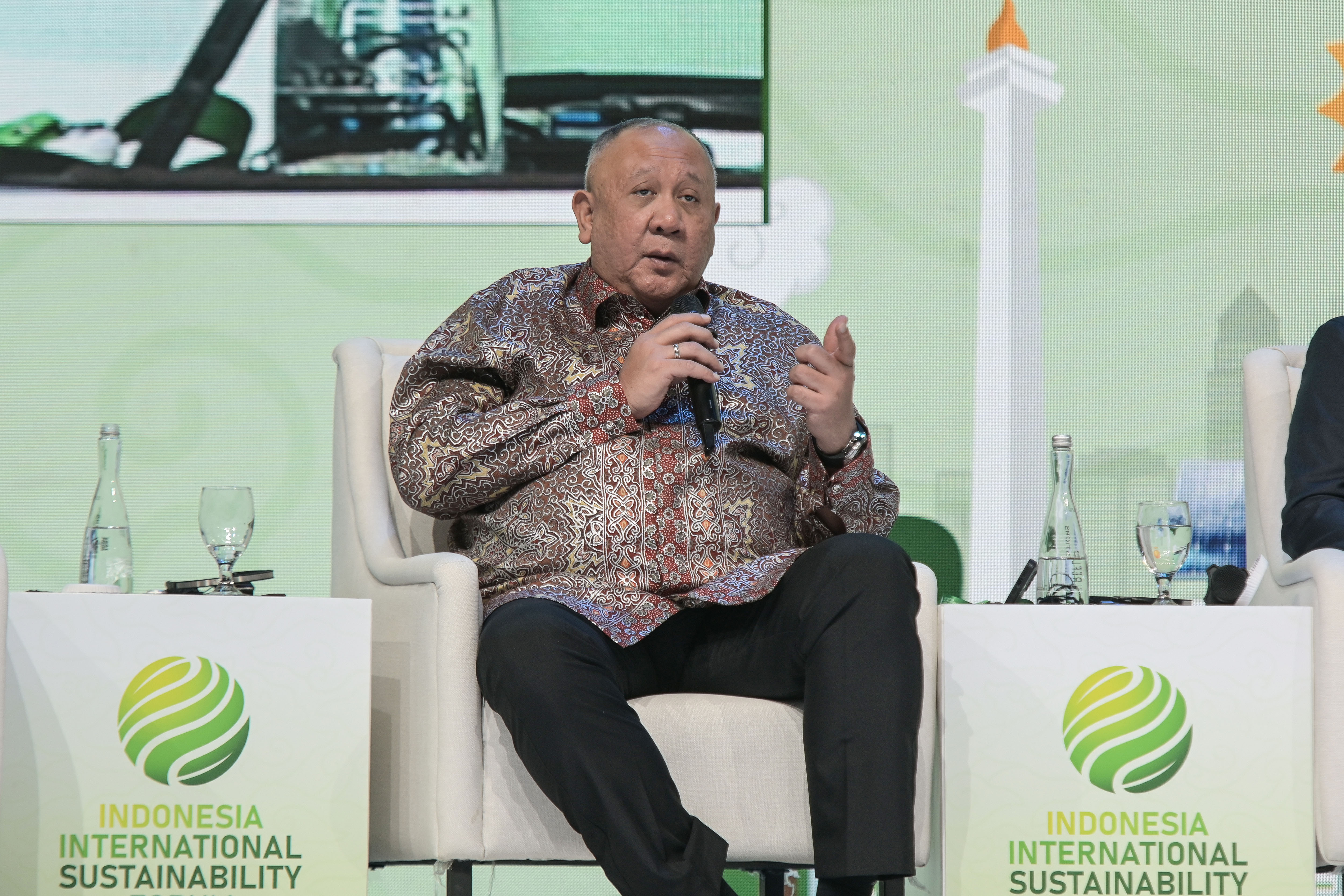
Addressing the financial aspect, Donny Donosepoetro, OBE, CEO of Standard Chartered Indonesia, noted that Indonesia presents a 40-billion-dollar investment opportunity in water infrastructure by 2030. “Water projects can be attractive to investors,” he said. “The challenge is to turn them into investable assets through strong governance and clear counterparty structures.”
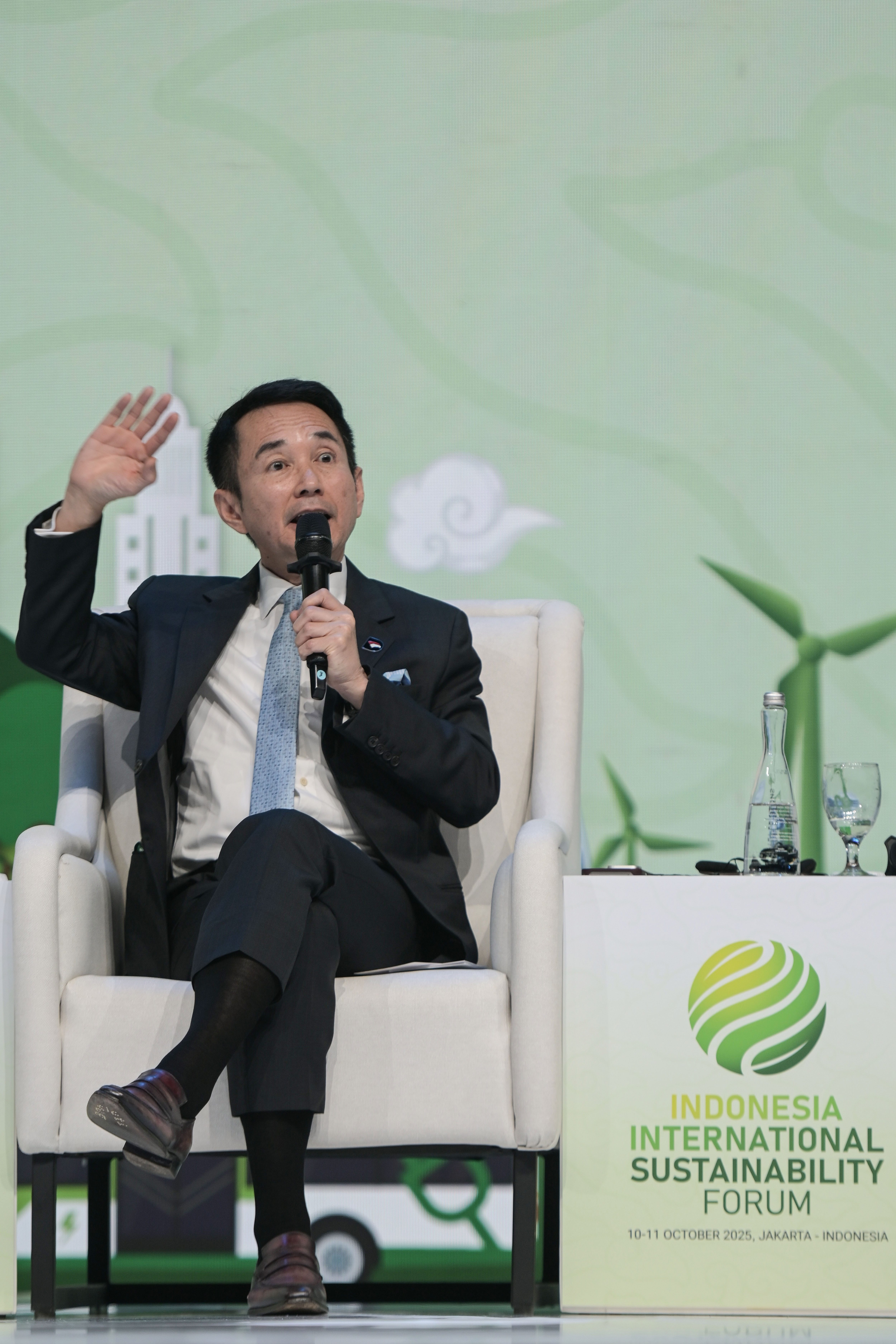
Lieng-Seng Wee, Managing Director Risk and Sustainability at Danantara, added that balancing social equity with financial viability is key. “Water must remain affordable, which limits pricing power,” he explained. “Innovative financing and partnerships are needed to align public good with private investment.”
Collaboration for a Sustainable Future
In closing, Rachmat Kaimuddin emphasized optimism. “The problem is not insurmountable,” he said. “We just need to work together.”
Moderator Nadia Habibie concluded by underlining that water security extends beyond infrastructure. “It is about systems, collaboration, and shared accountability,” she said. “Every innovation, every policy, every partnership must ultimately serve people and sustain life.”