
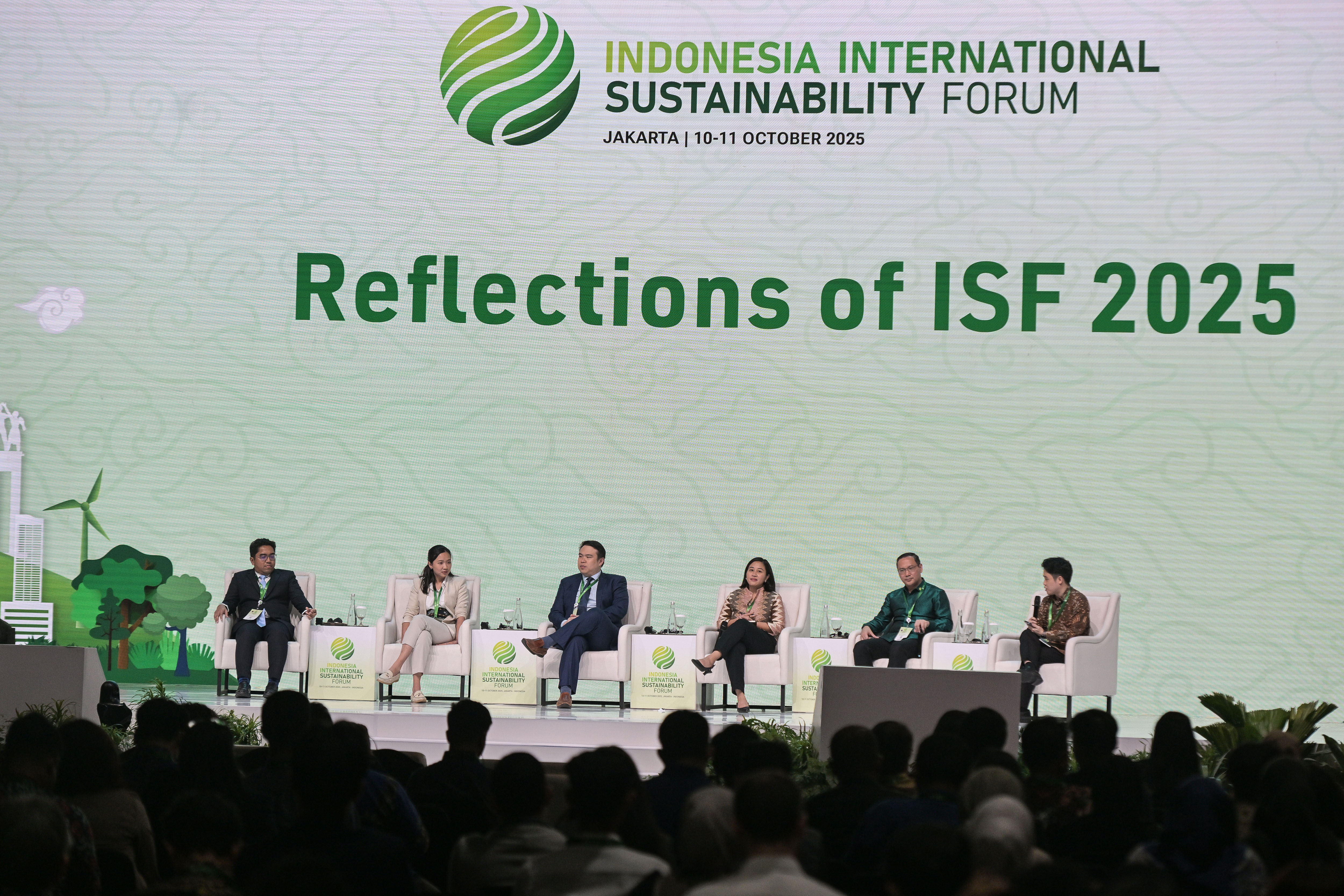

Jakarta, October 11, 2025 — The fireside chat of Indonesia International Sustainability Forum (ISF) 2025, moderated by Nicolas, brought together key figures who have been instrumental in shaping the forum’s evolution and advancing Indonesia’s sustainability agenda. Among them were Rachmat Kaimuddin, Deputy Minister for Basic Infrastructure of the Coordinating Ministry for Infrastructure and Regional Development and founder of ISF; Batari Saraswati, Director of Systemiq; Anthony Utomo, Chairman of KADIN Net Zero Hub; Mustika Wijaya, Executive Director of Solar Chapter; and Edo Mahendra, Principal Advisor to the Minister of Forestry.
Reflecting on ISF’s Origins

Rachmat Kaimuddin shared how the idea of ISF emerged in early 2023 after observing that major global sustainability discussions often lacked perspectives from developing nations. “We wanted to bring these conversations closer to home,” he said, emphasizing the need for a forum that combined Indonesia’s organizational strengths with discussions relevant to the Global South. Since then, ISF has grown into an annual event that bridges policy, business, and community action.
From Ambition to Action
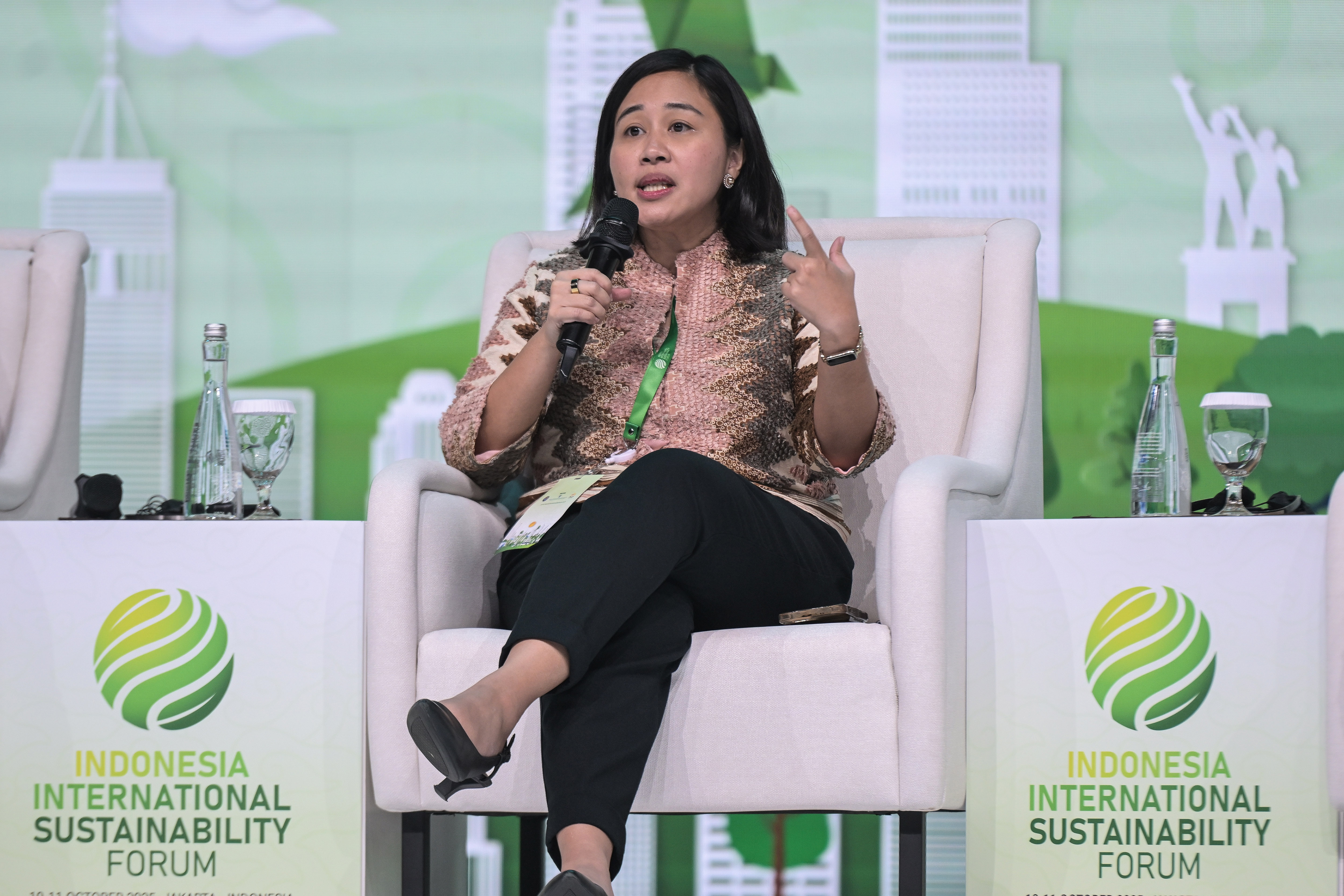
The panel discussion carried the theme *“Emission-Free Mobility: Catalyzing the Shift to Green Mobility.”*
ANTARA PHOTO/Sulthony Hasanuddin/sgd
Batari Saraswati highlighted how the forum’s focus has evolved over the years. “In ISF 2024, the discussion was about ambition. Now it has shifted to action, from setting goals to finding ways forward,” she said, noting that ISF has matured from outlining net-zero commitments to identifying real pathways and solutions for implementation.
Collaboration and Competitiveness
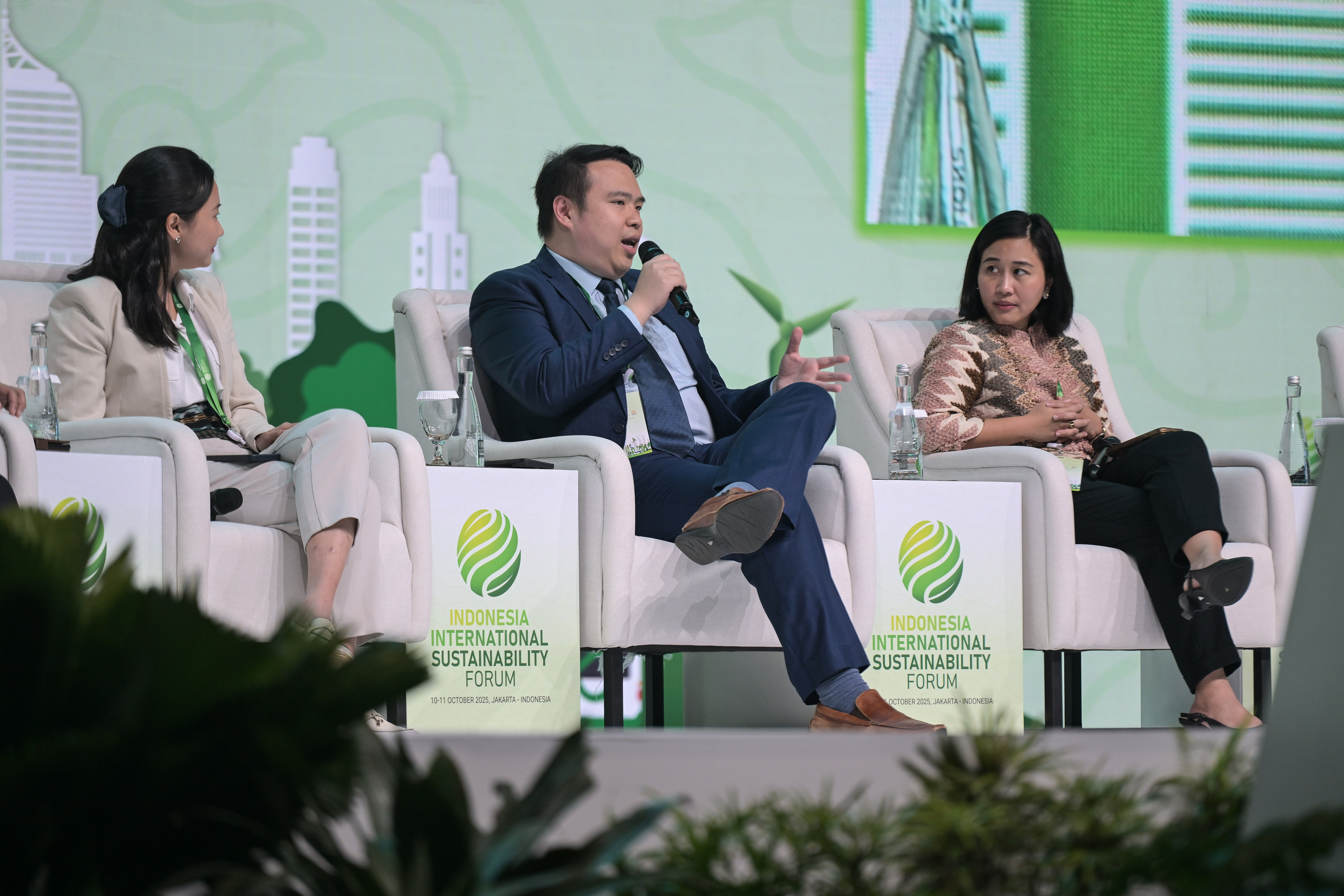
The discussion session served as a reflection on the implementation of ISF 2025.
ANTARA PHOTO/Sulthony Hasanuddin/sgd
Representing the private sector, Anthony Utomo emphasized ISF’s growing role as a convergence point for innovation and competitiveness. He noted how private sector collaboration has accelerated the green transition, citing Indonesia’s rapid progress in electric vehicle adoption as proof that sustainability and growth can advance together.
Youth and Grassroots Leadership

The discussion session served as a reflection on the implementation of ISF 2025.
ANTARA PHOTO/Sulthony Hasanuddin/sgd
Mustika Wijaya shared her experience leading Solar Chapter, a grassroots initiative providing solar-powered water systems for rural communities. She reminded the audience that sustainability should not only focus on environmental outcomes but also on lasting social impact. “Solutions should not just look good in pictures but must last through generations,” she said.
Indonesia as a Global Sustainability Leader
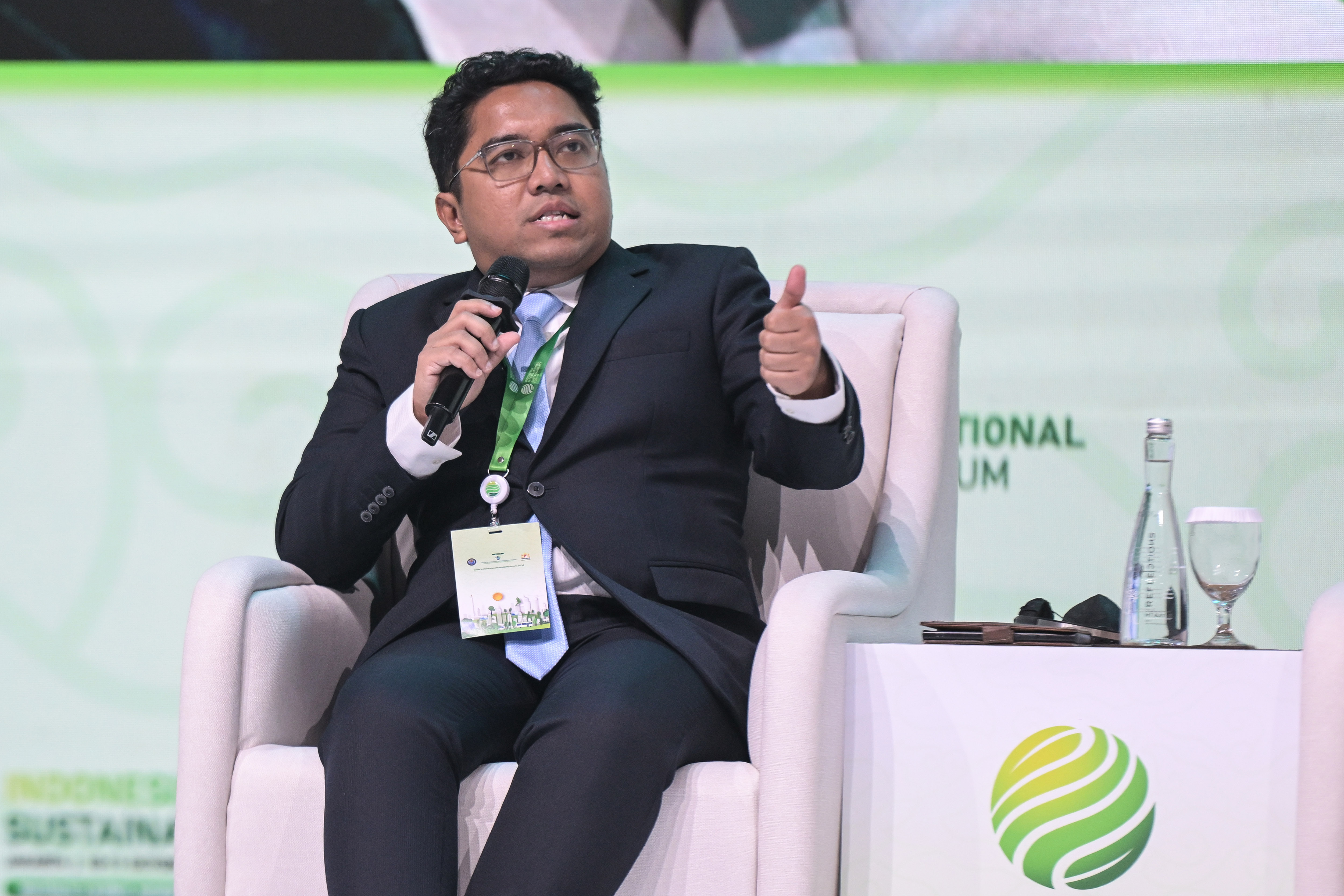
The discussion session served as a reflection on the implementation of ISF 2025.
ANTARA PHOTO/Sulthony Hasanuddin/sgd
Edo Mahendra reflected on ISF’s growing significance as a collaborative platform that unites thought leadership, partnerships, and practical results. He encouraged expanding inclusivity to involve more local innovators and international stakeholders. “Indonesia can make ISF the flagship sustainability forum for the world,” he said, noting that the country’s leadership on forestry, energy, and industry positions it at the center of global climate action.
The discussion concluded with a shared vision for ISF’s future which is to maintain openness, deepen collaboration, and continue as a bridge between ideas and implementation. “Indonesia needs this event, maybe the Global South needs this event, and hopefully the world needs this event,” Rachmat said, closing the session with a reminder that ISF’s real impact happens not only during the forum but throughout the year that follows.