
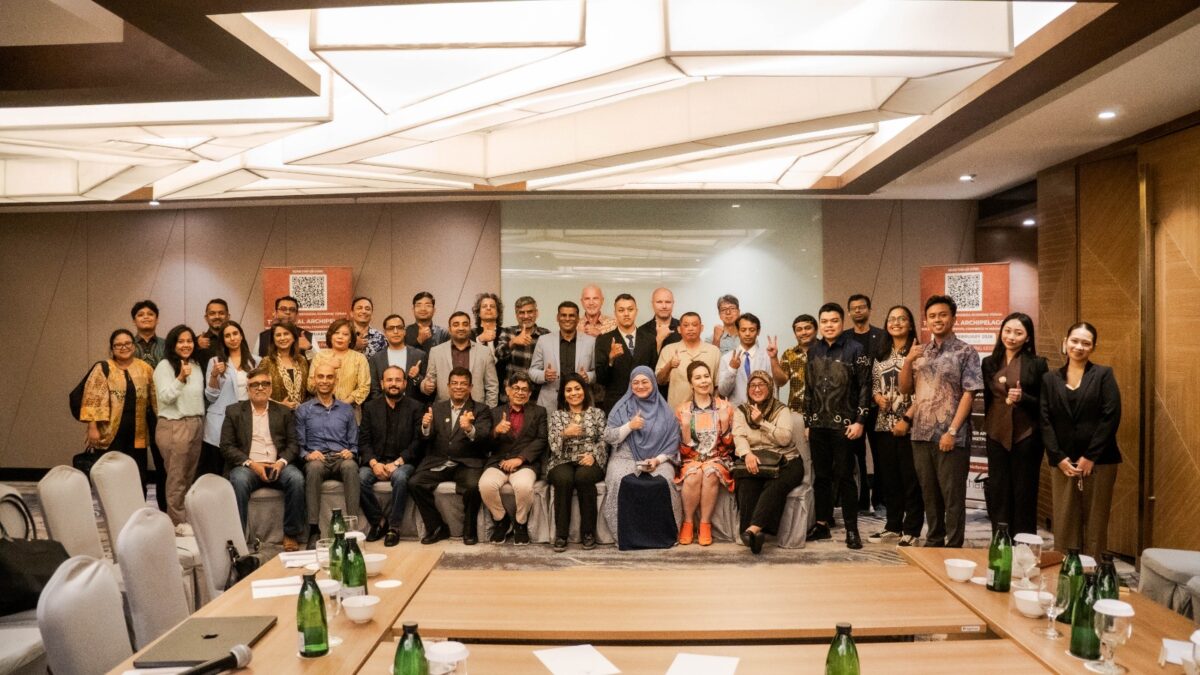

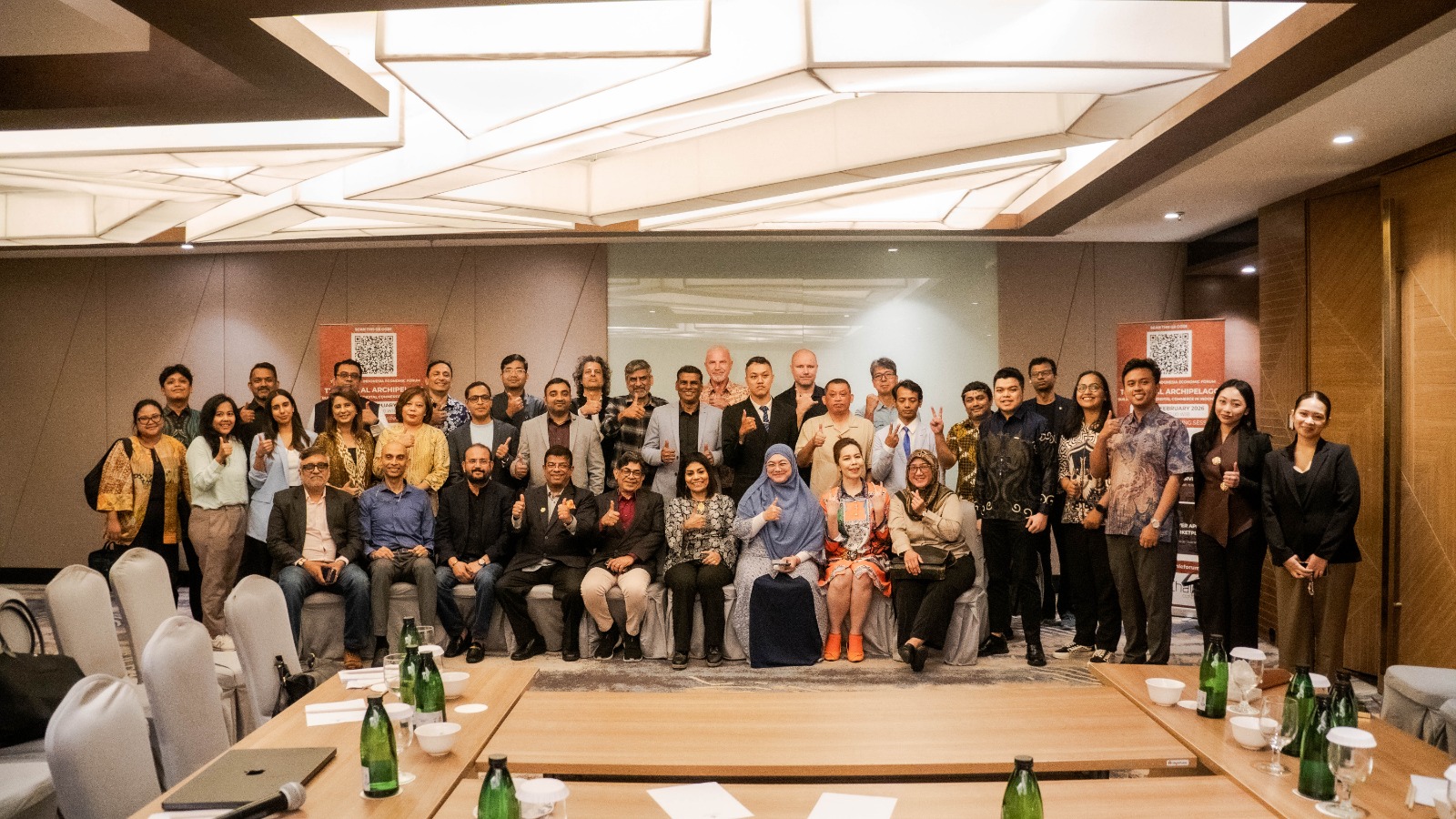
JAKARTA — The second day of the 12th Indonesia Economic Forum (IEF) at ARTOTEL Suites Mangkuluhur continued on Friday (6/2/2026) with a series of business matching sessions. The Buyer Apps & Marketplace Business Matching and Seller Apps & MSME Enablers Business Matching sessions served as strategic spaces to connect buyer applications, marketplaces, MSMEs, village cooperatives, and digital enablers within a single ION network, aimed at driving wider market adoption and real-world implementation among businesses.
Unlike formal panels, this session was highly practical. Participants took turns introducing themselves, explaining their business models, and collectively exploring how ION could reshape their operations. The focus shifted from “what is ION” to “how do we actually use it on the ground.”
From Closed Platforms to Open Networks
A strong theme that emerged was that ION is not a threat to existing marketplaces, but rather an expansion of their market reach. Many e-commerce players acknowledged that their coverage remains geographically and categorically limited. Through ION, they can continue operating as usual while gaining access to more sellers, more buyers, and previously hard-to-reach regions.
Discussions highlighted the key difference between traditional platforms and open networks. In the old model, a single app controls both buyers and sellers. Under ION, roles are separated: buyer apps focus on serving buyers, while seller apps serve sellers. Participants noted that this logic is already familiar in daily life, such as buying flight tickets via Traveloka while airlines remain the actual service providers.
The Role of Buyer Apps: Banks and Telcos as Market Gateways
Banks and telecommunications operators were identified as promising buyer apps. Bank BRI, with tens of millions of MSME accounts, is envisioned as a key entry point for shopping within ION directly from its banking app. Users could conduct transfers and payments as usual, while also accessing an “ION shopping” feature connected to multiple seller apps.
A similar model was proposed for Telkomsel and Indosat. With their vast user bases reaching remote areas, both companies could integrate ION features into their apps, enabling consumers to shop without downloading new marketplaces.
For established marketplaces, joining ION offers not only access to new markets but also the ability to add services they do not currently provide—such as financing, insurance, or additional logistics options—without building them from scratch.
Consumer Protection and Network Governance
Some participants raised concerns: does an open network mean anyone can join without standards? The answer was clear—no. ION is designed with verification mechanisms, reputation systems, and tiered complaint handling, similar to India’s ONDC model.
If a transaction dispute arises, resolution begins between the buyer app and seller app. Only if unresolved does the issue escalate to the network level. A reputation system also tracks reliability in delivery and product quality.
Seller Apps: Bringing MSMEs to the National Market
On the seller side, strong emphasis was placed on MSMEs and village cooperatives. The government is promoting the SAPA UMKM super app as a digital identity and commerce gateway for millions of businesses. Of approximately 5 million priority MSMEs, around 4 million are considered to already have authentic Indonesian products ready for commercialization but are not yet digitally transaction-ready.
A key strategy discussed was the digitalization of traditional markets. Each local market could operate a white-label app as a seller app. From hundreds of vendors, about ten initial businesses would be selected for training and connection to ION. This approach would allow markets to form interconnected digital clusters, enabling inter-market distribution based on supply availability.
This model extends to villages through cooperatives, with an initial target of connecting 25,000 villages as local seller apps. The presence of post offices in nearly every village is seen as minimal logistics infrastructure, while local entrepreneurs could grow into delivery providers supported by bank financing.
The government estimates that if only ten people per village participate in the digital ecosystem, around 800,000 new jobs could be created. If participation rises to twenty people per village, the potential could reach 1.6 million jobs.
Enablers: Training, Standards, and Product Quality
Organizations such as APINDO, Orbit Future Academy, and AYDA emphasized that ION’s success depends not only on technology but also on building MSME capacity. They advocate mentoring on product catalogs, digital literacy, and compliance with standards such as BPOM, halal certification, and business licensing—so MSMEs are not just “on the network” but also trusted by the market.
The Bigger Vision: From Domestic to Cross-Border Trade
Toward the end of the session, discussions expanded to cross-border trade potential. India’s ONDC export protocols were referenced as an early model. While logistics and customs challenges remain significant, participants see ION as a foundation for Indonesia’s digital trade integration within ASEAN.
The session concluded with three recurring principles throughout the forum: patience, collaboration, and trust. ION is not viewed as a short-term project but as a long-term ecosystem transformation that will unfold through pilots and real partnerships in the coming months.