
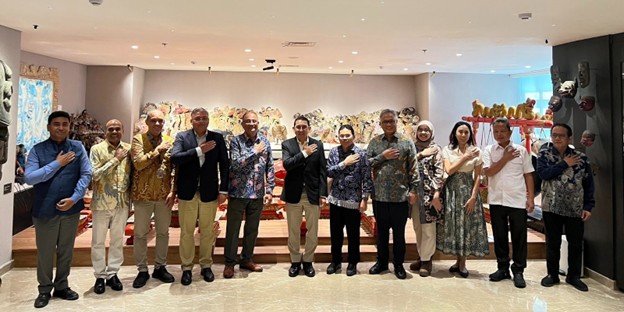

JAKARTA (Indonesia Economic Forum) — Indonesia and India are strengthening cooperation in cultural heritage preservation through plans to restore the Prambanan Temple complex. The initiative was discussed during a meeting between Indonesia’s Minister of Culture Fadli Zon and a restoration team from the Archaeological Survey of India (ASI) at the Ministry of Education and Culture Complex in Jakarta on Monday (March 16, 2026).
The meeting marked a follow up step in the two countries’ collaboration on the conservation of historical sites and reaffirmed their shared commitment to protecting one of Southeast Asia’s most significant cultural heritage areas.
Prambanan as an Interconnected Cultural Landscape
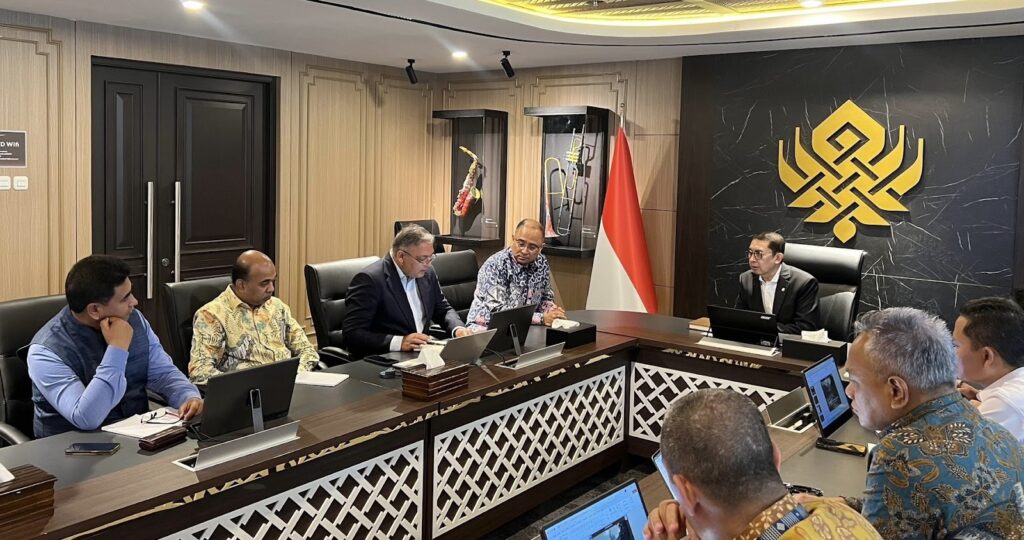
During the meeting, Fadli Zon emphasized that preservation efforts in Prambanan should not be treated as an isolated project. Instead, the temple complex should be understood as part of a broader cultural landscape that reflects the historical interaction of Hindu and Buddhist traditions in the Indonesian archipelago.
He explained that Prambanan is historically and architecturally linked with nearby Sewu and Plaosan temples, making it important for conservation efforts to consider the wider cultural ecosystem surrounding the site.
“Prambanan is not a standalone complex. It is part of a broader cultural landscape together with Sewu and Plaosan. Therefore, conservation must restore the temples while safeguarding the entire cultural ecosystem in the area,” Fadli Zon said.
Anastylosis Method and Restoration Challenges
Following an initial field visit, the ASI team assessed that several perwara temples within the Prambanan complex require further conservation. One of the methods proposed for the restoration process is anastylosis, a technique that reconstructs structures using original stones found at the site.
Through this method, temples are rebuilt primarily with original materials, while new stones are added only when necessary to ensure structural stability.
However, the restoration process presents several challenges. The ASI team noted that a large number of architectural stones are scattered across the site, making it difficult to determine which stones belong to each temple structure. This requires careful documentation before reconstruction can begin.
As a result, the early phase of restoration will focus on documenting temple structures and stone components before final decisions on reconstruction are made.
Pilot Restoration Project
As an initial step, ASI proposed launching a pilot restoration project focusing on one or two perwara temples. The project is expected to help determine the most effective working methods before restoration is expanded on a larger scale.
The ASI team, led by Additional Director General Janhvij Sharma, presented the restoration plans directly to Indonesia’s Minister of Culture and sought guidance on the conservation approach for the Prambanan site.
“For thousands of years, India and Indonesia have been connected by more than just trade and commerce. It is our vibrant culture that continues to resonate across the seas, both to the East and the West,” an ASI representative said.
He added that ASI teams working in Indonesia remain committed to supporting restoration efforts for heritage sites.
“Our team in Indonesia has been diligently working to help restore more World Heritage properties,” he added.
During the meeting, Fadli Zon also noted that Indonesia possesses substantial historical documentation related to the temple complex, which could serve as an important reference for the restoration team in planning accurate reconstruction efforts.
International Cooperation for Cultural Heritage
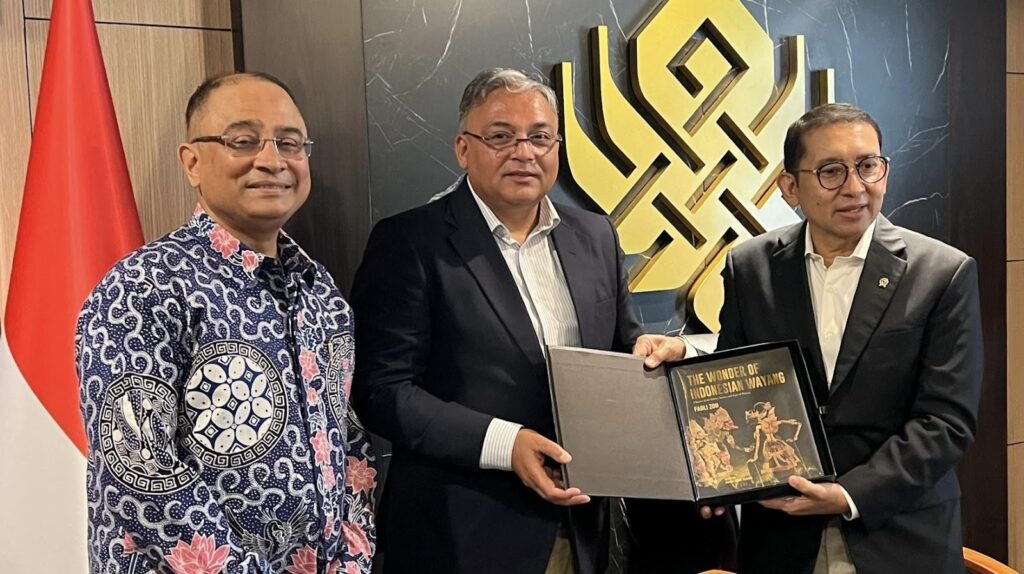
The Indonesian government reiterated its openness to international cooperation that can strengthen conservation efforts for cultural heritage sites, particularly in the Prambanan area.
Fadli Zon also highlighted the potential use of modern technologies in the restoration process. According to him, digital tools including artificial intelligence could help identify and reassemble scattered temple stones more accurately.
“The use of technology, including digital approaches and artificial intelligence, can assist in identifying and reassembling temple stone components more accurately,” he said.
Through this restoration cooperation, both countries hope to strengthen the preservation of cultural heritage that not only holds historical value but also symbolizes the long standing relationship between India and Indonesia.