
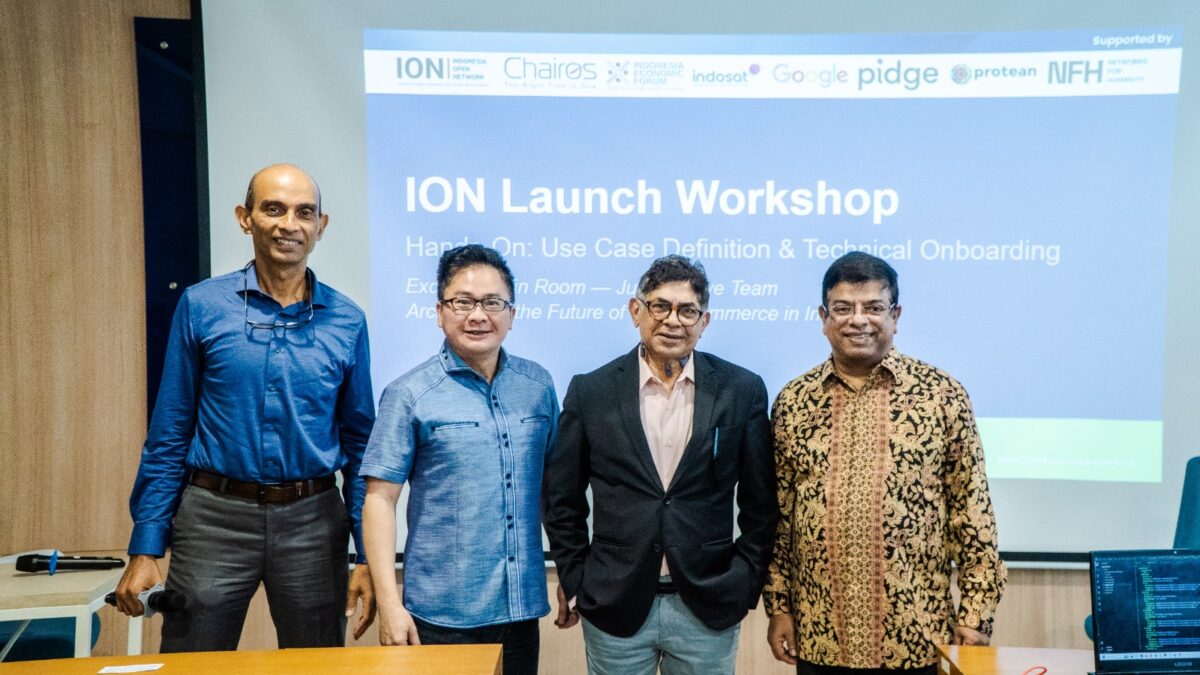

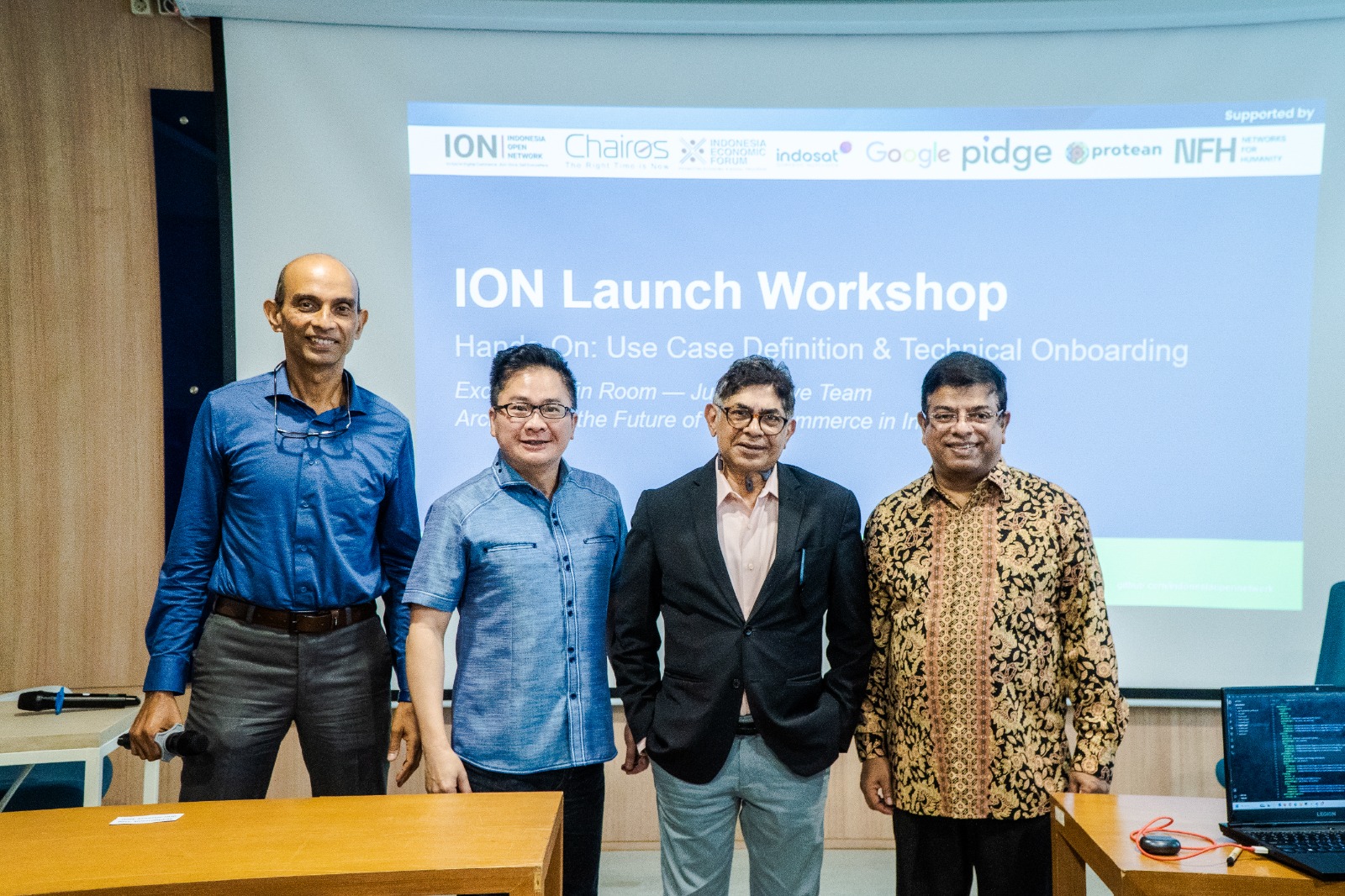
Jakarta, 19 May 2026 — Indonesia Open Network (ION) officially took its first major step toward national rollout through the ION Launch Workshop held at SMESCO Jakarta on Monday (May 19). The four-day workshop marked a key phase in preparations for ION’s planned launch in July 2026 and is expected to serve as the foundation for a new open digital commerce ecosystem in Indonesia.
Unlike conventional marketplaces, ION is not being built as a closed platform controlling users and transactions. Instead, it is designed as a Digital Public Infrastructure (DPI), allowing applications, logistics providers, payment services, MSMEs, and technology developers to connect through an integrated open commerce network.
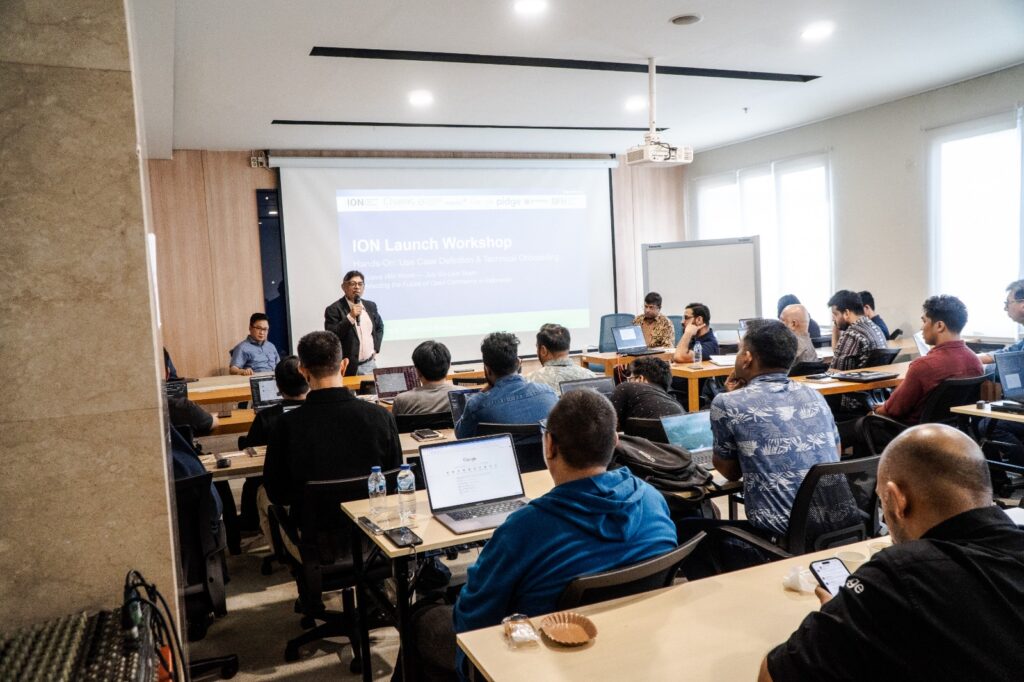
The workshop brought together ecosystem partners expected to participate in the initial implementation phase, including stakeholders from banking, logistics, digital payments, technology, and application development sectors preparing for the network’s go-live stage.
In his welcome remarks, Sachin V Gopalan of ION Accelerator said Indonesia has become the second country after India to develop an open commerce model based on an interoperable network. However, he emphasized that Indonesia is adopting a more advanced technological approach.
“Indonesia is introducing the latest and most advanced open commerce technology as a Digital Public Infrastructure. The system developed here is also built with an AI-first and agent-native approach,” he said.
He added that ION’s development in Indonesia could eventually become a gateway toward broader cross-border digital commerce integration across ASEAN countries.
ION Steering Committee Chair Dr. Bayu Prawira Hie explained that the network’s official launch is targeted for early July and is expected to coincide with Indian Prime Minister Narendra Modi’s visit to Indonesia. The launch is planned to involve President Prabowo Subianto as part of the digital cooperation initiatives agreed upon by both countries.
However, according to Dr. Bayu, the launch is not intended to be merely ceremonial.
“What matters most in the end is implementation on the ground. That is what we want to demonstrate during the launch,” he said.
From Closed Platforms to a Digital Highway
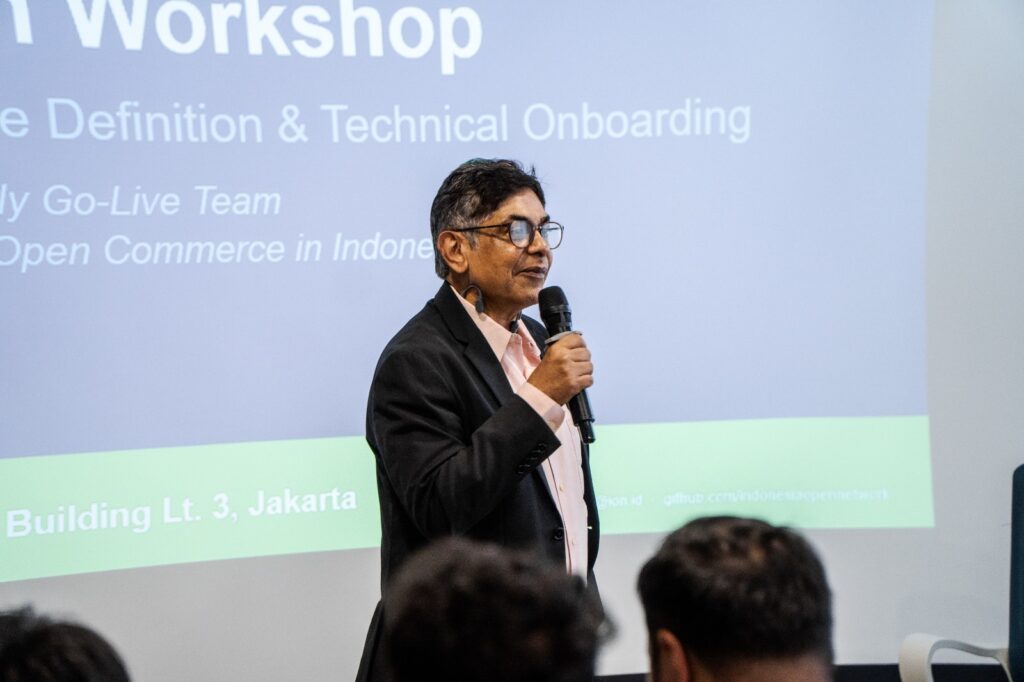
Throughout the workshop, speakers repeatedly emphasized that ION is fundamentally different from the platform model commonly associated with digital commerce today.
Dr. Bayu described ION as a kind of digital highway that can be used by multiple players.
“Existing platforms own both the entry and exit points. With ION, we build the road, while others can create their own gateways and exits,” he explained.
According to him, this approach allows a broader range of actors to build services on top of the same infrastructure without depending on a single dominant company.
That idea was reinforced by T Koshy, Advisory Council Member of ION, who argued that the biggest challenge lies in changing the industry’s mindset.
“ION is not a platform,” Koshy stressed.
He said digital commerce has traditionally revolved around large platforms controlling user ecosystems, whereas the open network model is designed to give both buyers and sellers more freedom.
“Imagine the amount of power this gives to buyers and sellers,” he said.
Koshy illustrated that a small business owner in Sulawesi could eventually upload a product catalog once and make it visible across multiple buyer applications without needing to register separately on different platforms.
“Any product or service that can be catalogued can become part of this network,” he added.
Targeting One Million Sellers and a National Ecosystem
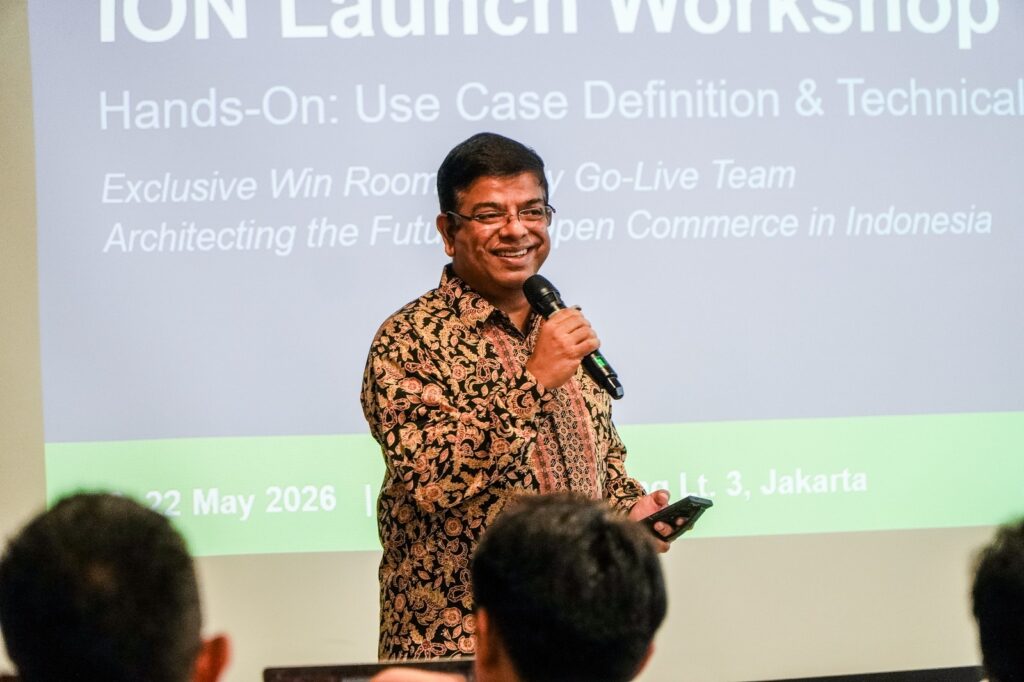
During his presentation, Sachin revealed that the Indonesian government has validated around 30 million active MSMEs nationwide. Of those, around four million are considered ready to participate in digital commerce.
From that figure, ION aims to onboard 100,000 sellers by the end of the year before scaling toward a target of one million sellers in the next phase.
Several organizations have already joined the initiative, including BRI, Flip, Padi UMKM, SiCepat, technology companies, logistics associations, and other application developers.
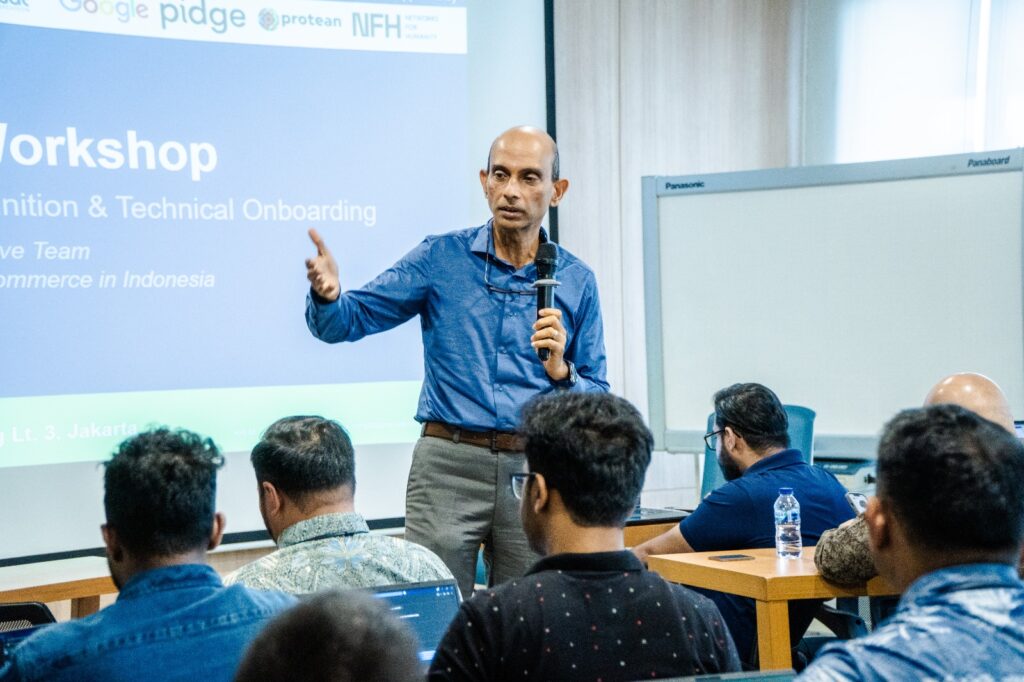
Meanwhile, ION Chief Architect Binu Raj encouraged workshop participants to view ION as a long-term initiative whose impact could unfold over many years.
“We are all participating in the growth of something as significant as the internet,” he said.
He described ION as “the internet for commerce,” emphasizing that success should not be measured in months, but in years and even decades.
“We are not the only ones building ION. Everyone in this room is a founder of ION,” he told participants.
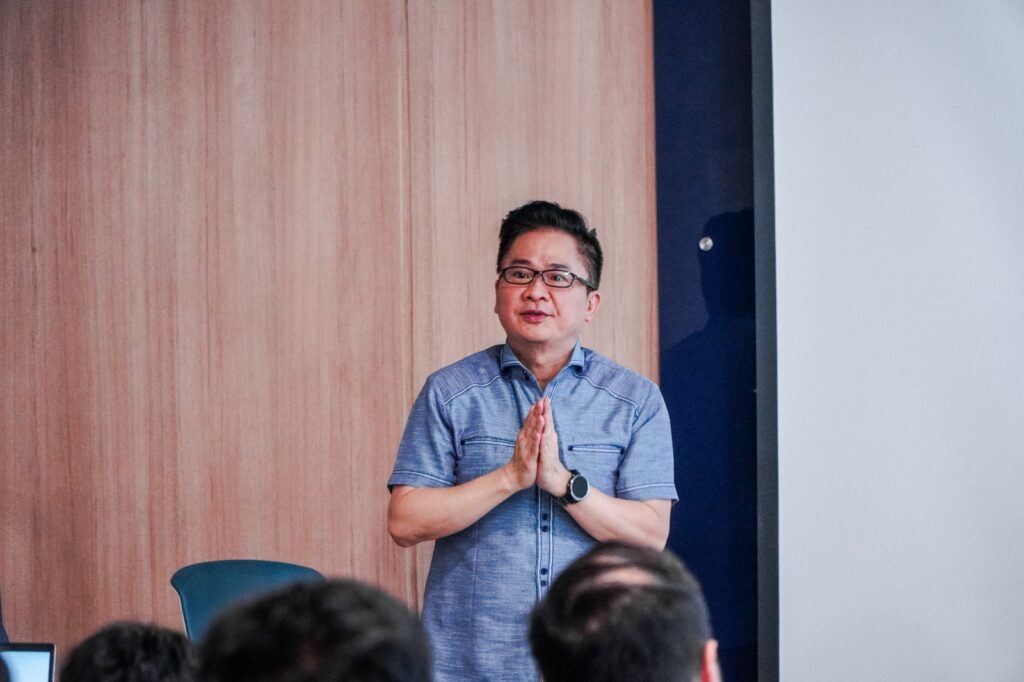
On the other hand, Dr. Bayu stressed that the initiative’s broader purpose goes beyond technology.
“This is a project for the economic benefit of everyone,” he said.
According to Dr. Bayu, ION’s development will also include training programs and digital literacy efforts to ensure people not only use technology but can also leverage it to improve local productivity and economic opportunities.
He argued that an open network cannot succeed through technology alone. Communities and businesses also need to understand how to utilize it effectively so that digital access can create a broader impact.
“If a road exists but only a few people know how to use it, its impact will remain limited,” he said, emphasizing the importance of building ecosystem readiness alongside infrastructure.
The July launch may only represent the beginning. But if the first transaction demonstrations proceed as planned, ION is expected to enter its next phase by expanding partnerships, onboarding more participants, and building a stronger digital ecosystem across sectors.
If the launch becomes what Dr. Bayu described as a “breaking the ice” moment, then the inaugural workshop at SMESCO may ultimately be remembered as the first step toward creating a new digital highway connecting millions of Indonesian businesses through a more open, interconnected, and inclusive commerce ecosystem.