Jakarta (Indonesia Economic Forum) — Indonesia continues to strengthen the foundations of its national digital economy through a more open and inclusive approach. During a meeting held on May 12, stakeholders discussed the potential development of the Indonesia Open Network (ION), an open digital public infrastructure concept that is seen as a possible new foundation for Indonesia’s future digital economy ecosystem.
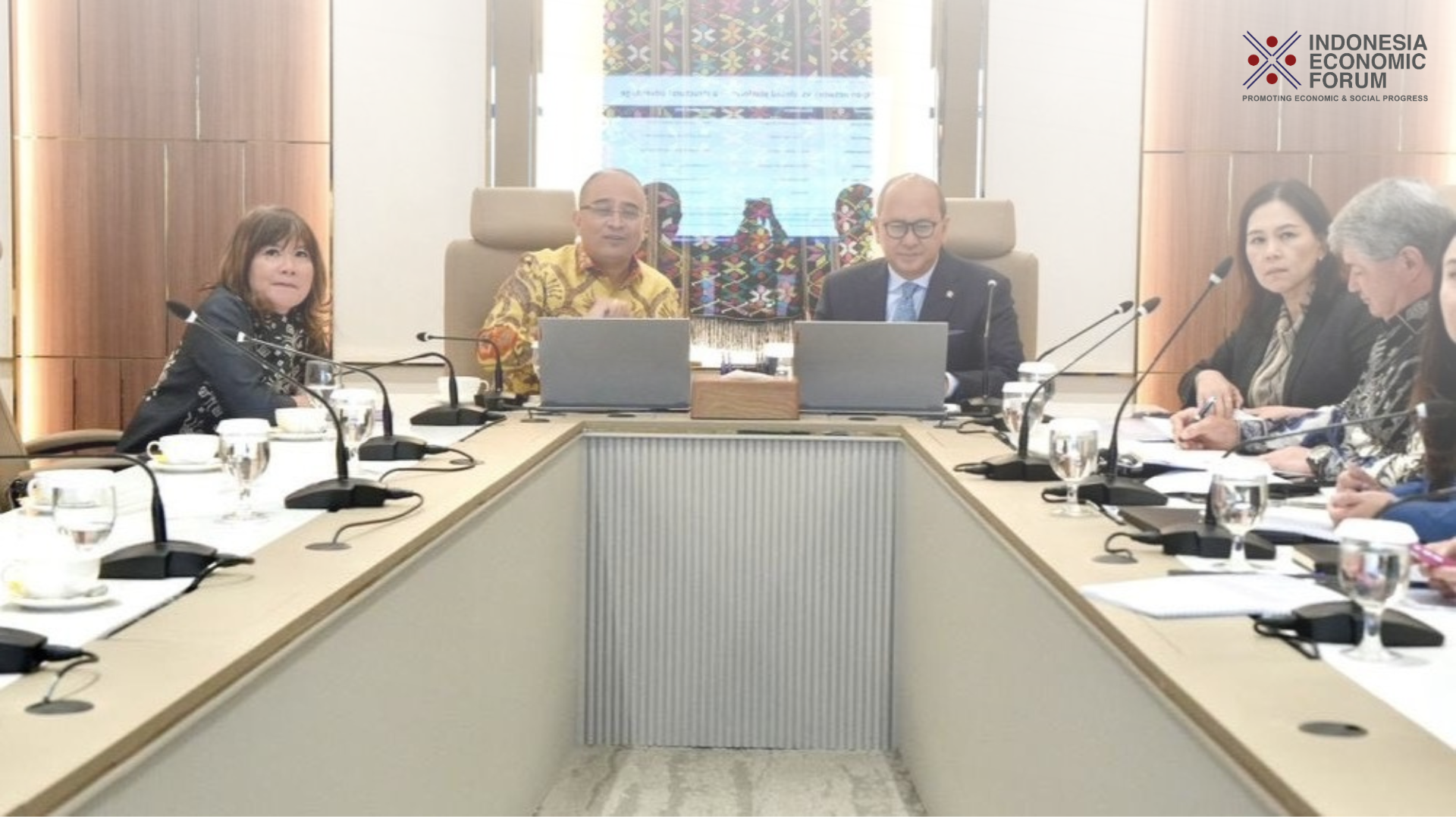
The meeting brought together Danantara CEO Rosan Roeslani, Indian Ambassador to Indonesia Sandeep Chakravorty, and ION Steering Committee member as well as Indonesia Economic Forum CEO Sachin V Gopalan. Discussions centered on how an open digital public infrastructure approach could help create a digital economy system that is more efficient, interconnected, and accessible to a broader range of businesses.
As Indonesia’s digital economy continues to grow rapidly, discussions around open digital infrastructure have emerged as a new approach that could expand participation across the ecosystem. Rather than relying on fragmented and closed systems, the model offers a shared foundation that can be utilized by various stakeholders, from large corporations to small and medium enterprises.
Rosan Roeslani said Indonesia is entering an important phase in building the next generation of its digital economy. According to him, digital transformation is no longer solely about adopting the latest technologies, but also about ensuring those technologies generate broader and more equitable benefits.
“Indonesia is building the foundations of a next generation digital economy that is more efficient, open, and capable of reaching a wider range of businesses. Through Indonesia Open Network, we see an opportunity to establish a new foundation for the national digital economy that can create broader access and impact,” Rosan said.
He emphasized that discussions surrounding ION go beyond introducing new technologies. Behind the initiative lies a larger ambition: ensuring that the development of Indonesia’s digital economy benefits a wider segment of society.
“The objective is not simply accelerating technology adoption. We want to ensure that Indonesia’s digital economy works for everyone,” he added.
Learning from Open Digital Infrastructure Models
In recent years, the concept of Digital Public Infrastructure (DPI) has gained increasing attention worldwide. Unlike closed digital platforms typically controlled by a single company or ecosystem, DPI is designed as an open foundational layer that can be used collectively.
Such a model is believed to create greater interoperability among digital services while encouraging broader innovation. India has often been cited as a leading example through its implementation of national scale digital systems connecting citizens to payment systems, digital identity platforms, and public services.
In Indonesia’s context, the Indonesia Open Network has emerged as an initiative seeking to adapt that approach to the country’s commerce and digital services ecosystem. The concept aims to establish an open network that enables more businesses to connect through an integrated and interoperable system.
Indian Ambassador to Indonesia Sandeep Chakravorty said his side presented the potential of Indonesia Open Network to Danantara, including several early stage implementations currently under development.
“We introduced Indonesia Open Network as an open source digital commerce network, including Indonesia One, an ION based mobility application that is currently being prepared for launch in Indonesia through Namma Yatri,” Chakravorty said.
Indonesia One is expected to become one of the early examples built on the ION ecosystem. The application is being developed as a mobility platform connected through an open network structure, enabling collaboration across service providers within a more flexible ecosystem.
New Opportunities for Indonesia’s Digital Economy
Discussions around ION come at a time when Indonesia’s digital economy continues to show strong growth. The country remains one of Southeast Asia’s largest digital markets, supported by growing internet penetration, digital transactions, and increasing adoption of online services.
However, such rapid growth also presents new challenges. Many small businesses continue to face barriers when entering larger digital ecosystems. Costs, technological access, and limited system integration often remain significant obstacles.
Open network models such as ION are seen as potentially creating broader opportunities for participation. With a shared foundation, businesses may gain greater access to connect and grow within Indonesia’s digital ecosystem.
Chakravorty said Danantara’s initial response reflected strong interest in the initiative’s potential.
“Danantara sees significant possibilities that can be developed through this initiative,” he said.
Although discussions remain at an early stage, the meeting demonstrated how Indonesia is beginning to explore new approaches in building long term digital economic foundations. Amid increasingly competitive global dynamics, a more open and inclusive system could become one of the key strategies to ensure that digital transformation delivers broader and more sustainable benefits.