
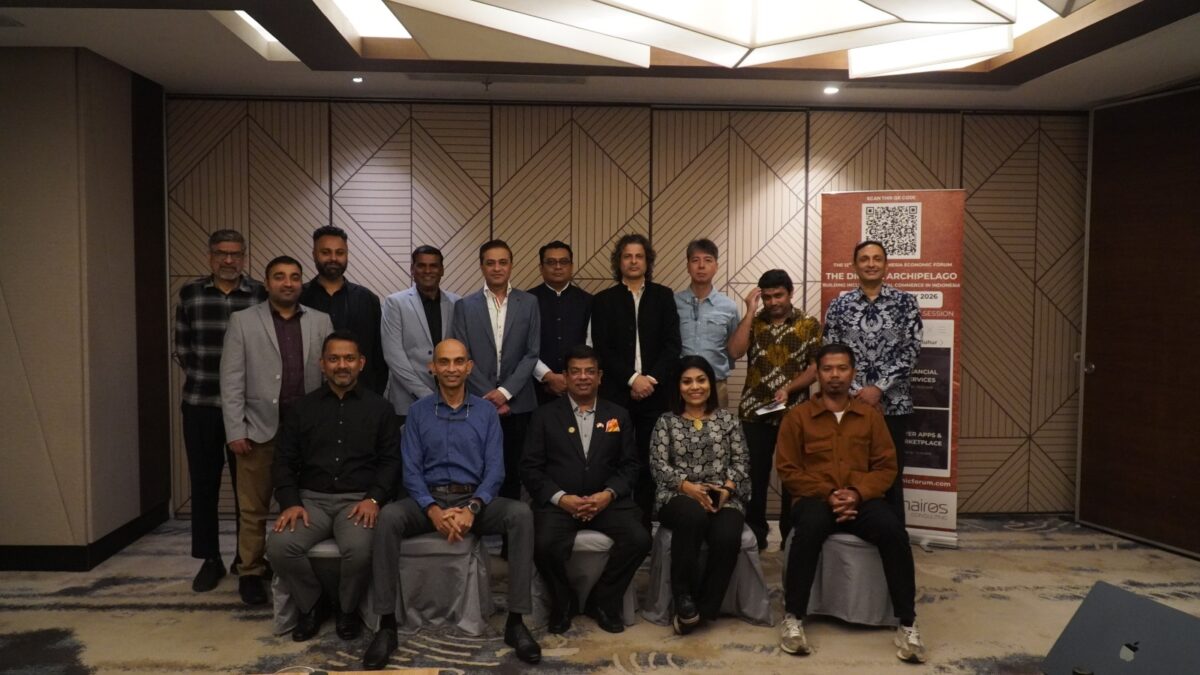

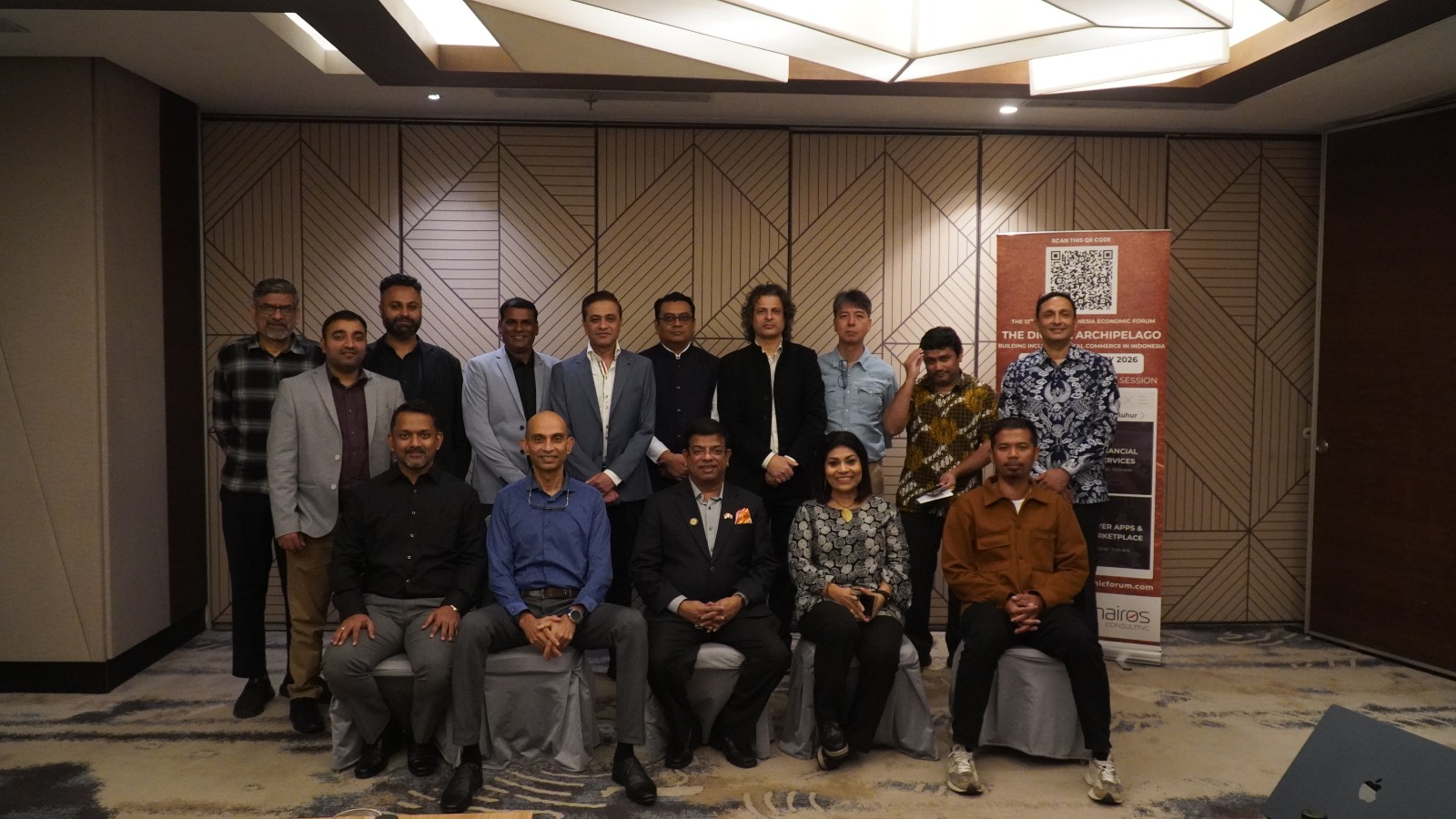
JAKARTA — The 12th annual Indonesia Economic Forum (IEF) at ARTOTEL Suites Mangkuluhur marked a critical moment for the operationalization of the Indonesia Open Network (ION). Two business matching sessions ran in parallel on the second day, Friday (6/2/2026). The Logistic Partner Business Matching and Financial Services Business Matching sessions were designed to connect ION ecosystem players, bring together service providers, buyers, and technology enablers, and translate the vision of ION into more concrete collaborations on the ground.
From the outset, the format was not formal presentations but open introductions and dialogue among participants. The goal was clear: to build mutual understanding before entering commercial partnerships. Attendees came from diverse backgrounds, including Indian logistics firms, Indonesian B2B marketplaces, warehousing providers, and digital training institutions.
Logistic Partner Business Matching: From Vision to Operations
Discussions evolved into highly practical exchanges. Indian logistics technology providers such as PIJ and Pro Routing positioned themselves as “integration bridges” to ION, particularly for companies that were not yet system-ready. They emphasized that many businesses are commercially prepared but lack the technical capacity to connect to an open network.
On the user side, several Indonesian B2B marketplaces highlighted the need for more transparent service standards, ranging from GPS tracking and digital documentation to fleet reliability. They viewed ION as an opportunity to access a wider range of logistics providers rather than relying on a handful of vendors.
Meanwhile, material handling and warehousing players stressed the importance of integrating operational data with payment and logistics systems so supply chains could become more efficient and measurable. At the same time, Orbit Future Academy and AYDA reminded participants that technology adoption must be accompanied by digital upskilling for logistics workers, MSMEs, and field operators.
Participants frequently referenced India’s experience with ONDC: adoption must be gradual, with clear minimum technical standards and secure onboarding mechanisms to prevent weak implementation from disrupting the broader network. The overarching message remained consistent — ION is understood as a digital public infrastructure that enables multiple business models to grow, rather than being controlled by a single platform.
A recurring theme was the importance of patience, collaboration, and trust. Stakeholders agreed that building a nationwide open network cannot happen overnight. It requires collective learning, repeated pilots, and a willingness to align operational standards.
Financial Services Business Matching: Closing the MSME Financing Gap
The Financial Services Business Matching session focused on how financial services could support ION adoption, particularly for MSMEs. Financial institutions and fintech firms discussed data-driven financing models based on digital transaction records rather than physical collateral.
Cashless payment integration also emerged as a key topic, especially to help small traders in remote areas transact more easily across regions. Supply chain financing schemes were discussed as solutions for distributors and small logistics providers facing working capital constraints.
Participants noted that the more transparent and standardized transaction data becomes within ION, the greater the opportunity for MSMEs to access fairer and more affordable credit. In other words, ION’s success will be measured not only by technology but also by its impact on financial inclusion.
Connecting Logistics and Finance in One Ecosystem
Both sessions demonstrated that logistics and financial services cannot operate in isolation. Reliable logistics requires flexible financing support, while financial institutions need supply chain visibility to assess risk accurately.
Overall, the second day’s business matching reaffirmed that ION is not merely a technology platform but a national collaboration infrastructure aimed at creating “digital equality” — from large corporations to small neighborhood shops across Indonesia.