
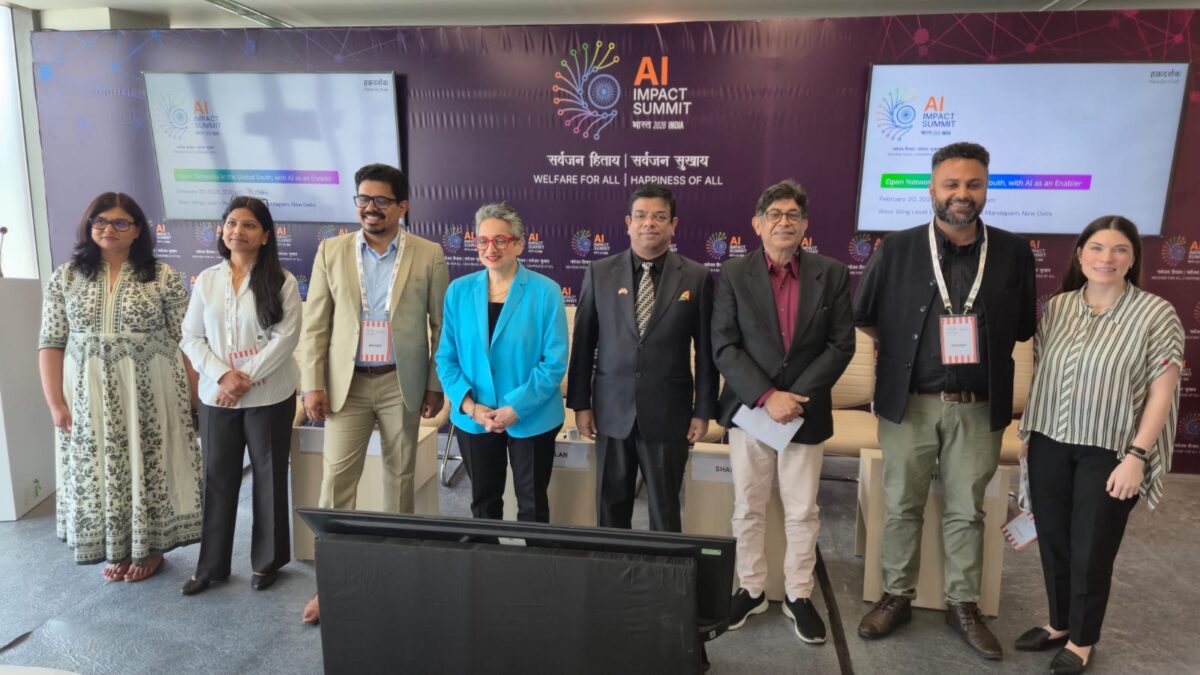

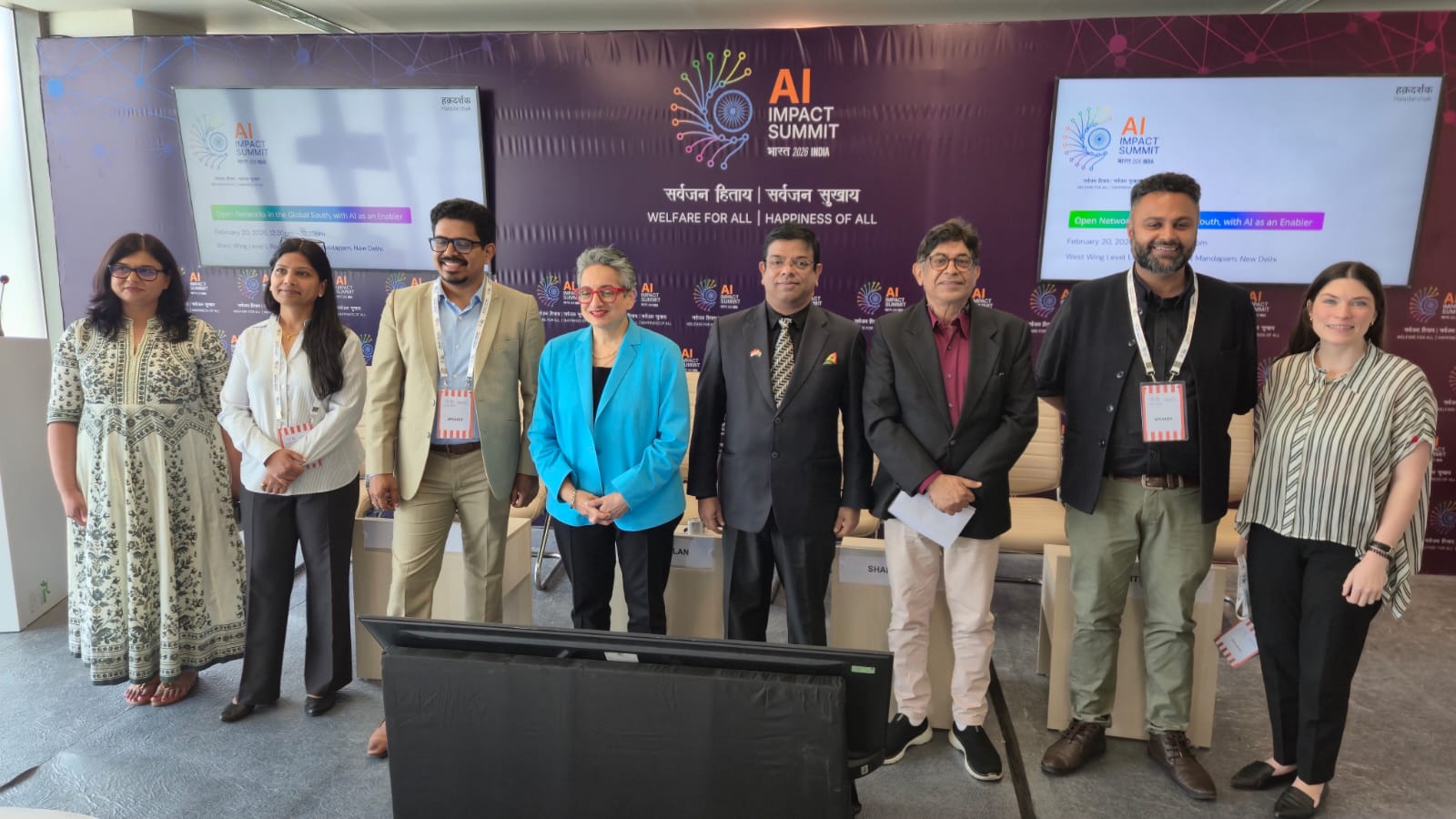
NEW DELHI — Open networks and artificial intelligence (AI) are seen as a new foundation for transforming digital economies across the Global South. This was highlighted during the panel How Open Networks Are Transforming the Global South at the India AI Impact Summit 2026 in New Delhi on Friday (20/2/2026).
The panel featured Aniket Doegar (Founder & CEO, Haqdarshak) for the opening remarks, T Koshy (Founding MD & CEO, ONDC) as keynote speaker, and was moderated by Savita Muley (CTO, Haqdarshak). The discussion also included Sujith Nair (CEO, Beckn Labs & Co-Founder, Networks for Humanity), Shamina Singh (Founder & President, Mastercard Center for Inclusive Growth), and Sachin Gopalan (Founder & CEO, Indonesia Economic Forum).
Access Must Be Accompanied by Trust
Founder & CEO of Haqdarshak, Aniket Doegar, emphasized that digital transformation must begin with meaningful access.
“Access is not merely about availability. What matters more is trust and a sense of agency. Without that, people cannot truly experience the benefits of the digital economy,” he said.
He explained that open networks create more equitable participation.
“Open networks shift power from closed systems to shared infrastructure, so citizens are not locked into a single platform and can retain choice and dignity in their transactions.”
Open Networks as a Governance Choice
In his keynote address, T Koshy stressed that open networks are fundamentally a governance decision.
“This is not just a technology choice, but a governance choice. We are choosing to separate infrastructure from innovation so that more participants can take part,” Koshy said.
According to him, open networks redesign how markets function.
“Open networks do not replace markets; they re-architect markets. With interoperable rails in place, small businesses can enter without facing major barriers.”
He also warned that AI should not lead to new forms of power concentration.
“The most important question is not whether we can build sophisticated systems, but who benefits, who controls them, and who is left behind.”
AI to Simplify, Not Complicate
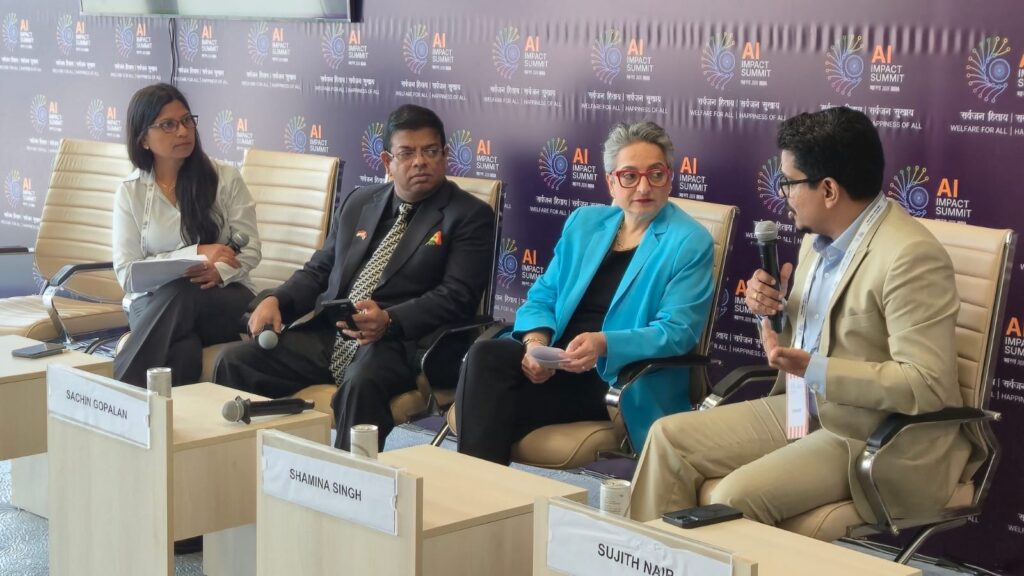
Sujith Nair, CEO of Beckn Labs, noted that open networks place people at the center.
“Open networks put people and businesses at the center, giving them choice and control,” he said.
In his view, AI’s role is to reduce technical complexity.
“The role of AI is to hide the complexity behind the scenes. Users do not need to understand the technical details; what matters is that they can access better prices and wider market opportunities.”
He added that a decentralized architecture helps prevent the concentration of power at a single point.
Data Must Protect and Empower
From a global perspective, Shamina Singh emphasized the importance of data governance principles.
“Data should belong to consumers, benefit consumers, and it is our responsibility to protect it,” she said.
She added that AI is meaningful only if it has a real impact on people’s lives.
“AI must benefit humanity and uphold people’s dignity, not merely serve as a symbol of technological sophistication.”
Indonesia and Acceleration in ASEAN
Founder & CEO of Indonesia Economic Forum, Sachin Gopalan, explained that Indonesia adopted the open network approach based on real needs on the ground.
“This was born out of necessity. The challenges faced by MSMEs, cooperatives, and traditional markets show that interoperability is a relevant solution,” Sachin said.
He expressed optimism that the combination of open networks and AI could unlock the potential of younger generations.
“AI is not meant to replace humans, but to unleash human potential, especially in villages and smaller towns.”
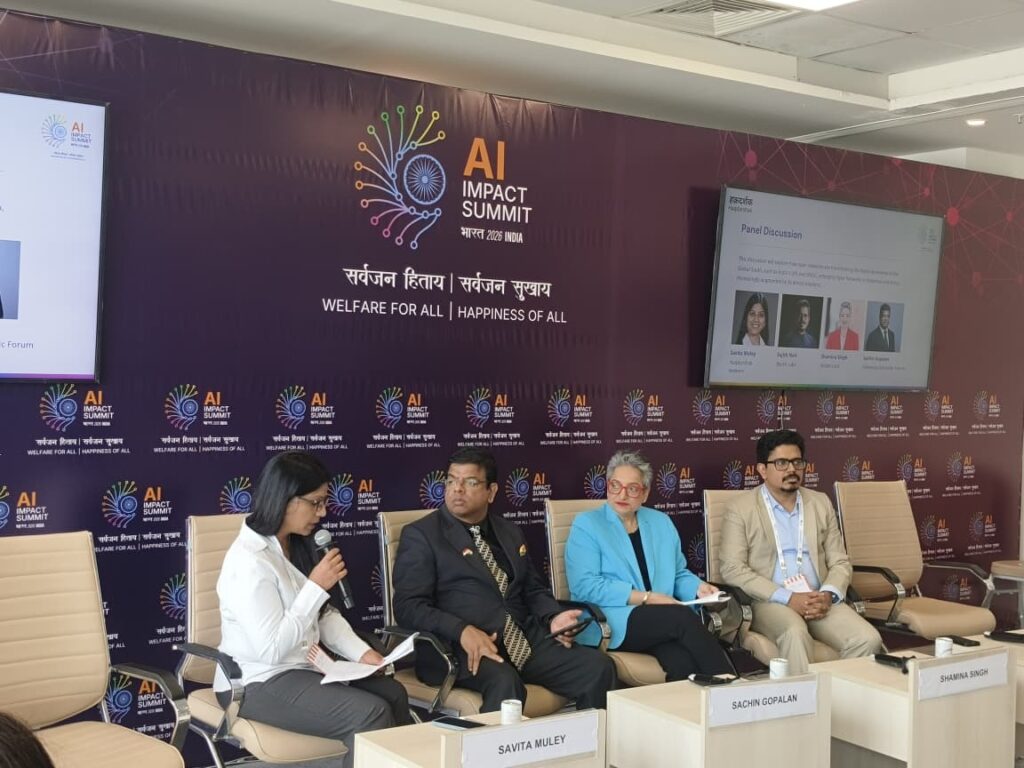
The panel underscored that the future of the Global South’s digital economy will not be determined solely by technological sophistication, but by a commitment to building systems that are open, fair, and inclusive. Open networks and AI are positioned as instruments to expand participation and sustainably improve people’s welfare.