By Sachin V. Gopalan
Indonesia’s digital economy is often described in superlatives.
Fast-growing. Dynamic. Full of potential.
And all of that is true.
But beneath the impressive growth numbers lies a more uneven reality, one that deserves closer attention.
Growth, by itself, does not guarantee inclusion.
The expansion of e-commerce, digital payments, and online services has created new opportunities. Urban consumers have more choices than ever. Digital platforms have scaled rapidly. Investment has flowed into technology and innovation.
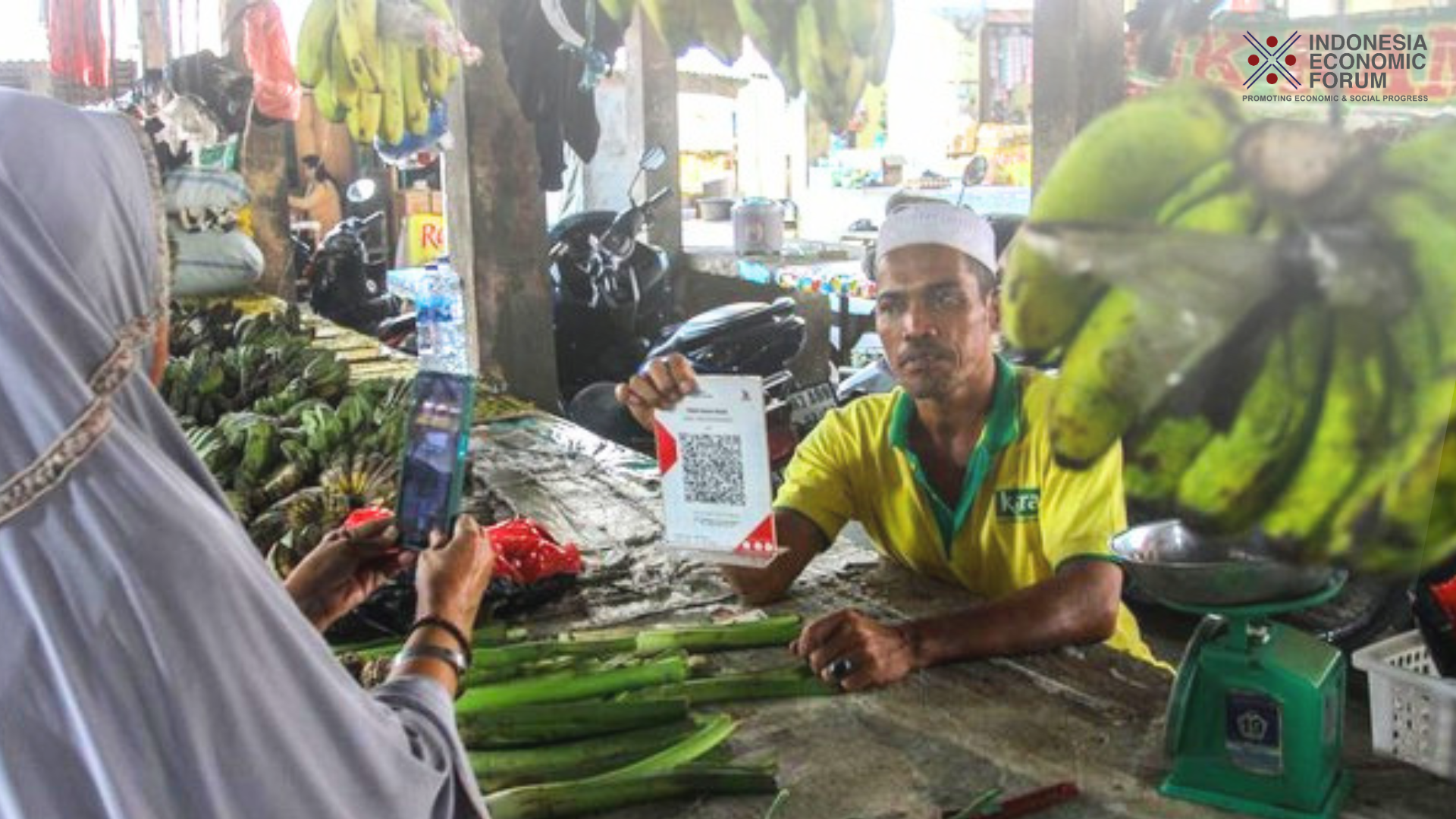
Yet, for many Indonesians, particularly those outside major urban centers, the benefits of this growth remain limited.
This is not simply a matter of infrastructure, though connectivity gaps still exist. It is also about how the system is designed.
Digital platforms, by their nature, reward scale. The more transactions, the more visibility. The more visibility, the more growth. This creates a feedback loop that favors those who are already established.
For smaller players, breaking into this loop is difficult.
A small business in a rural area may have a good product, but limited reach. Without visibility, it struggles to attract customers. Without customers, it cannot build the data needed to improve its offering. And without that improvement, it remains stuck.
This is not a failure of effort. It is a limitation of structure.
There is also a geographic dimension to inequality.
Urban centers like Jakarta, Surabaya, and Bandung are deeply integrated into the digital economy. Logistics networks are strong. Payment systems are seamless. Consumer behavior is already aligned with digital platforms.
In contrast, semi-urban and rural areas often face higher delivery costs, longer wait times, and less reliable service. For businesses operating in these regions, competing on equal terms is significantly harder.
The digital economy, instead of bridging gaps, can sometimes reinforce them.
Another layer of inequality comes from access to knowledge.
Digital tools evolve quickly. Algorithms change. Marketing strategies shift. For businesses that lack access to training or support, keeping up becomes a challenge.
The result is a divide, not just in access, but in capability.
And yet, Indonesia’s greatest strength lies precisely in its diversity.
From farmers in Sumatra to artisans in Bali, from fishermen in Sulawesi to home-based entrepreneurs in Java, the country’s economic potential is distributed across its geography.
The challenge is not a lack of participation. It is a lack of connection.
If growth continues along the current path, the risk is clear: a digital economy that becomes increasingly efficient, but also increasingly unequal.
This is not inevitable.
It is a design choice.
A more inclusive model would focus on interoperability, ensuring that different platforms, services, and regions are connected. It would lower the barriers to entry, reduce duplication, and allow businesses to participate without needing to navigate multiple systems.
It would also recognize that inclusion is not just about access to technology, but access to opportunity.
Indonesia stands at an important moment in its digital journey.
The foundations have been laid. The growth has begun.
The next step is to ensure that this growth reaches beyond the obvious centers and into the broader economy.
Because in the long run, the strength of Indonesia’s digital economy will not be measured by how fast it grows, but by how widely it includes.