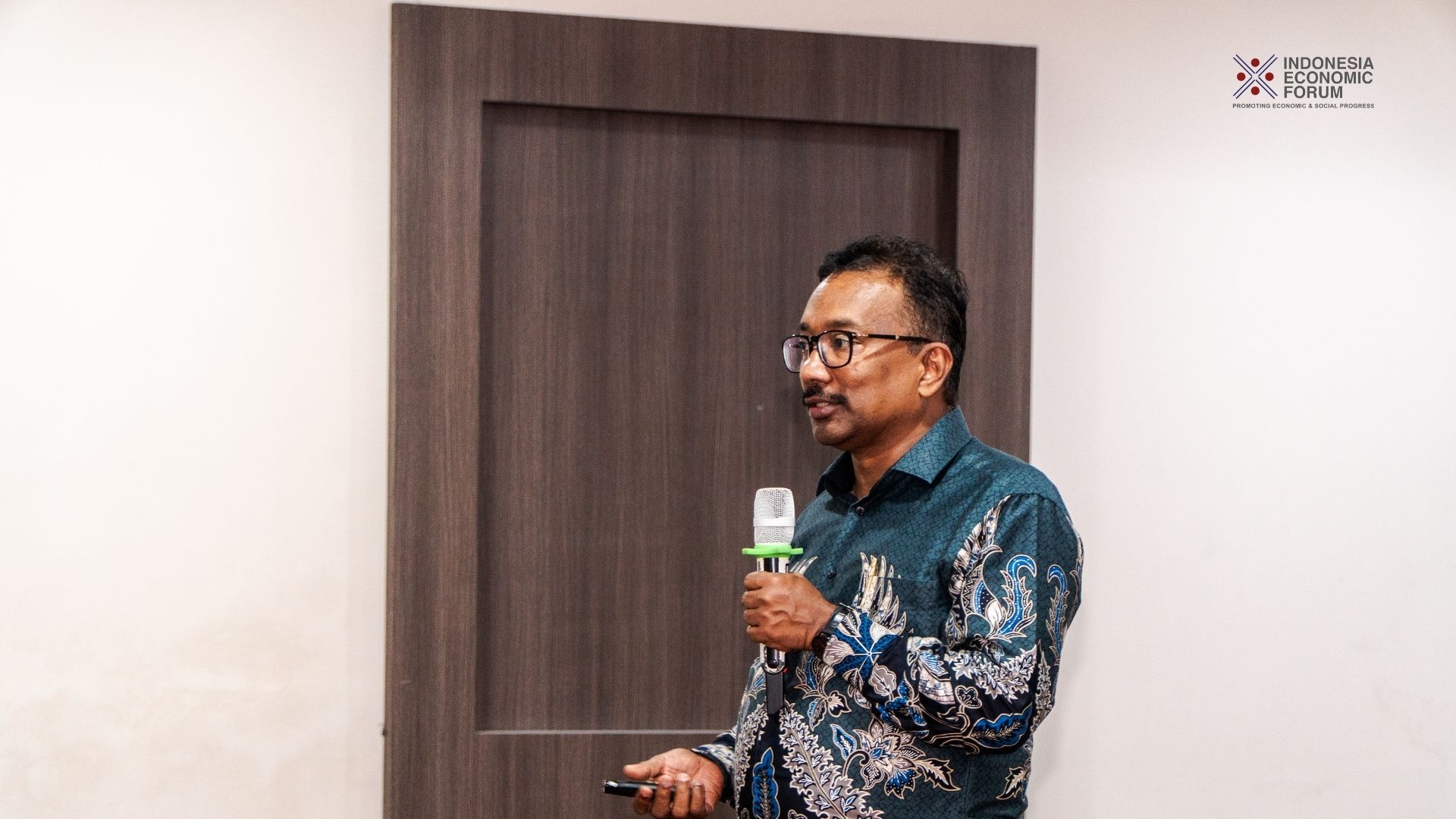
Karawang (Indonesia Economic Forum) — Rising gas prices and uncertainty in fuel supply are forcing industries in Indonesia to rethink how they generate heat and steam, prompting growing interest in biomass and thermal efficiency solutions as companies seek more stable and cost-effective energy systems.
The issue became a central focus at the Thermax Seminar during the Sustainable Economic Transformation and Acceleration Program (SETAP) titled Rethinking Energy Transition for a Volatile World in Karawang on Thursday (21/5), where industrial stakeholders discussed how biomass technologies and industrial heat systems could help industries maintain competitiveness amid tightening environmental regulations and volatile global energy markets.
During the seminar, Thermax representatives outlined how industries can reduce operational costs and improve energy resilience through biomass-based boiler systems, fuel-flexible combustion technologies, and more efficient thermal management.
“We find that gas availability and fuel prices are really increasing in Indonesia, especially in West Java,” said Sujit Vargis, Head of Sales & Marketing at Thermax International Indonesia.
According to Sujit, industries are now under pressure not only to reduce emissions, but also to maintain operational competitiveness while adapting to unstable fuel markets and increasingly stringent sustainability requirements.
Industries Seek More Stable Energy Costs
A major focus of the seminar was the comparison between conventional gas-fired boilers and biomass-fired systems using fuels such as rice husk, palm kernel shell (PKS), wood chips, and wood pellets.
Using operational simulations for industrial boilers, Arzan, Project Sales Manager at Thermax International Indonesia, explained that while gas-fired systems generally operate at higher thermal efficiency, biomass systems can provide stronger long-term cost advantages due to lower fuel expenses.
“One thing is very clear. Sustainability is not free of cost,” Arzan said. “If you want to transition toward biomass boilers, there will be higher investment costs initially. But the payback can happen within one to one-and-a-half years because operational costs decrease drastically.”
According to Arzan, fuel uncertainty has become one of the most pressing concerns for industrial operators today.
“The biggest issue today is uncertainty in fuel prices and availability,” he said. “Industries are struggling because gas prices continue to increase.”
During the presentation, Thermax compared multiple fuel types and demonstrated how operational costs can vary significantly depending on calorific value, fuel efficiency, and fuel consumption rates.
Although gas-fired boilers can achieve efficiency levels above 90 percent, Arzan noted that high fuel costs often offset those efficiency gains.
“At the end of the day, why do we still see higher operating costs? Because of the fuel price,” he explained.
Fuel Flexibility Becomes Increasingly Important
The seminar also explored several combustion technologies designed for industrial biomass applications, including fluidized bed combustors, reciprocating grate systems, and chain grate boilers.
According to Arzan, industries are increasingly looking for systems capable of handling multiple fuel types as companies seek greater flexibility amid changing fuel markets.
He noted that reciprocating grate technology has become particularly relevant for Indonesia because it can handle biomass fuels with varying moisture levels and calorific values.
“It can burn coal, rice husk, wood chips, palm kernel shell, empty fruit bunches, and other biomass fuels with high moisture content,” he said.
Arzan added that many industrial facilities in Indonesia still rely on chain grate boilers originally designed for coal combustion, even though the systems are not always suitable for biomass fuels.
“Chain grate is primarily designed for coal,” he explained. “The moment you transition from coal to biomass such as wood chips or PKS, it is not necessarily the right combustor because the fuel characteristics are different.”
Thermax representatives also emphasized the importance of matching combustion technologies with fuel characteristics in order to maintain efficiency, automation, and operational reliability.
Improving Efficiency Beyond the Boiler System
Beyond fuel transition, the seminar also highlighted the importance of improving overall thermal efficiency within industrial operations.
Panca Sembiring, Area Sales Manager at Thermax International Indonesia, explained how condensate recovery systems can significantly reduce fuel consumption by recycling high-temperature condensate back into boiler feedwater systems.
According to him, many factories still discharge condensate directly instead of recovering its remaining thermal energy.
“Every six-degree Celsius increase in feedwater temperature can generate around one percent energy savings,” Panca explained.
He said condensate recovery can simultaneously reduce fuel usage, water consumption, and chemical treatment requirements.
“When feedwater temperature is already close to boiling point, the energy required to convert it into steam becomes much smaller,” he said.
Panca added that improving thermal efficiency is often one of the fastest and most practical ways industries can reduce operational costs without major changes to production systems.
Preparing for Stricter Emission Standards
Another major discussion point focused on industrial emissions and the growing need for cleaner combustion systems as environmental regulations tighten across Southeast Asia.
Sujit Vargis said industries in Indonesia will likely face stricter particulate emission standards in the coming years as regional environmental policies continue to evolve.
“Emission requirements in Indonesia will become more and more stringent,” he said. “Industries need to start preparing now.”
The seminar compared several air pollution control technologies including electrostatic precipitators (ESP), bag filters, scrubbers, and cyclone systems.
According to Sujit, industries should not only aim to meet minimum compliance standards, but also evaluate technologies based on long-term operational efficiency and environmental performance.
He noted that while scrubbers remain widely used, they can create secondary environmental issues if wastewater handling is not properly managed.
“Scrubbers can shift air pollution into water pollution,” Sujit explained. “You may not see smoke anymore, but the pollutants are transferred into wastewater.”
He also highlighted how dry ash handling systems can create additional value streams by allowing biomass ash to be reused for agricultural applications such as fertilizer.
Energy Transition Increasingly Linked to Industrial Resilience
Throughout the seminar, Thermax representatives repeatedly emphasized that industrial energy transition is no longer being driven solely by sustainability commitments, but also by the need for energy security, operational resilience, and long-term cost stability.
Rather than framing biomass as purely an environmental solution, the discussion positioned biomass transition as part of a broader industrial strategy to reduce exposure to volatile fuel markets while preparing for tighter sustainability regulations and global supply chain requirements.
Closing the seminar, Sameena Khalid, Head of Corporate Communications at Thermax Global, stressed the importance of collaboration between industries, policymakers, and technology providers in ensuring that energy transition efforts remain practical and economically viable.
As industries across Indonesia continue navigating rising fuel uncertainty and increasing sustainability pressures, discussions at the seminar reflected a growing recognition that future competitiveness may depend not only on production capacity, but also on how efficiently and flexibly companies manage their energy systems.