
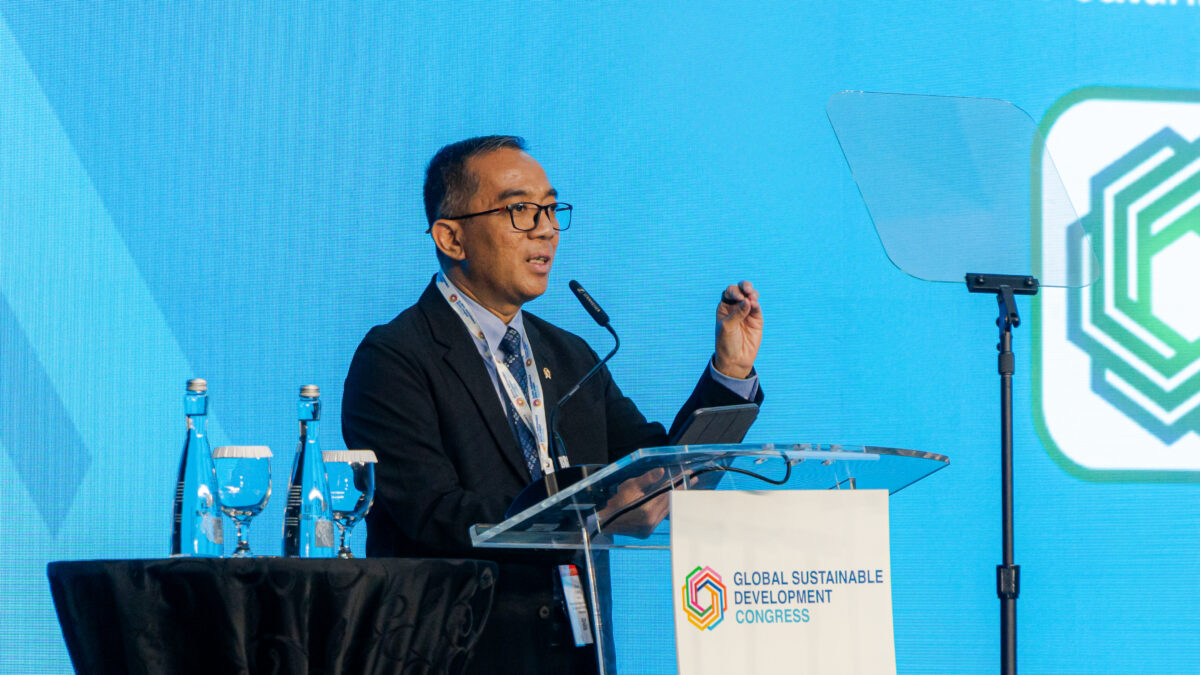

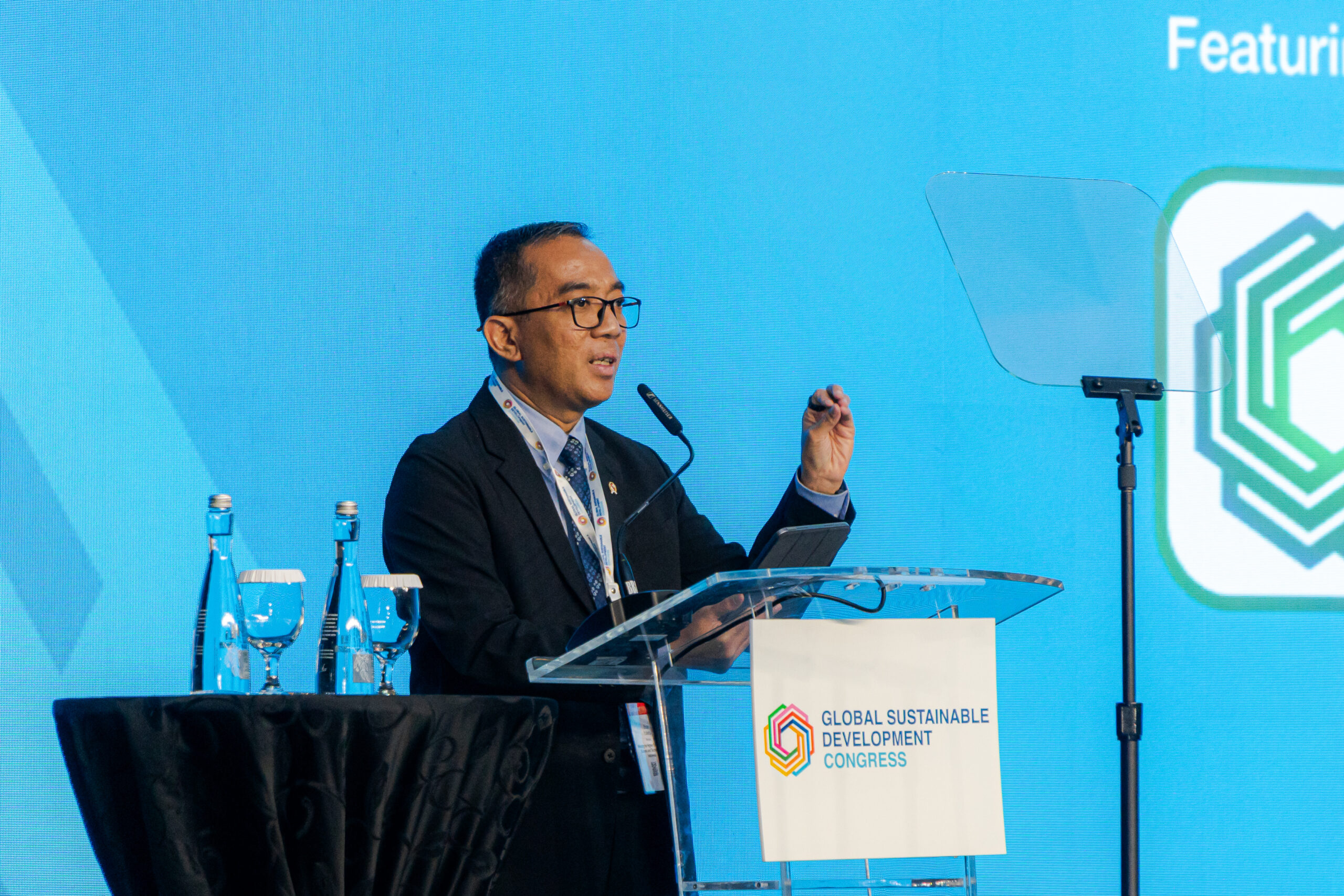
Tangerang, Indonesia – Indonesia’s Minister of Higher Education, Science, and Technology, Brian Yuliarto, emphasized that improving the quality of higher education institutions cannot rely solely on climbing global rankings, but must instead be built upon stronger academic culture, research culture, and sustained collaboration.
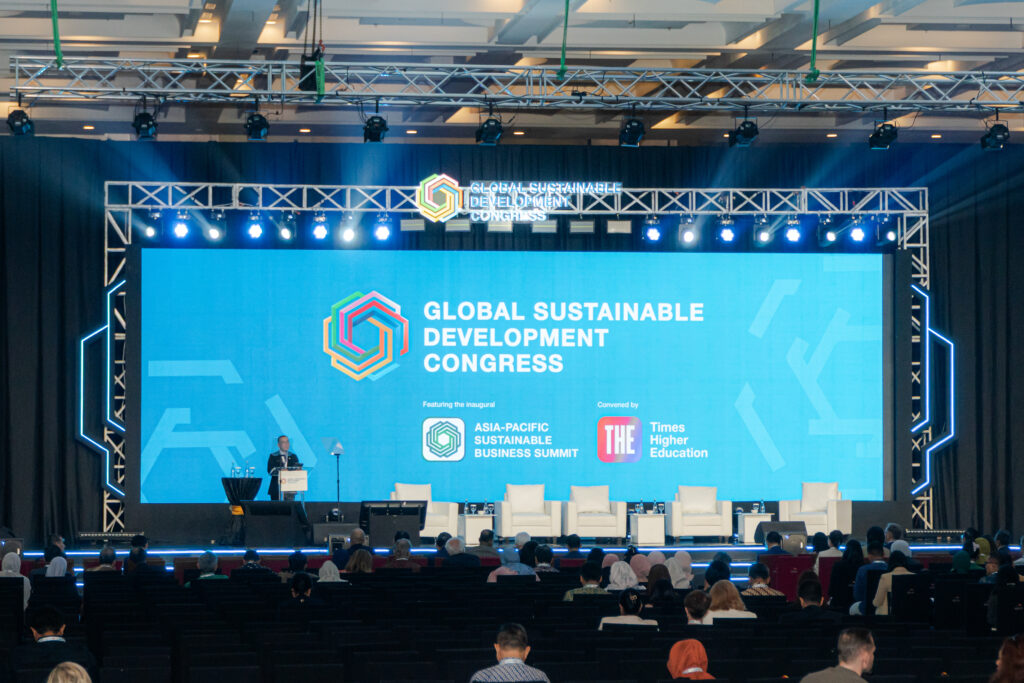
The statement was delivered during his keynote speech on the second day of the Global Sustainable Development Congress (GSDC) 2026 on Tuesday, June 23, 2026. The event brought together more than 5,000 leaders, academics, policymakers, industry representatives, and civil society stakeholders from around the world.
In his remarks, Brian highlighted that Indonesia currently has more than 4,500 higher education institutions serving nearly 10 million active students, supported by over 300,000 lecturers and academic staff. According to him, the vast scale of Indonesia’s higher education ecosystem presents a unique challenge in ensuring equitable quality across institutions.
“We have several universities that are already highly advanced and actively collaborating with world-class institutions. At the same time, many universities still face various limitations. Our challenge is to ensure that all institutions can progress together toward higher quality,” he said.
To address this challenge, the Ministry has introduced a university mentoring system, in which leading universities provide guidance and support to developing institutions through stronger academic networks and national collaboration.
Brian stressed that university excellence cannot be achieved merely by pursuing higher positions in international rankings.
“Rankings are not just numbers. They reflect quality. As long as we remain focused on building quality, I believe rankings will improve naturally,” he stated.
Drawing on his experience as the former Vice Rector for Research and Innovation at the Bandung Institute of Technology (ITB), Brian acknowledged the pressure universities often face whenever global ranking results are released. However, he argued that meaningful improvement must begin with the development of a healthy and sustainable academic ecosystem.
He underscored the importance of cultivating a strong scientific culture on campus, including encouraging professors to remain actively engaged in research and student mentorship.
“The key to becoming a reputable university lies in culture—scientific culture, academic culture, and research culture. We need more professors who conduct research with passion and patience, who continuously engage with students, and who actively collaborate with fellow researchers,” he said.
Brian also highlighted the critical role of laboratories as centers for nurturing research culture. According to him, professors who remain actively present and involved in laboratory work form the foundation for innovation and impactful scientific contributions.
Furthermore, he reminded the audience that the ultimate purpose of research is not merely to produce academic publications, but to create tangible benefits for society.
“Research does not end when a paper is published. What matters most is how knowledge and research outcomes can generate real impact for society,” he emphasized.
During his speech, Brian revealed that Indonesia has produced more than 335,000 Scopus-indexed publications, which have generated over 1.5 million citations. However, he noted that Indonesia’s international research collaboration rate currently stands at 23.7 percent, highlighting significant opportunities to expand global partnerships.
Under the leadership of President Prabowo Subianto, the Ministry of Higher Education, Science, and Technology is currently implementing a transformation agenda through the vision of “Impactful Higher Education, Science and Technology” (Dikti Saintek Berdampak). The initiative aims to position higher education, science, and technology as key drivers of Indonesia’s social and economic transformation.
The policy focuses on eight strategic priority sectors: food security, healthcare, renewable energy, maritime development, defense, digital transformation—including artificial intelligence and semiconductors advanced manufacturing and materials, as well as downstream industrialization.
Concluding his address, Brian called on the global community to strengthen cross-border collaboration in addressing shared challenges, ranging from food security and public health to energy transition and digital transformation.
“The challenges we face today are shared challenges that require shared solutions. Through the Global Sustainable Development Congress, we invite our global partners to build stronger and more meaningful collaborations for a sustainable, inclusive, and prosperous future,” he concluded.
Through this international forum, Indonesia reaffirmed its commitment to strengthening talent mobility, expanding research partnerships, and promoting innovation that delivers tangible benefits to society while supporting the achievement of the Sustainable Development Goals (SDGs).