
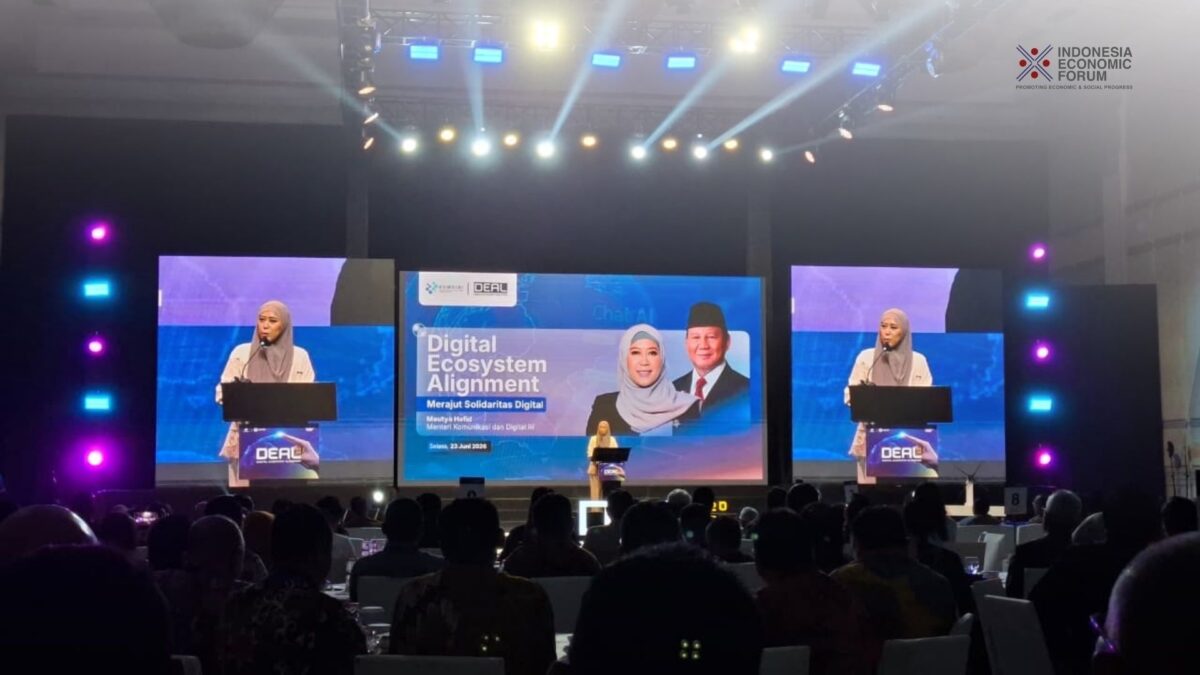

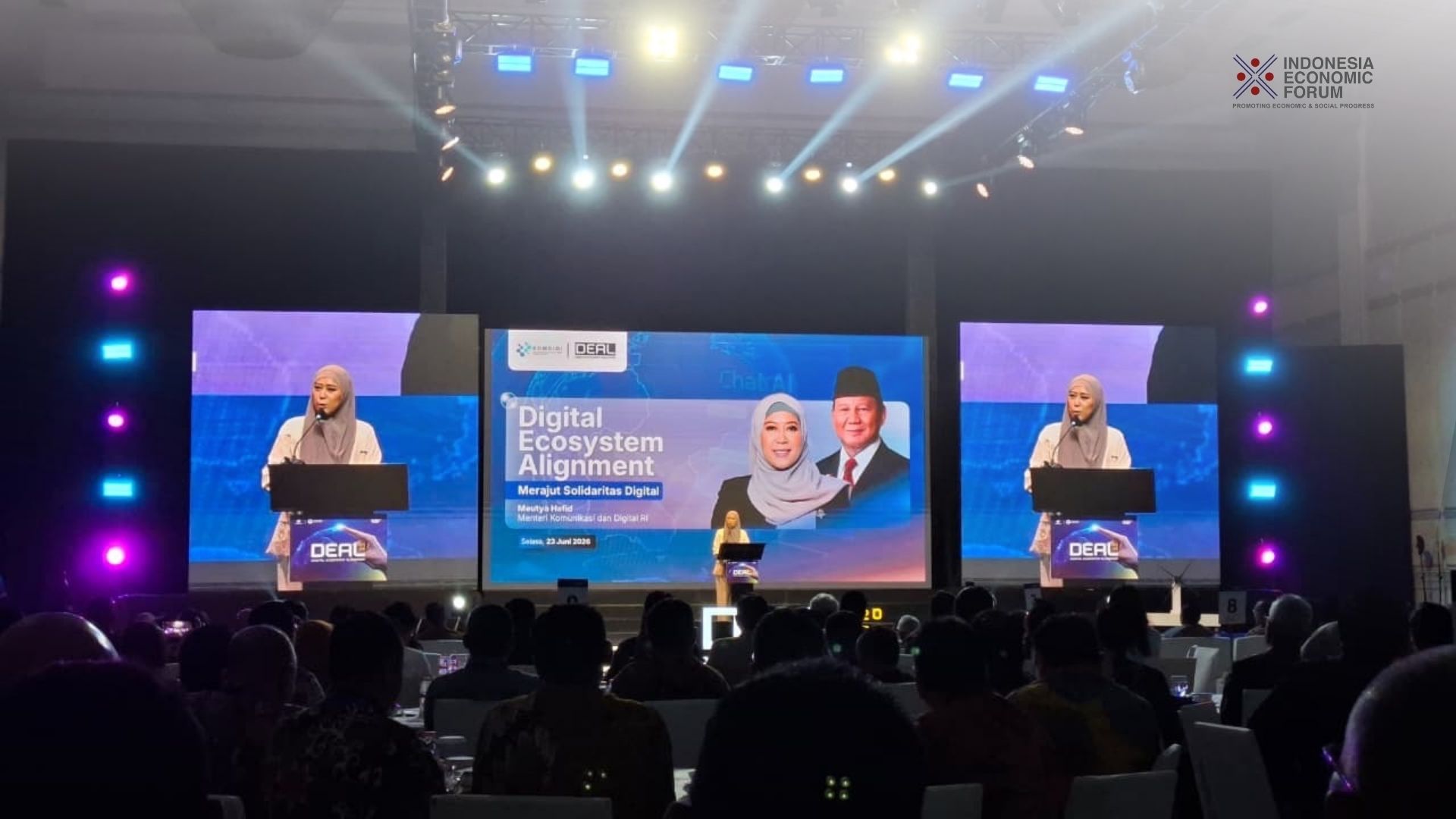
Jakarta — Indonesia’s Ministry of Communication and Digital Affairs (Komdigi) has launched the Digital Ecosystem Alignment (DEAL) 2026 initiative, bringing together government institutions, industry leaders, academics, investors, startups, SMEs, communities, and local governments to accelerate digital transformation and ensure its benefits are shared more broadly across society.
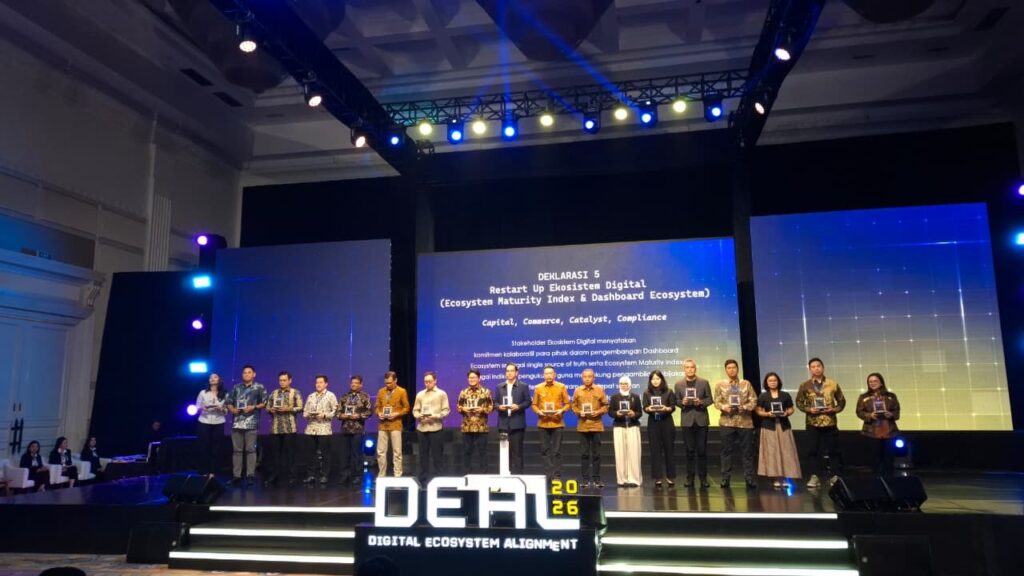
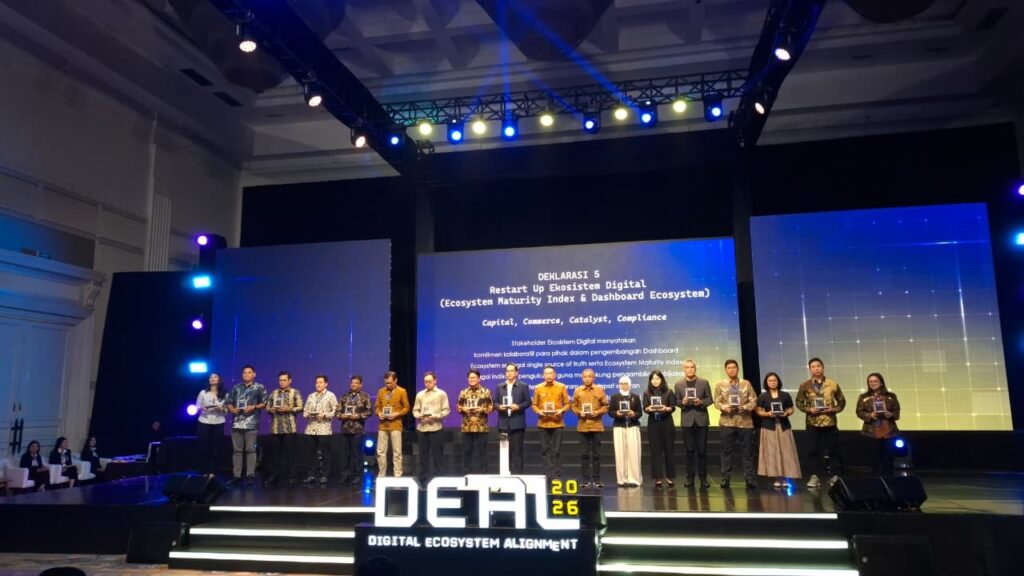
The initiative was unveiled during the DEAL 2026 forum in Jakarta on Tuesday, where stakeholders jointly declared a series of collaborative commitments aimed at strengthening Indonesia’s digital ecosystem and supporting inclusive economic growth.
Minister of Communication and Digital Affairs Meutya Hafid said Indonesia needs the same spirit of collective action that has shaped the nation’s history to build a resilient and sustainable digital future.
“Mutual cooperation is essential in building a digital ecosystem. If we move separately, the ecosystem becomes fragmented, and the economic growth we aim to achieve may neither materialize nor be felt broadly by society,” Meutya said.
According to Meutya, DEAL 2026 is designed not as a ceremonial gathering but as a platform to align interests across the digital ecosystem and transform commitments into tangible actions.
Indonesia currently has more than 230 million internet users, representing over 81 percent of the population. The country’s digital economy is estimated to have reached approximately US$99 billion in 2025, accounting for nearly one-third of Southeast Asia’s total digital economy.
However, Meutya argued that large market size alone does not automatically translate into national strength if the value generated by digital activities continues to flow outside the country.
“Real strength will only emerge if we can retain value within Indonesia. There must be a fairer distribution of economic value between global platforms, national digital infrastructure, and our real economy,” she said.
Building a More Inclusive Digital Ecosystem

Director General of Digital Ecosystem Edwin Hidayat Abdullah said DEAL 2026 was built on three core principles: alignment of interests, shared responsibility, and nation prosperity.
He emphasized that digital transformation cannot be achieved by any single stakeholder acting alone.
“Digital transformation cannot be completed by the government alone, cannot be driven by industry alone, and will not succeed without the active participation of society,” Edwin said.
The collaboration framework covers a wide range of priorities, including telecommunications industry development, digital consumer protection, innovation and technopreneurship, digital safety, startup ecosystem strengthening, artificial intelligence development, digital inclusion, and logistics efficiency.
Edwin said the initiative aims to ensure that Indonesia’s digital economy delivers benefits to society as a whole rather than a limited group of stakeholders.
“We must build indigenous growth, growth driven by our own talent, innovation, technology, and Indonesian values,” he said.
The implementation of these eight initiatives relies on close collaboration among a diverse range of stakeholders. As part of the fifth DEAL initiative, which focuses on strengthening Indonesia’s startup ecosystem, Indonesia Economic Forum (IEF) is contributing through the Indonesia Open Network (ION) Program. Set to launch soon, the program will bring together Indonesia entrepreneurs, investors, policymakers, and innovation leaders to foster collaboration, accelerate innovation, and support the continued growth of Indonesia’s inclusive digital economy.
Turning Technology into Real-World Impact
Komdigi said DEAL 2026 is focused on practical implementation and measurable outcomes rather than policy discussions alone.
Several pilot programs are already underway, including the deployment of Internet of Things (IoT) solutions for farmers and fish cultivators in Sleman, Banjarnegara, and Lamongan. The ministry said these initiatives have improved productivity while reducing resource consumption.
Komdigi has also launched practical AI training programs for between 100 and 150 small business owners in Wonogiri and Banyuwangi, helping SMEs integrate emerging technologies into their operations.
In the area of child protection, the ministry has introduced Digital Addiction Response Assistance (DARA), a service designed to support children and families dealing with the risks of digital addiction.
Another initiative involves the development of an Ecosystem Dashboard that will serve as a national single source of truth for data related to startups and the broader digital ecosystem.
Meutya stressed that the ultimate objective of digital transformation is not merely to produce impressive economic figures but to improve people’s lives.
“The ultimate goal is not the numbers on paper. It is what our farmers, fishermen, students, and young people actually experience. That must remain the focus of digital transformation,” she said.
Retaining Value in Indonesia
As artificial intelligence adoption accelerates and the global economy becomes increasingly data-driven, Komdigi believes Indonesia must strengthen every layer of its digital ecosystem to avoid becoming merely a consumer market for foreign technology.
Meutya noted that Indonesia has already established a strong foundation through digital infrastructure, connectivity, and a rapidly growing digital economy. The next challenge is ensuring that more value creation remains within the country through stronger domestic capabilities in infrastructure, cloud services, platforms, and digital applications.
She also highlighted the need to ensure that technology adoption translates into productivity gains rather than simply increasing digital consumption.
“Indonesia is too large for any single institution to transform on its own. We should not be satisfied with becoming a market. Indonesia must be able to create technology, generate innovation, and shape its own digital future,” she said.
The DEAL 2026 forum was attended by representatives from government ministries and agencies, regional administrations, telecommunications operators, digital startups, technology associations, investors, academics, as well as farmers, fishermen, and SMEs participating in digital transformation programs across the country.
The ministry hopes the initiative will serve as a catalyst for stronger collaboration across sectors and help ensure that Indonesia’s digital transformation contributes to inclusive growth, greater productivity, and long-term national competitiveness.