
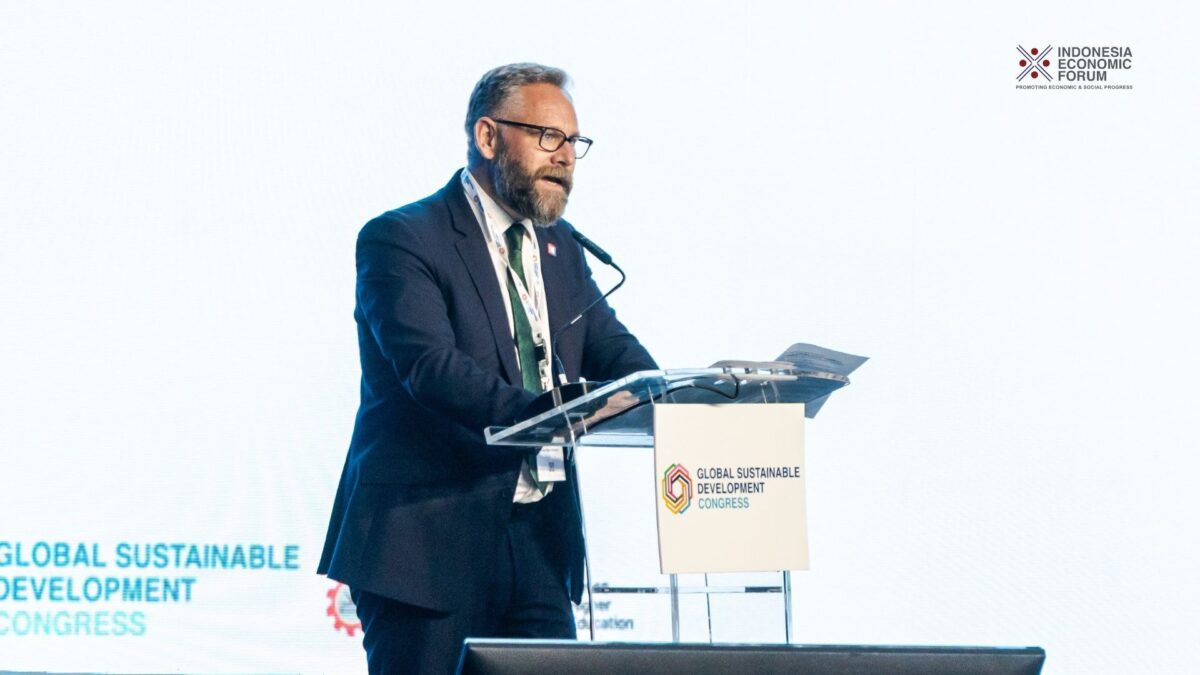

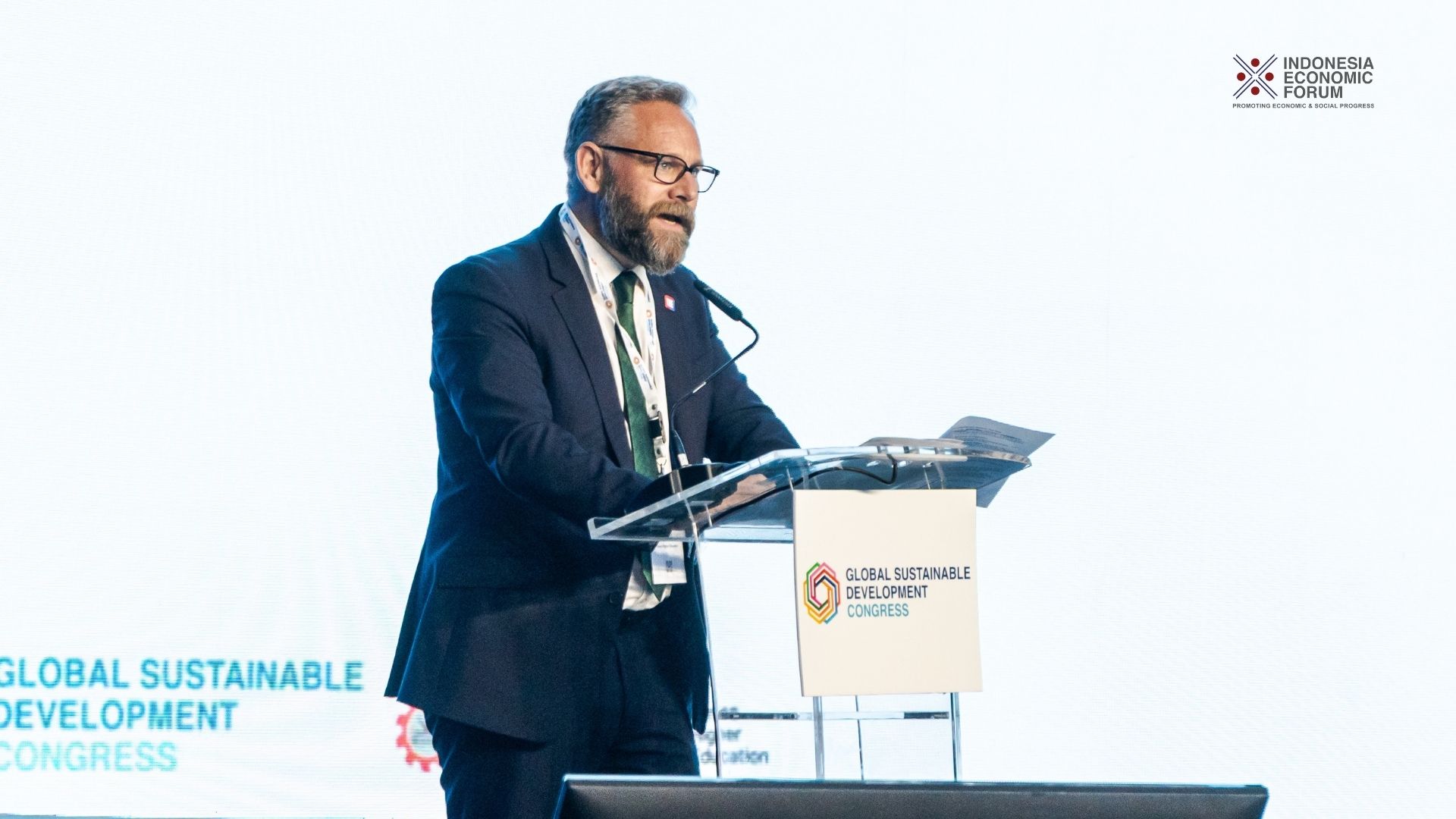
Jakarta — The Global Sustainable Development Congress (GSDC) 2026 officially opened on Monday, June 22 at the Indonesia Convention Exhibition (ICE) BSD City, bringing together university leaders, policymakers, researchers, business executives, and civil society representatives from around the world for a four-day dialogue on accelerating progress toward the United Nations Sustainable Development Goals (SDGs).
Hosted by Times Higher Education, the congress runs from June 22 to 25 and serves as a global platform for collaboration across higher education, government, industry, and communities to address interconnected challenges such as climate change, biodiversity loss, inequality, and sustainable economic transformation.
Opening the congress, Phil Baty, Chief Global Affairs Officer at Times Higher Education, emphasized that the gathering is rooted in the power of imagination and collective action to drive real-world change.
“This is what makes the Global Sustainable Development Congress so unique, so vital, so genuinely exciting,” Baty said. “The quadruple helix, universities, government, business, civil society, together in one room, building together, imagining together.”
Universities at the Center of Sustainable Development
Baty highlighted the central role of universities in addressing global challenges, recalling a recent encounter with Nobel Peace Prize laureate Malala Yousafzai, who stressed the importance of imagining a better future as the starting point for change.
“Change does not begin with the world as it is, but the world as it could be,” he said.
He warned that global crises such as climate change, biodiversity loss, poverty, inequality, and food insecurity are deeply interconnected and require new ways of thinking and acting.
Baty also pointed to the rapid expansion of the Times Higher Education Sustainability Impact Network, which now includes more than 1,600 universities worldwide committed to advancing sustainability through measurable impact.
According to him, institutions participating in the network are assessed through the Times Higher Education Impact Rankings, which evaluate contributions toward all 17 SDGs across teaching, research, operations, and community engagement.
“They’re saying hold us accountable, measure us, push us to do more and do better,” he said.
“The failure of imagination ends here.”
Education and International Collaboration
British Ambassador to Indonesia and Timor-Leste Dominic Jermey said sustainable development represents both one of the defining challenges and opportunities of the current era.
“Sustainable development is one of the defining challenges, but also opportunities, of our time,” Jermey said.
He noted that the shift toward greener economies is already creating significant economic opportunities, including more than 700,000 green jobs in the United Kingdom alone.
“The transition to greener economies has the potential to be a driver of global growth,” he said.
Jermey emphasized that education systems must equip future generations with the skills needed to drive innovation in clean energy, engineering, policy, and entrepreneurship.
“Education enables people to develop these skills and therefore sits at the heart of our vision for sustainable development,” he said.
He also underscored the importance of international collaboration, particularly between the United Kingdom and Indonesia, in advancing education, climate action, and sustainable development goals.
“The transition to a sustainable future will not be delivered by governments alone, nor by business or academia in isolation. It will be delivered through collaboration,” he said.
Indonesia Highlights SDG Challenges and Progress
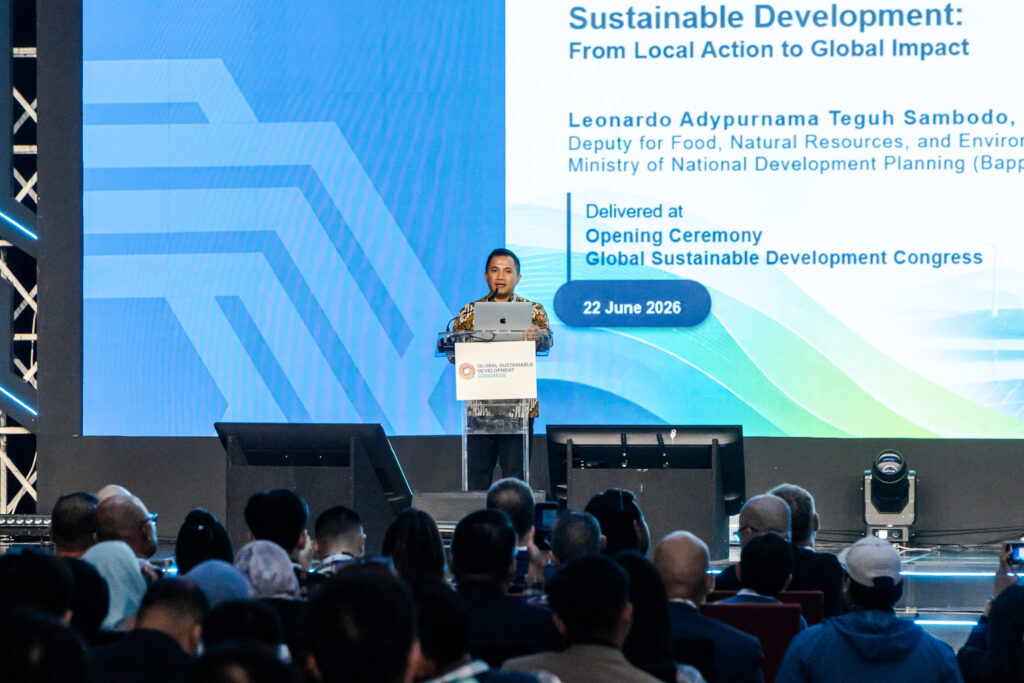
Representing Indonesia’s Ministry of National Development Planning (Bappenas), Deputy for Food, Natural Resources, and Environment Leonardo Adypurnama Teguh Sambodo warned that global sustainability efforts are under increasing pressure as environmental risks escalate.
He said scientific assessments show that seven of the nine planetary boundaries have already been crossed, signaling severe stress on Earth’s natural systems.
“Climate change is no longer just a distant, long-term environmental concern,” Sambodo said.
He added that environmental risks now account for half of the world’s top 10 global threats, reinforcing the need to place sustainability at the center of development policy.
“Sustainability can no longer be treated as a secondary policy option,” he said.
Sambodo noted that while the SDGs provide a comprehensive global framework, progress remains uneven, particularly in Asia and the Pacific where 88 percent of targets are at risk of being missed.
At the national level, Indonesia has achieved or made significant progress on 62.7 percent of its SDG indicators, supported by the establishment of 75 SDG Centers across 26 provinces.
“Higher education institutions are central to this mission,” he said, adding that universities are increasingly becoming “active engines of sustainable development.”
Turning Ideas Into Measurable Impact
As the opening session concluded, organizers emphasized that the congress is not only a platform for discussion, but also a space for translating ideas into action through partnerships, research collaboration, and policy engagement.
The GSDC 2026 will continue through June 25, featuring sessions focused on sustainable finance, climate solutions, innovation, and the evolving role of higher education in addressing global challenges.
Organizers expressed hope that the congress will produce concrete commitments and long-term collaborations that extend beyond the event itself, turning dialogue into measurable progress toward a more sustainable and inclusive global future.