
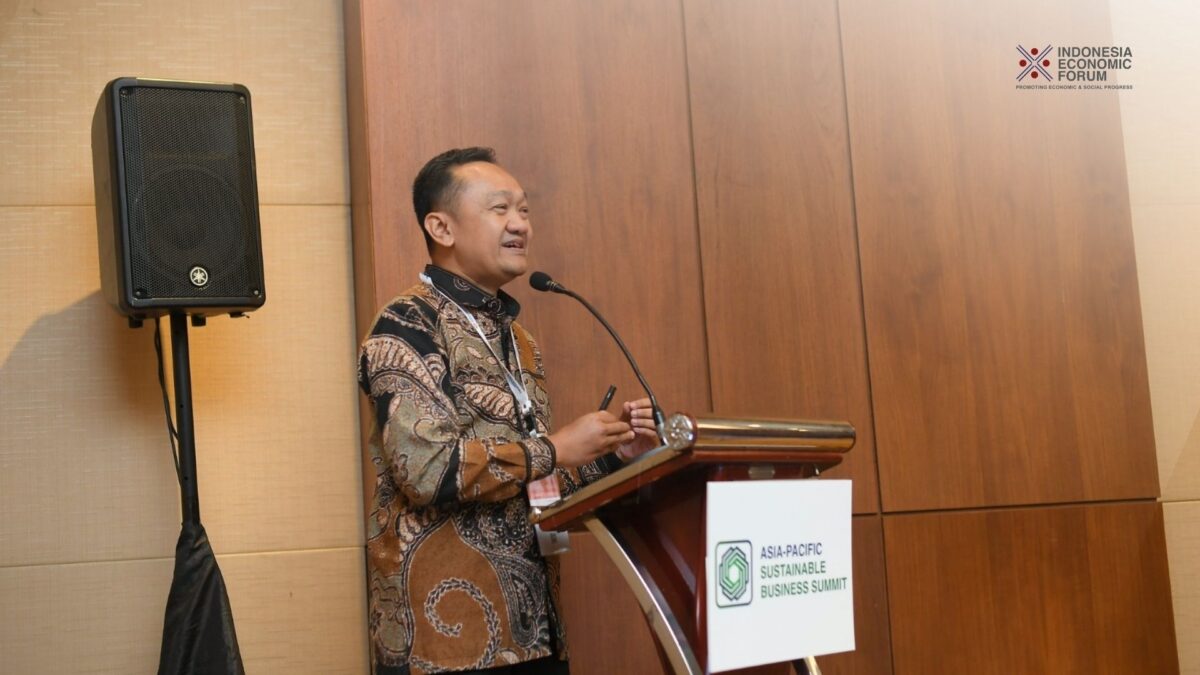

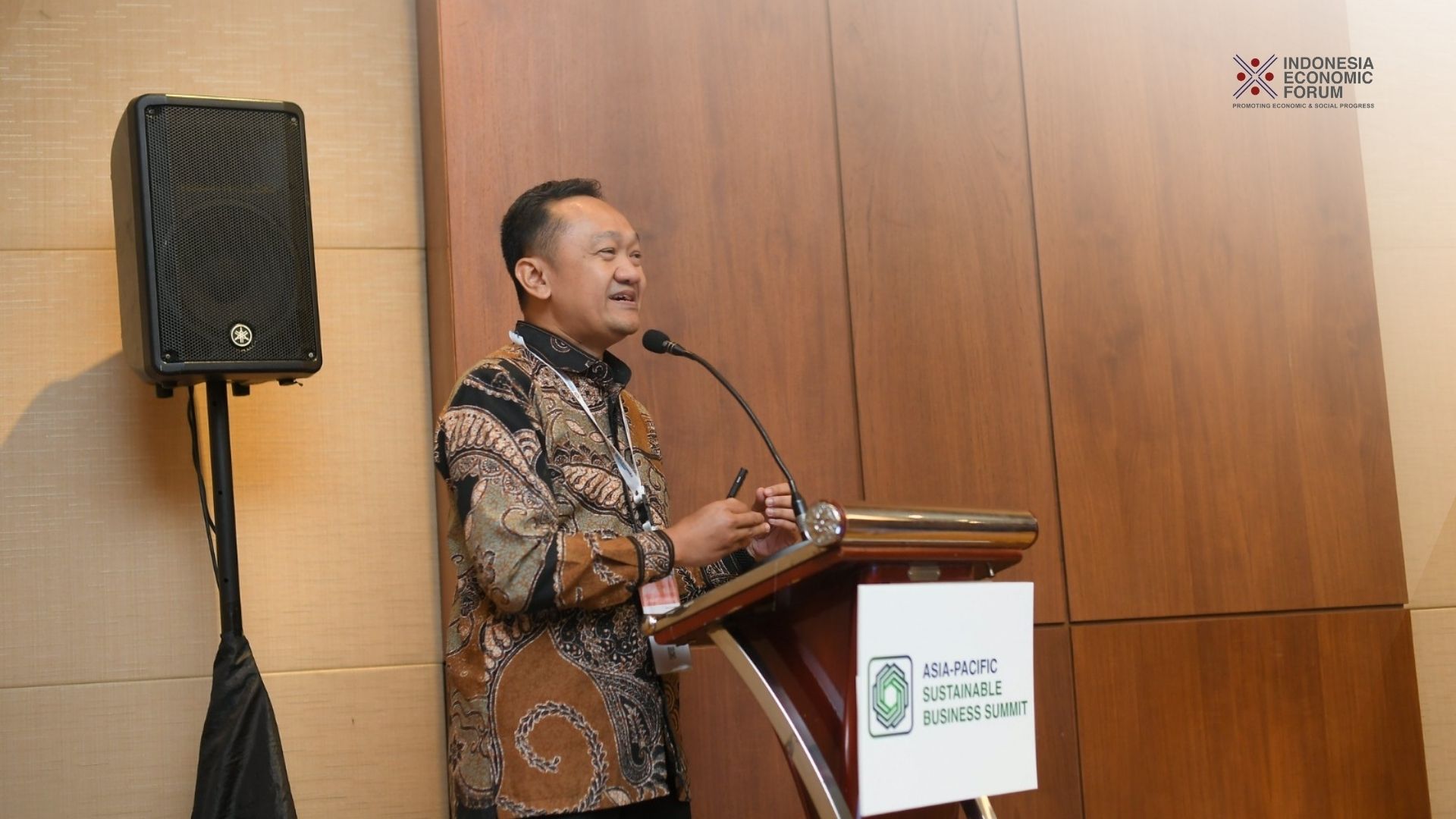
Jakarta — Indonesia is accelerating efforts to align its financial system with climate and sustainability goals, with Bank Indonesia outlining a multi-phase regulatory roadmap that will require banks to embed carbon accounting directly into lending decisions and portfolio management.
Speaking at the Global Sustainable Development Congress (GSDC) 2026, Heru Rahadyan, Head of Green Economy Empowerment at Bank Indonesia, said financial policy must go beyond signaling and actively reshape how capital flows in support of the country’s transition to a low-carbon economy.
“There is more than just intentions from the private sector. It also needs strong financial policy frameworks that actively enable banks to lend differently,” he said.
Rahadyan emphasized that Indonesia’s central bank has been developing mechanisms that integrate climate considerations into financial decision-making, from green economy programs to tools that embed emissions tracking into lending portfolios.
Climate exposure and urgency for economic transformation
Rahadyan warned that Indonesia faces disproportionately high exposure to climate-related risks compared to global averages, making the transition to a green economy a structural necessity rather than a policy choice.
While global estimates suggest climate impacts could reach around 18 percent of global GDP by 2050, he said Indonesia’s exposure could reach as high as 40 percent.
“The problem is for Indonesia it will reach 40 percent of global GDP. It’s much higher than global efforts,” he said, pointing to the country’s geographic and economic vulnerability.
He highlighted Indonesia’s dependence on agriculture and maritime sectors as key risk factors. Rising temperatures, shifting weather patterns, and sea level rise pose direct threats to livelihoods and infrastructure, particularly for coastal communities.
“We are also a maritime country… millions of people live by the sea. It means that rising sea level will have a lot of problems for us,” he added.
Rahadyan said government fiscal capacity alone will not be sufficient to fund the transition. While the state budget can still support development needs in the short term, he warned that structural fiscal constraints will emerge in the next decade.
“The government thinks we cannot sustain with conventional resources. We can survive now, but after that our budget will decline,” he said.
Carbon accounting becomes central to financial regulation
A core element of Bank Indonesia’s strategy is integrating carbon emissions measurement directly into the financial system, effectively making banks responsible for tracking the emissions linked to their lending portfolios.
Rahadyan explained that under emerging frameworks, emissions are attributed not only to polluting industries but also to financial institutions that fund them.
“In the financial sector, one of the largest carbon emitters is the banking sector because every loan carries emissions,” he said, referencing global greenhouse gas accounting standards that link financed emissions to lenders.
To address this, Bank Indonesia has been developing standardized tools to help banks and businesses calculate emissions more accurately, moving toward higher-tier measurement methods that reflect local conditions rather than generic global assumptions.
He noted that Indonesia is encouraging the use of more precise national methodologies instead of defaulting to basic international emission factors.
“If there is a tier two methodology in Indonesia, it is not acceptable to use tier one IPCC methods,” he said, referring to emissions calculation standards.
Three-phase roadmap for green financial data system
Bank Indonesia is implementing a phased roadmap to institutionalize climate data across the financial system.
In Phase 1, the focus has been on measuring Scope 1 emissions, primarily direct emissions from firms. Phase 2 will significantly expand requirements, mandating banks to report emissions data for every loan they issue, including both borrower emissions and financed emissions attributed to banks.
“Starting next year, banks will ask every debtor what their proper emissions are, because they need to report it to the authorities,” Rahadyan said.
Phase 3 will go further by publishing national-level financial and climate statistics, creating a centralized dataset that can be used by regulators, investors, and policymakers for analysis and strategy development.
The system is supported by Indonesia’s “green calculator” platform, which is being developed into a multi-channel tool available via mobile applications, desktop platforms, and technical frameworks for institutions that want to build their own systems.
SME digitization and green economy ecosystem
Beyond large financial institutions, Bank Indonesia is also building an integrated ecosystem for small and medium enterprises (SMEs) to support both financial inclusion and sustainability tracking.
The initiative includes digital payment systems, accounting tools, and a planned AI-enabled “super app” that will combine financial reporting with emissions measurement.
“We want SMEs not only to have financial reports but also SME reports that include sustainability and emissions data,” Rahadyan said.
The ecosystem includes tools for mobile-based payments, accounting and sales reporting applications, and a green calculator designed to connect financial performance with environmental impact.
To support adoption, Bank Indonesia is also rolling out training hubs, business matching platforms, trade expos, and technical assistance programs aimed at improving SME capacity to access finance and comply with emerging sustainability standards.
Incentives to accelerate green lending
Rahadyan also outlined a set of regulatory and financial incentives designed to encourage banks to expand green lending and support sustainable projects.
These include relaxed regulatory requirements for financing eco-friendly housing and renewable electricity projects, as well as liquidity incentives for banks that prioritize green assets.
“In the past, banks needed to require strict down payments for housing. Now we allow flexibility, and banks can decide as low as zero to one percent,” he said.
The central bank is also supporting blended finance structures and green sukuk issuance, alongside investments in domestic and international green financing instruments. Bank Indonesia has already allocated trillions of rupiah into green sovereign and central bank-linked instruments and participates in global green investment initiatives.
Rahadyan said the overall goal is to make sustainability a structural feature of the financial system rather than a parallel policy agenda.
“We don’t just want banks to comply. We want them to become catalysts for the transition,” he said.