By Dr. (HC) Setyono Djuandi Darmono, Founder & Chairman, Jababeka Group & Founder, President University
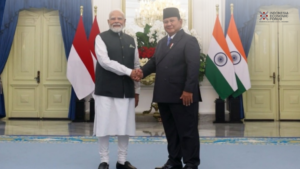
The forthcoming State Visit of Prime Minister Narendra Modi to Indonesia marks more than another diplomatic engagement. It represents an opportunity to elevate one of Asia’s oldest relationships into one of its most important strategic partnerships for the twenty-first century.
Indonesia and India have been connected for over two thousand years. Long before the emergence of our modern nation states, traders, scholars, and seafarers crossed the Indian Ocean, bringing commerce, culture, philosophy, science, and ideas that helped shape both civilizations. Today, these historical ties provide a strong foundation for building a new partnership centered on innovation, investment, education, technology, and sustainable development.
President Prabowo Subianto’s visit to India in January 2025 opened a new chapter in bilateral relations. The visit produced several strategic agreements and demonstrated the commitment of both governments to strengthen cooperation across multiple sectors. Prime Minister Modi’s return visit now provides the opportunity to transform those agreements into concrete actions.
The global economy is undergoing profound structural changes. Supply chains are being reorganized, digital technologies are reshaping industries, demographic trends are creating new opportunities, and geopolitical uncertainties are encouraging countries to diversify their economic partnerships.
In this environment, Indonesia and India possess highly complementary strengths.
India has become one of the world’s fastest-growing major economies. Its achievements in information technology, digital public infrastructure, pharmaceuticals, engineering, space technology, and entrepreneurship have attracted global attention. India has also demonstrated remarkable success in nurturing innovation while maintaining democratic institutions and a vibrant private sector.
Indonesia, meanwhile, is Southeast Asia’s largest economy, blessed with abundant natural resources, strategic maritime geography, political stability, and a young population. More importantly, Indonesia is entering a period of industrial transformation, moving beyond commodity exports toward downstream industries, advanced manufacturing, renewable energy, healthcare, digital services, and knowledge-based economic activities.
Rather than competing, our economies naturally complement one another.
Indonesia offers industrial land, logistics infrastructure, strategic access to ASEAN markets, abundant energy resources, and opportunities for long-term investment.
India contributes world-class human capital, technological capabilities, engineering expertise, digital innovation, healthcare excellence, and entrepreneurial talent.
When these strengths are combined, both countries can become stronger together.
From my own experience in developing Kota Jababeka over the past three decades, I have learned that successful economic development depends not only on physical infrastructure but also on building complete ecosystems where industries, universities, research institutions, healthcare facilities, housing, and communities grow together.
The next phase of Indonesia–India cooperation should therefore move beyond traditional trade. We should jointly develop innovation ecosystems. There are several promising areas where practical cooperation can be accelerated.
First, industrial development.
Indian manufacturing companies looking to expand into Southeast Asia can view Indonesia as a strategic production base. At the same time, Indonesian companies can benefit from India’s engineering capabilities and extensive global business networks.
Second, healthcare and life sciences.
Indonesia is investing significantly in medical education and research. Collaboration with leading Indian medical institutions can help develop research partnerships, medical technology, pharmaceutical manufacturing, telemedicine, and affordable healthcare innovations that benefit millions of people.
Third, higher education and talent development.
Universities should become strategic bridges between our two countries. Student exchanges, joint research centers, dual-degree programs, faculty collaboration, artificial intelligence research, biotechnology, and entrepreneurship education will produce the human capital required for future industries.
Fourth, digital economy and artificial intelligence.
India’s globally recognized digital ecosystem and Indonesia’s rapidly growing digital market create significant opportunities for collaboration in AI applications, fintech, cybersecurity, smart manufacturing, digital governance, and startup development.
Fifth, renewable energy and sustainability.
Both countries are committed to energy transition. Joint investments in solar energy, green hydrogen, battery technologies, electric mobility, and sustainable industrial parks can support both economic growth and environmental responsibility.
As Indonesia pursues its vision of Indonesia Emas 2045, international partnerships will become increasingly important. However, partnerships should not simply make Indonesia a larger market for foreign products. Instead, they should help Indonesia become a producer of higher-value goods, new technologies, skilled professionals, scientific discoveries, and globally competitive enterprises.
Likewise, India’s engagement with Indonesia should not be viewed only through the lens of trade volumes. It should be viewed as a long-term investment in creating a stronger Indo-Pacific region built upon shared prosperity, mutual respect, democratic values, and economic resilience.
The private sector will play an equally important role. Governments can establish the framework, but businesses create investment, universities develop talent, researchers generate innovation, and entrepreneurs transform ideas into economic value. This collaborative model has been one of the key lessons from successful economies around the world.
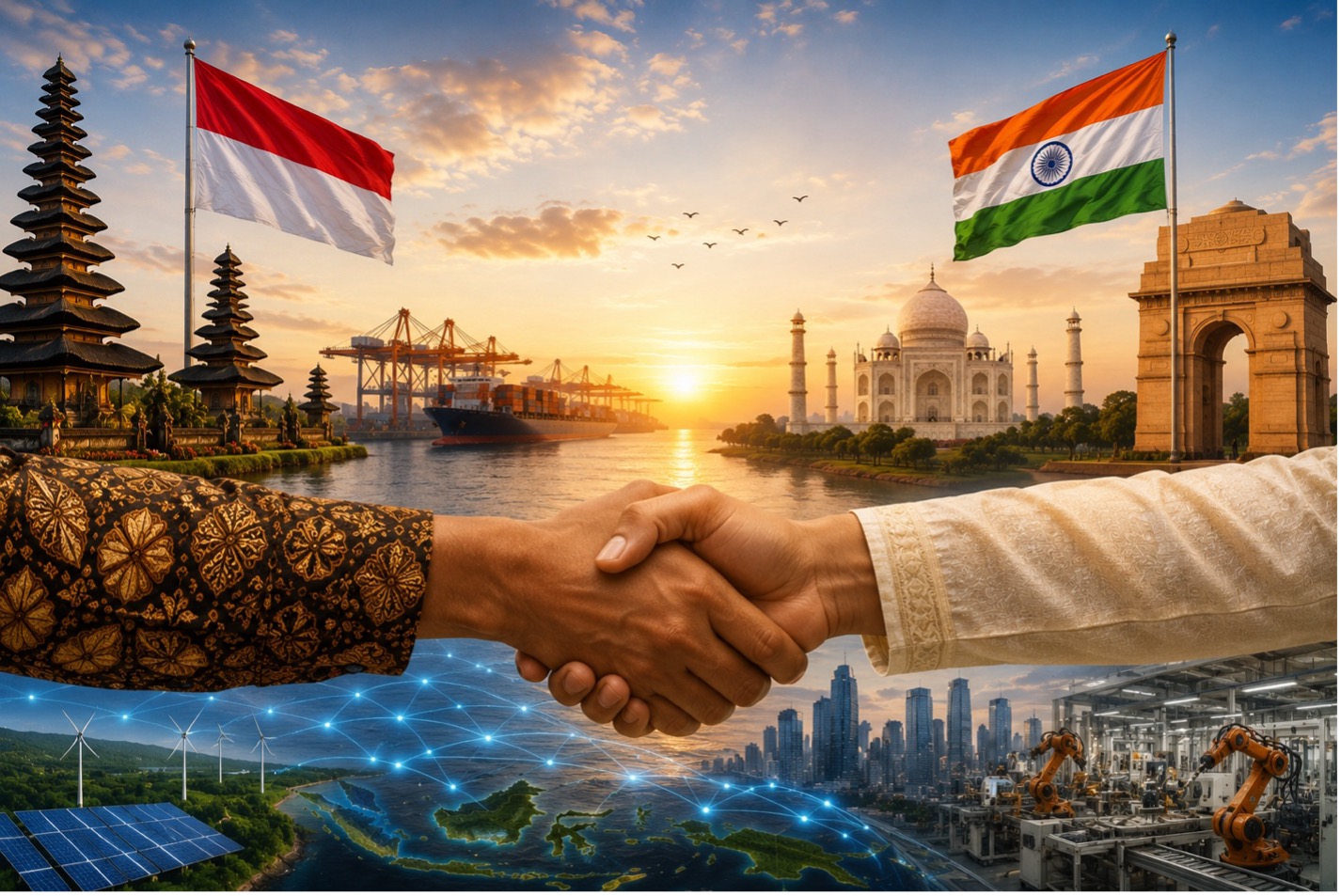
Looking ahead, I believe Indonesia and India should aspire to become strategic partners in building Asia’s next generation of industrial and innovation ecosystems.
Together, our combined population exceeds 1.7 billion people.
Together, we represent two of the world’s largest democracies.
Together, we possess enormous human capital, growing technological capabilities, expanding middle classes, and complementary economic strengths.
Few bilateral partnerships possess such remarkable potential.
Prime Minister Modi’s visit therefore should not be remembered only as another state visit. It should be remembered as the moment when two ancient civilizations decided to shape a common future—one built not merely on history, but on innovation, partnership, and shared prosperity.
If we succeed, the benefits will extend far beyond Indonesia and India. They will contribute to a stronger, more resilient, and more prosperous Asia for generations to come.
About the Author

S. D. Darmono is Founder of Jababeka Group and Chairman of the President University Foundation. A leading Indonesian entrepreneur and urban developer, he has been a strong advocate for industrial development, education, healthcare and Indonesia–India economic cooperation.