

By SACHIN V. GOPALAN
Indonesia’s small businesses are everywhere—and yet, in many ways, they remain unseen
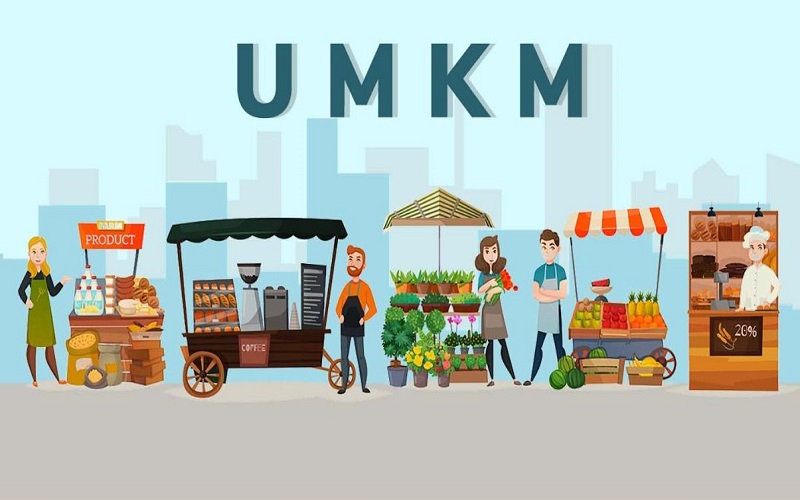
They are the warungs that quietly anchor neighborhoods. The home kitchens that wake before
dawn to prepare snacks. The artisans whose hands carry techniques passed down through
generations. These are not just businesses. They are livelihoods, identities, and stories.
Collectively, they form the backbone of Indonesia’s economy. They make up more than 90 percent
of all businesses and employ the majority of the workforce. And yet, as Indonesia’s digital
economy surges forward, many of these enterprises are still standing at the edges of that growth—
looking in, but not fully part of it.
We often celebrate the rise of Indonesia’s digital economy. And rightly so. But beneath that
optimism lies a harder question: who is truly benefiting from this growth?
A digital journey that feels fragmented
For many MSMEs, “going digital” has not meant transformation. It has meant adaptation—often
exhausting, sometimes confusing
To stay competitive, a small business owner must juggle multiple platforms, each with its own
ecosystem. Different rules. Different commissions. Different systems for inventory, payments,
and logistics.
What we call digitization has, in practice, become fragmentation.
For large companies, this complexity is manageable. They can hire teams, invest in systems, and
optimize across channels. But for MSMEs, this is personal. It is the owner staying up late to update
listings. It is the mental load of switching between apps. It is time taken away from improving
products, serving customers, or simply resting.
The cost of participation
And then there is the cost.
Commission fees—often between 20 to 30 percent—cut deeply into already thin margins. Add
logistics, promotions, and platform advertising, and the reality becomes stark.
The sales numbers may look promising on the surface, but what remains in the hands of the seller
is often far less.
The digital economy promises to democratize opportunity. But too often, it redistributes power in
ways that are less visible, yet deeply consequential.
Selling without seeing
Another layer of this challenge lies in something less tangible, but equally critical: data.
In today’s economy, data is not just information—it is leverage. It determines who understands
customers, who can anticipate demand, and who can innovate.
Yet for many MSMEs, the data generated through their own transactions is not something they
truly control.
They sell—but they do not see.
They do not see patterns. They do not see customer journeys. They do not see the insights that
could help them grow. That visibility remains locked within platforms, creating a quiet but
persistent imbalance.
Over time, this becomes a structural disadvantage. Without access to their own data, MSMEs
cannot build meaningful customer relationships or make informed decisions. They remain
participants in the system—but not beneficiaries of its full potential.
Beyond access, toward inclusion
There is also something less discussed, but deeply felt: the psychological barrier.
For many small business owners, the digital journey is not just technical—it is emotional. It can
feel overwhelming, unpredictable, even intimidating. Algorithms change. Policies shift. Visibility
fluctuates without clear explanation.
The promise of “going online” is simple. The reality is anything but.
And this is where we need to be honest: this is not a failure of MSMEs.
It is a failure of how the system has been designed.
If we are serious about inclusive growth, we need to move beyond access. Because access alone
does not equal participation. And participation does not guarantee empowerment.
What MSMEs need is not more platforms—but better connections between them.
The next phase of Indonesia’s digital economy should not be about adding layers of complexity.
It should be about reducing them. About creating systems that speak to each other. About
enabling a seller to list once and be discovered everywhere. About making payments and logistics
feel seamless, not fragmented.
And perhaps most importantly, it should be about restoring balance—shifting from ecosystems
that control, to networks that enable.
Indonesia has always thrived on connection. From traditional markets to modern trade, our
strength has never been in isolation, but in participation. In the way people, goods, and ideas
move fluidly across communities.
The digital economy should build on that strength—not constrain it.
Because the barriers holding MSMEs back are not technological. They are structural. And
structures, once understood, can always be redesigned.
The real question is not whether Indonesia’s digital economy will continue to grow. It will.
The question is whether it will grow in a way that truly includes the millions of small businesses
that power it—or quietly leave them behind.