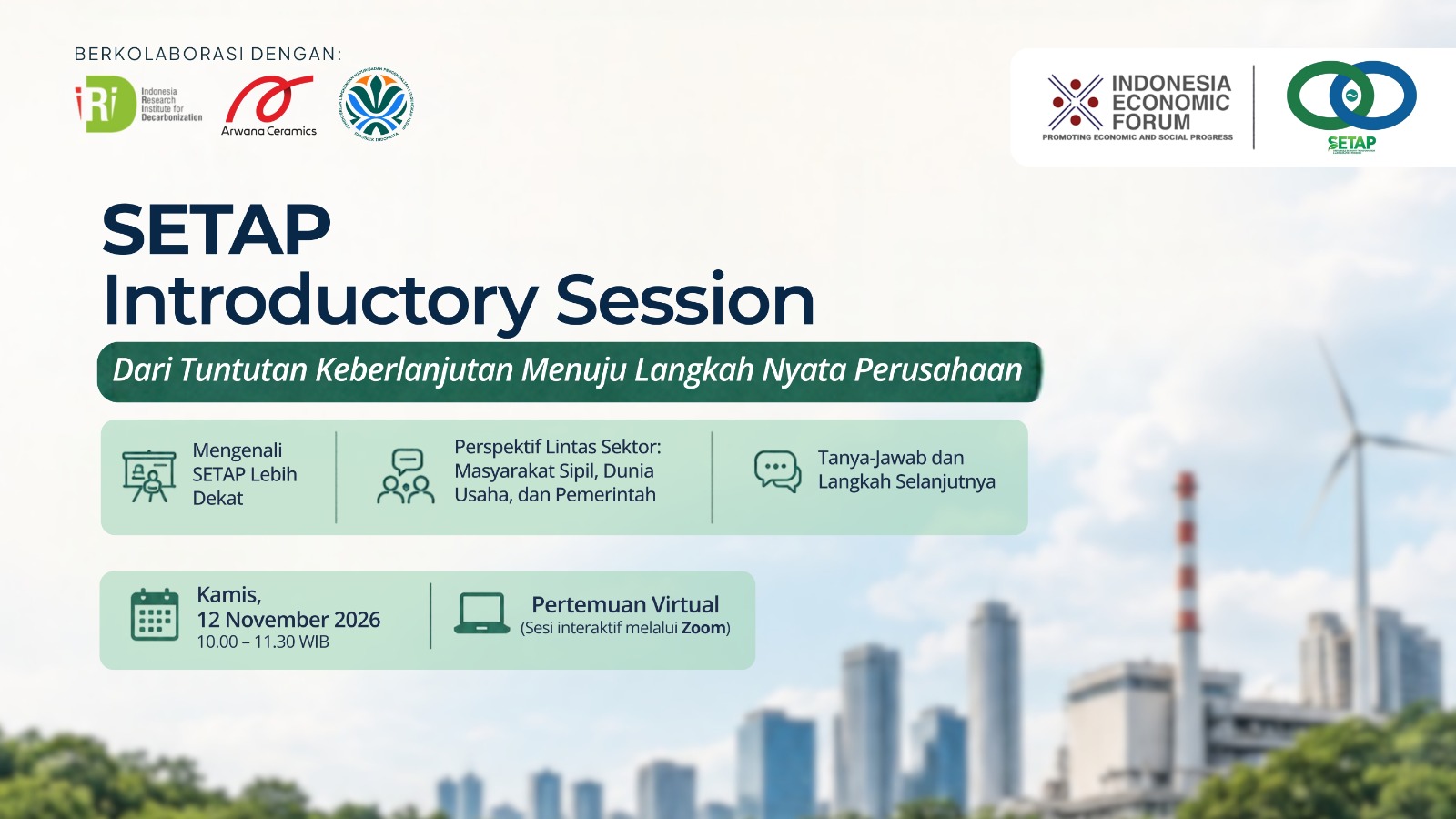
On 12 November 2026, the SETAP Introductory Session brought together government, industry, civil society, and validation and verification bodies for an online discussion on how Indonesian companies can put energy transition plans into practice. The discussion centred on a decision many companies face before they can act. They need to know which requirements apply to their operations, what evidence they already have, and which gaps to address first.
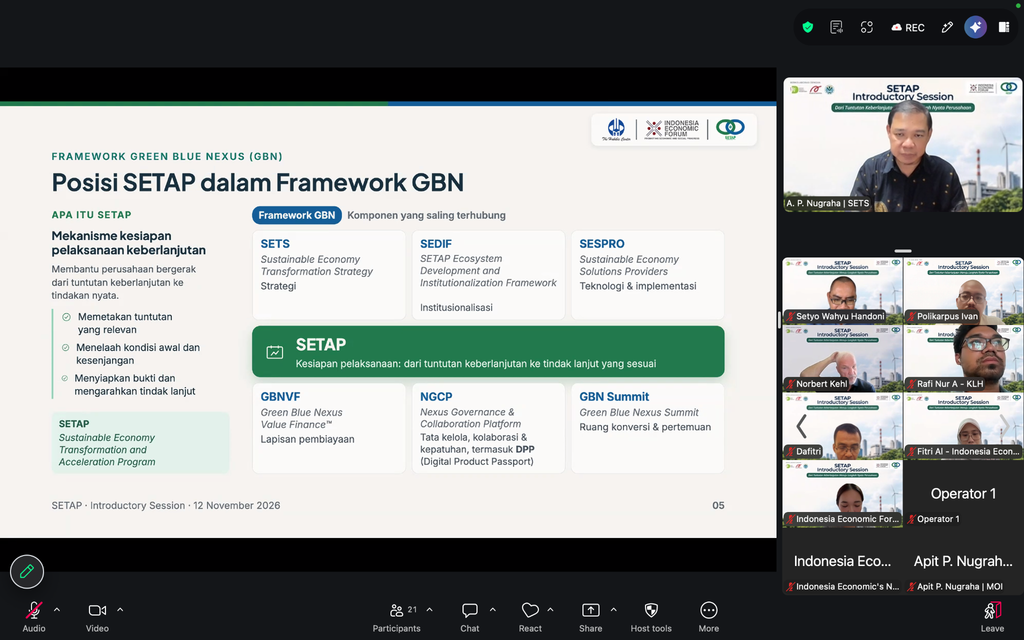
The session introduced the Sustainable Economy Transformation and Acceleration Program (SETAP), an initiative by the Indonesia Economic Forum and The Habibie Center. Its One-Day Readiness Clinic is designed to give companies a qualitative overview of their current readiness and a practical guide to their next steps. Three perspectives from the session illustrated what that guidance can help companies do.
Identify the Evidence Needed for PROPER Readiness
Rafi Nur Arifman, an environmental extension officer with the Directorate of Air Quality Protection and Management, suggested using Minister of Environment Regulation No. 7 of 2025, which governs Indonesia’s PROPER environmental performance rating programme, as a reference for SETAP’s assessment module. He pointed to compliance areas such as hazardous waste, air quality, water, and solid waste as practical starting points for reviewing company records and operating practices. proper.kemenlh.go.id
Rafi also highlighted PROPER’s beyond compliance component. He suggested that SETAP explore how its readiness assessment could help companies prepare information relevant to the Dokumen Ringkasan Kinerja Pengelolaan Lingkungan (DRKPL), PROPER’s environmental management performance summary. In his view, asking companies to connect environmental claims to documented practices and outcomes could help reduce the risk of greenwashing. proper.kemenlh.go.id
For a company preparing for PROPER, the clinic’s guidebook can help identify which documents are already available, where evidence is missing, and which teams should follow up. That gives the company a starting point for organising its records and deciding which gaps to close first.
Turn a Gap Analysis into an Action Plan
Setyo Handoni, Assistant Director of Operations at PT Arwana Citramulia Tbk, shared the perspective of a publicly listed manufacturer. He said that sustainability expectations extend across the company’s production chain and noted that Arwana had already met Indonesia’s Green Industry Standards. When the company first began preparing for ISO certification, however, it needed outside guidance to understand the requirements and determine where it stood. Hiring a consultant involved a substantial cost.
Setyo described a sequence that other manufacturers may recognise. The company first had to understand the requirements, then assess its current practices against them, and finally take action to close the gaps. He saw a role for SETAP in making that initial stage more accessible, helping companies understand their position and decide which work requires further investment or specialist support.
The clinic’s qualitative overview is designed to support that decision. For example, if a manufacturer tracks facility-wide energy use but has limited information on individual production processes, its next step could be to determine where more detailed measurement would help and which team should lead it. That gives the company a specific action it can assign and follow up on.
SETAP as a Tool for Industry Readiness
Apit P. Nugraha, Associate Fellow, The Habibie Center described SETAP as a readiness tool that helps companies understand where they stand and decide what to do next. Its role is advisory, while formal assessment, verification, and certification remain with the relevant authorities and qualified bodies.
The SETAP website uses qualitative information that participating companies choose to share about their operations. This can include how they monitor energy use, maintain environmental records, or assign responsibility for sustainability reporting. Companies may also provide quantitative data voluntarily. SETAP uses the information provided to develop a qualitative overview and a company-specific guidebook that identifies current practices, gaps in documentation or processes, and practical next steps.
For example, a manufacturer may already keep records of fuel and electricity use across several departments. The clinic can help the company identify who holds those records, where reporting is inconsistent, and which team could take responsibility for bringing the data together. The guidebook gives the company a starting point for improving its data collection and, over time, building an emissions baseline it can use to measure progress.
Build a Routine for Collecting Emissions Data
Moekti Handajani Soejachmoen, Executive Director of the Indonesia Research Institute for Decarbonization (IRID), highlighted a challenge for Indonesian manufacturers. As international buyers increasingly look for lower-emissions products, many companies still find it difficult to compile the necessary greenhouse gas emissions data and share it while protecting commercially sensitive information. dev.irid.or.id
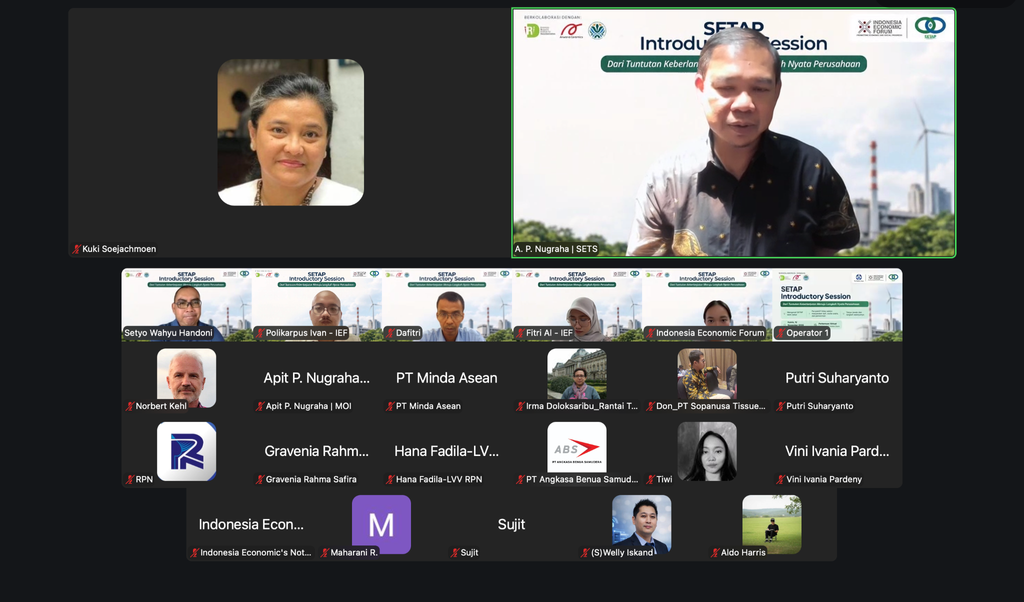
She suggested assigning a dedicated internal team to coordinate data collection and submissions. A consistent process, she noted, could help companies prepare for potential export requirements and emerging carbon economy opportunities. She placed those opportunities in the context of Presidential Regulation No. 110 of 2025 on carbon economic value instruments and national greenhouse gas emissions control. jdih.setneg.go.id
For SETAP participants, the immediate task can be as practical as identifying where energy and fuel records are kept, who can check them, and what information the company can share externally. The clinic uses qualitative information provided by the company, with quantitative data shared voluntarily. Its output can help the company pinpoint the gaps it needs to address before building an emissions baseline or reporting progress.
What Companies Take Away from the SETAP Clinic
The One-Day Readiness Clinic is designed to give each participant a company-specific guidebook covering three practical points:
- Current readiness. What the company already has in place, including relevant practices, records, and responsibilities.
- Priority gaps. Where information, documentation, or operating practices need attention in light of the company’s requirements and goals.
- Next steps. What the company can act on first and what evidence it can collect to track progress.
Together, the speakers’ perspectives showed how a company can begin with one concrete decision, whether that means organising documentation for PROPER, closing a gap identified during ISO preparation, or assigning responsibility for emissions data. The value of the clinic is giving the company a clear starting point and a record of what it can do next.
Learn more about the programme and the One-Day Readiness Clinic on the SETAP website.