

By Primus Dorimulu, Co-Founder & CEO, InvestorTrust Media
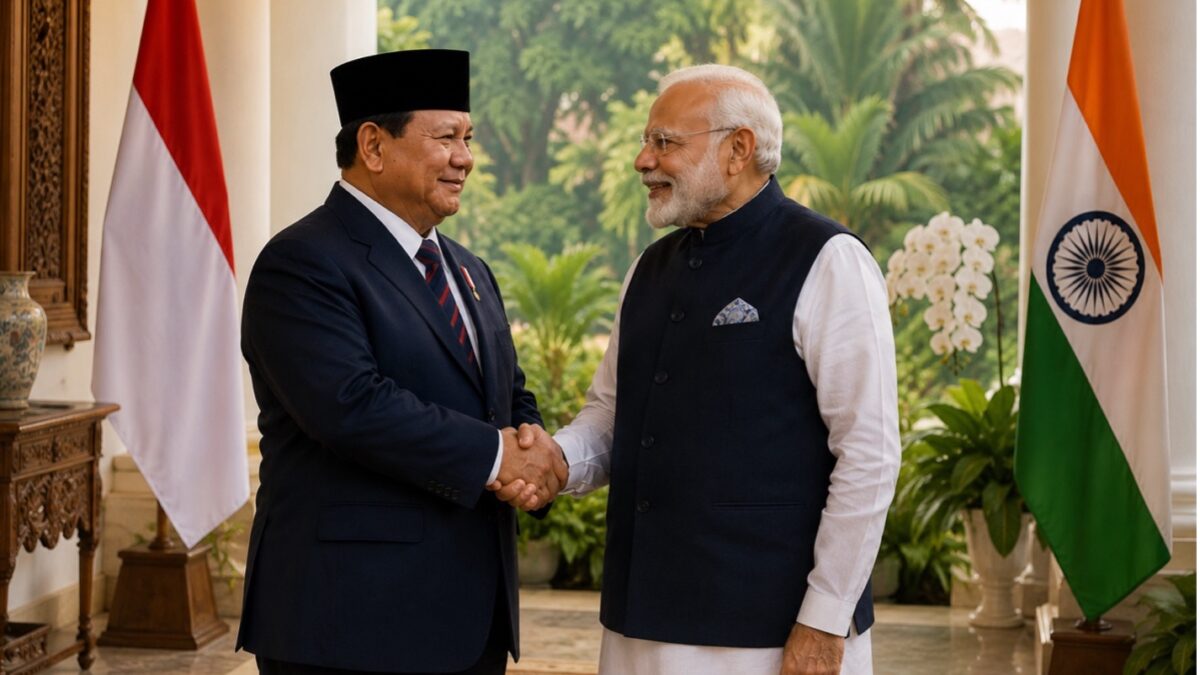
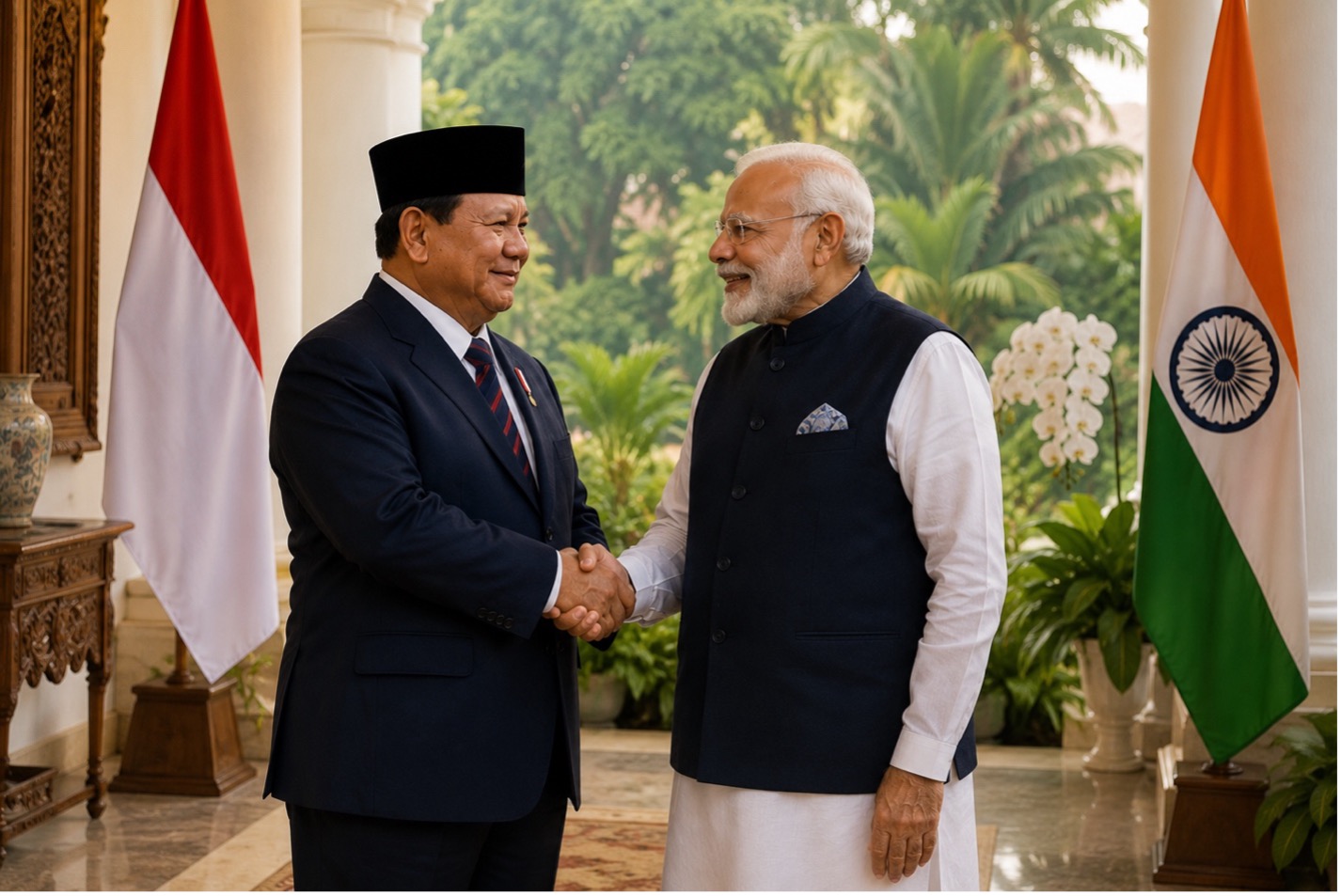
Indonesia and India have shared thousands of years of history. Today, the time has come for both countries not only to inherit that remarkable past, but to build a better future together—one that enables both nations to play an increasingly influential role on the global stage. Prime Minister Narendra Modi’s visit to Indonesia on July 7, 2026, has the potential to become a turning point in the birth of a new, mutually beneficial strategic partnership.
Prime Minister Modi’s visit as the official guest of President Prabowo Subianto is far more than a routine state visit. It reciprocates President Prabowo’s attendance as Guest of Honour at India’s Republic Day celebrations on January 26, 2025. More importantly, the meeting between the two leaders presents a valuable opportunity to elevate Indonesia–India relations into a new chapter—from a relationship rooted in history to a strategic partnership for the 21st century.
Indonesia and India are, in essence, connected by civilization. Long before the emergence of modern nation-states, the Indonesian archipelago and the Indian subcontinent were linked through the Indian Ocean trade routes, facilitating the exchange of goods, religions, languages, knowledge, art, architecture, and philosophy. Hindu and Buddhist influences from India became deeply rooted in the archipelago, giving rise to masterpieces such as Borobudur and Prambanan temples, wayang, the Ramayana and Mahabharata epics, and many cultural values that continue to shape Indonesia’s national identity today. This relationship is therefore not merely one between two countries, but between two of Asia’s great civilizations.
History, however, should not simply be remembered—it should serve as the foundation for building the future. Both nations possess enormous potential to become globally influential powers. The key lies in mutual understanding and mutually beneficial cooperation.
If the past was defined by the exchange of spices, religion, and culture, the future of Indonesia and India will be shaped by technology, artificial intelligence, the digital economy, cybersecurity, semiconductors, defense, clean energy, and data sovereignty. This shift marks a profound transformation—from a shared civilizational heritage to a partnership driven by innovation.
This transformation is becoming even more relevant as the world undergoes its most significant geopolitical shift since the end of the Cold War. Strategic rivalry between the United States and China has reshaped global trade, investment, supply chains, and technological development. Middle powers such as Indonesia and India must develop strategic foresight—not merely to become markets or objects of great-power competition, but to emerge as influential players helping shape a new global economic order. In this context, Indonesia–India relations have acquired even greater strategic importance.
India is currently one of the world’s fastest-growing major economies. According to projections by the International Monetary Fund (IMF) and the World Bank, it is expected to become the world’s third-largest economy within the next decade. With a population of 1.4 billion, a strong demographic dividend, a mature information technology sector, and the successful development of Digital Public Infrastructure—including digital identity, digital payments, and digital commerce networks—India has become one of the world’s leading innovation hubs.
Indonesia, meanwhile, is Southeast Asia’s largest economy, endowed with abundant strategic natural resources, a population exceeding 285 million, a location linking the Indian and Pacific Oceans, and immense potential in critical minerals, energy transition, and the digital economy. Forecasts by the OECD, PwC, and Goldman Sachs suggest that Indonesia could become one of the world’s largest economies by the middle of this century if it succeeds in raising productivity, strengthening human capital, and enhancing technological capabilities.
In other words, Indonesia and India are naturally complementary economies. Unfortunately, their economic relationship has yet to fully reflect this potential. Indonesia enjoys a substantial trade surplus with India, driven largely by exports of coal, palm oil, rubber, minerals, and other resource-based commodities. India, on the other hand, exports pharmaceuticals, machinery, vehicles, information technology, digital services, and high-value manufactured products.
A trade surplus is certainly good news for Indonesia. However, from a development economics perspective, relying primarily on commodity exports is insufficient to transform Indonesia into a developed nation. This view is consistent with the work of leading development economists such as Ha-Joon Chang and Alice H. Amsden, who argue that successful catch-up economies—including Japan, South Korea, and Taiwan—did not rely solely on free trade. They built competitive industries through targeted industrial policies, technological investment, human capital development, and knowledge transfer. Economic progress, they contend, comes not from exporting raw materials but from mastering technology and producing higher value-added goods.
Indonesia–India economic relations should therefore enter a new phase. The focus should shift beyond increasing trade volumes to promoting two-way investment, technology transfer, joint research, manufacturing development, the digital economy, artificial intelligence, semiconductors, pharmaceuticals, and innovation ecosystems. Such cooperation would not only sustain trade but also accelerate Indonesia’s transformation into a more advanced and globally competitive industrial economy.
Investment flows also remain imbalanced. Data shows that Indian investment in Indonesia significantly exceeds Indonesian investment in India. In 2025, Indian investment in Indonesia reached approximately US$237.6 million, while Indonesian investment in India stood at just US$9.8 million. This disparity highlights the enormous potential for expanding bilateral investment in a more balanced manner.
BRICS: A New Strategic Platform
This momentum has become even more significant as Indonesia and India now share membership in BRICS. Indonesia officially became the 11th full member of BRICS on January 6, 2025. Both countries are also members of the World Trade Organization (WTO) and the G20. Indonesia additionally belongs to ASEAN and APEC, while India plays an increasingly influential role within BRICS and across the Global South.
Joint membership in BRICS should not be viewed merely as a political symbol. BRICS aims to strengthen South-South cooperation in development, trade, investment, innovation, and reform of global economic governance. Indonesia joined BRICS not to distance itself from the United States or Europe, but to broaden its diplomatic and economic options. Its foreign policy remains firmly anchored in the principle of being “free and active”—maintaining friendly relations with all countries without aligning itself with any single geopolitical bloc.
Within BRICS itself, national strengths are diverse. China leads in manufacturing and industrial capacity, India in economic growth and digital innovation, and Russia in military capability and energy. Indonesia may not yet rank among the top powers in technology or diplomacy, but it possesses unique advantages: a strategic geopolitical location, a stable democracy, Southeast Asia’s largest economy, vast critical mineral reserves, and the ability to serve as a constructive middle power bridging competing international interests.
Why a Stronger Strategic Partnership Matters
Why should Indonesia and India deepen their strategic partnership?
The answer can be understood through the ideas of Hans J. Morgenthau and Joseph S. Nye Jr. Morgenthau argued that national power depends not only on military strength but also on economic capacity, natural resources, technology, governance, national morale, and diplomacy. Nye later introduced the concepts of soft power and smart power—the ability of nations to influence others through attraction, innovation, culture, technology, reputation, and trust, rather than coercion alone.
In today’s interconnected world, national strength is measured not simply by GDP or military assets, but by the ability to build productive and mutually beneficial partnerships. Countries that collaborate effectively wield greater influence than those that act alone.
This is where Indonesia–India cooperation finds its greatest relevance. Indonesia brings strategic natural resources, geopolitical significance, and Southeast Asia’s largest economy. India contributes strengths in information technology, digital innovation, pharmaceuticals, and its demographic advantage. These strengths should not compete with one another—they should complement one another. Collaboration in investment, technology transfer, artificial intelligence, digital industries, defense, education, and the maritime economy can create far greater value than either country could achieve independently.
Ultimately, Indonesia–India relations should move beyond historical nostalgia or trade statistics. A true strategic partnership is one that strengthens the competitiveness of both nations, enhances their diplomatic influence across the Indo-Pacific, and delivers tangible benefits to their people. That is the true meaning of a mutually beneficial strategic partnership.
India is not merely a vast market; it is also a partner capable of accelerating Indonesia’s digital transformation. Conversely, Indonesia can serve as India’s gateway to ASEAN, a global hub for critical mineral downstream industries, and a vital partner in energy security, food security, the maritime economy, and Indo-Pacific supply chains.
This mutually beneficial partnership should become the new direction of Indonesia–India relations. The two countries should no longer be satisfied with celebrating their shared history or rising trade figures. What matters far more is their ability to create shared value, develop joint innovation, and establish a new Asian growth center capable of contributing meaningfully to global stability and prosperity.
The strength of a nation is determined not only by what it possesses today, but by whom it chooses to walk with into the future.
Indonesia and India have shared a history spanning thousands of years.
Now, they have the opportunity to share a future.
If the 20th century was the century of Indonesia–India diplomatic relations, then the 21st century should become the century of the Indonesia–India strategic partnership—a partnership built not merely on the romance of history, but on a shared vision of becoming two democratic, economic, technological, and diplomatic powers that help shape the future of Asia and the world.
About the Author

Primus Dorimulu is Founder and CEO of InvestorTrust Media and DataTrust. A veteran Indonesian journalist and publisher, he writes on capital markets, corporate governance, economic policy and regional investment trends.