
By Ina H. Krisnamurthi, Ambassador of Indonesia to India, 2022-2026
It was a clear blue sky in New Delhi on 26 January 2025, when India celebrated its 76th Republic Day, with a theme ‘Swarnim Bharat: Virasat aur Vikas’ (Golden India: Heritage and Progress). President Prabowo Subianto was the Chief Guest for the occasion, marking his first State Visit to India and in celebration of the 75th Anniversary of Diplomatic Relations between Indonesia and India.
This historic visit sent a powerful signal of political trust, strategic alignment, and long-term commitments between our two countries. Many remember the presence of the First President of Indonesia, Bung Karno, as the Chief Guest on India’s First Republic Day on January 26, 1950.
As an individual who lived in India for almost 4,5 years, I have witnessed how far this relationship has come along. A relationship that was built on goodwill and shared history, has now become a partnership that is both broad and practical. Today, Indonesia and India work together across many areas including trade, investment, defense, health, education, technology, and maritime cooperation.
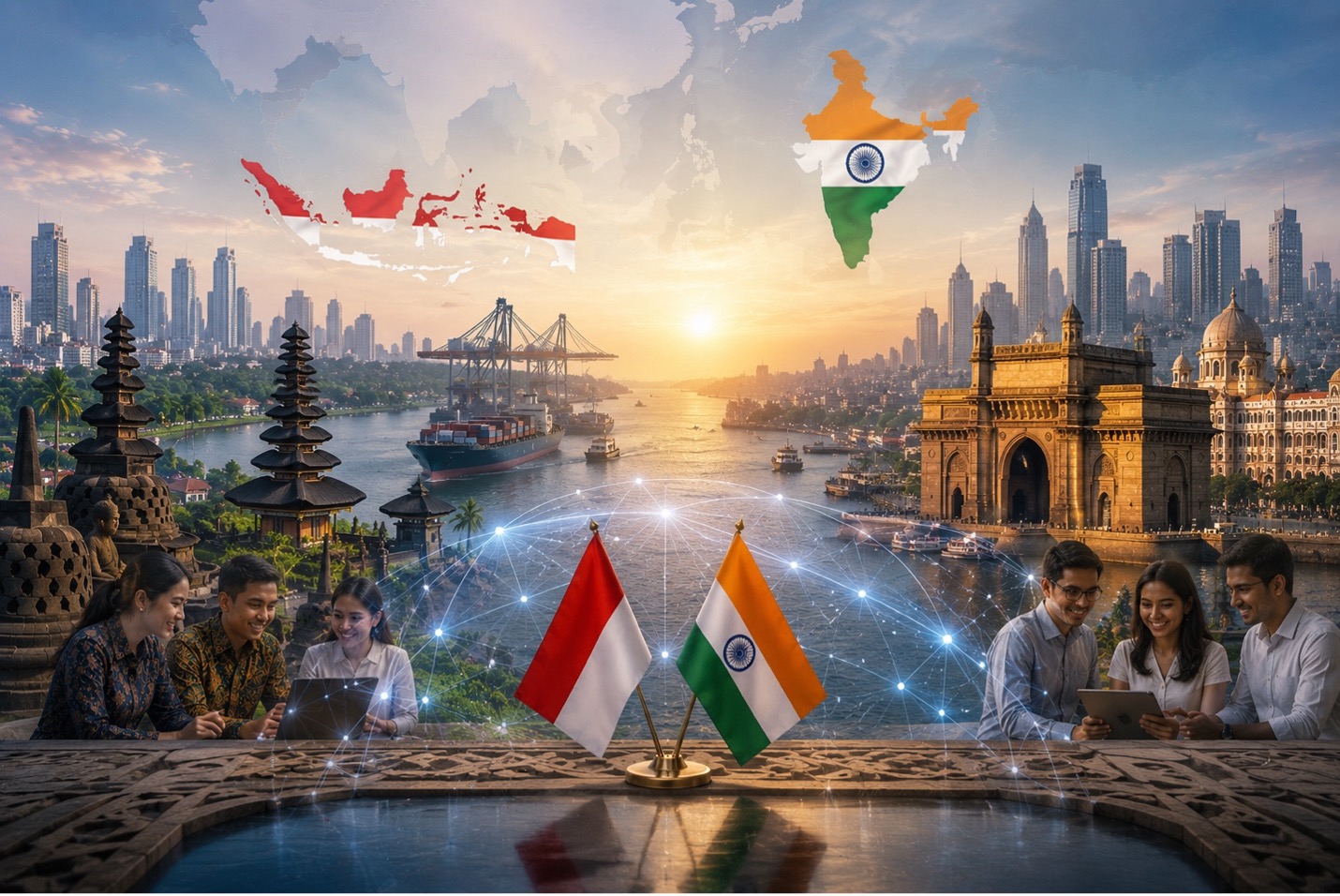
The upcoming visit of Prime Minister Narendra Modi to Indonesia in early July 2026 is an important momentum for Indonesia–India relations. It reciprocates President Prabowo Subianto’s successful visit to New Delhi in January 2025, when both sides agreed on a number of strategic initiatives that strengthened our Comprehensive Strategic Partnership established in 2018.
The visit is not just about ceremony, but rather about follow-through. The real test of diplomacy is on how commitments established at the highest level can be converted into real results that people from both countries can benefit from.
Indonesia and India share a long history, for centuries our people were connected through trade, ideas, religion, and culture via the maritime routes of old. But history alone is not enough because the world around us is changing rapidly. Economic uncertainty, climate risks, disrupted supply chains, and rapid technological innovations are now part of our shared reality. In such an environment, closer cooperation between Indonesia and India is not optional. It is necessary.
The economic relationship is one area where there is still significant room to grow where in 2025 our bilateral trade reached around US$23 billion. This is an important milestone and shows steady progress. However, considering the size of both economies, the number is still modest compared to what is possible.
Indonesia and India complement each other well. Indonesia supplies key commodities such as coal, palm oil, nickel, and other minerals that support industrial growth. India brings strengths in areas such as pharmaceuticals, information technology, engineering, manufacturing, and digital services. As both economies continue to expand, there is strong potential to deepen cooperation in renewable energy, healthcare, food processing, digital industries, and critical minerals.
The ongoing discussion on a Preferential Trade Agreement (PTA) is therefore very important. If concluded, it would help reduce barriers, increase trade flows, and encourage more investment in both directions.
Furthermore, both countries should advance agreements on Local Currency Transactions and a seamless transaction between digital payment systems, to make bilateral trade more efficient, reduce transaction costs, and strengthen financial resilience.
Connectivity is also a significant issue in our bilateral cooperation, especially the development of Sabang Port in Aceh. Located near the entrance of one of the busiest sea lanes in the world, Sabang has natural potential as a hub for maritime trade and services.
If developed, Sabang can do more than improve shipping routes. It can support local economic growth, attract investment, and create jobs for local communities. It can also strengthen links between Indonesia’s western region and India’s Andaman and Nicobar Islands. That way, Sabang becomes not just a point on the map but a practical symbol of cooperation that benefits the people of Indonesia and India.
Maritime cooperation in general remains central to the partnership. As two major maritime nations, Indonesia and India share an interest in keeping the Indo Pacific region peaceful, open, and stable. Cooperation in maritime security, disaster response, sustainable fisheries, and ocean-based economies can strengthen regional stability while also supporting national development goals.
Technology and innovation are another frontier for opportunities. India has achieved status as global force in digital systems, fintech, and space technology. While Indonesia is undergoing its own rapid digital transformation. Collaborating in areas such as artificial intelligence, digital public services, startups, research, and skills development can help both countries achieve more and faster.
Health cooperation has also become an important sector for cooperation in recent years. The COVID 19 pandemic showed that no country can face health challenges alone. Indonesia and India are strengthening its cooperation in pharmaceuticals and vaccines. This cooperation can be expanded further into research, biotechnology, and digital health systems in the future.
At the regional level, both countries share similar outlook. Indonesia promotes the “ASEAN Outlook on the Indo Pacific”, while India advances its “Indo Pacific Oceans Initiative”. These approaches are not competing, but they are complementary. Both emphasize openness, cooperation, respect for international law, and ASEAN centrality. This shared vision gives Indonesia and India a strong foundation to work together in creating a stable and prosperous Indo Pacific region.
Beyond governments, the relationship between people is just as important. More Indonesians are studying and visiting India, and more Indians are coming to Indonesia for tourism and business. But these links remain limited compared to the size of both populations. Expanding exchanges between students, researchers, entrepreneurs, and cultural groups will further build deeper understanding and trust.
Looking into the future, the direction of Indonesia–India relations is indeed positive. Both are large democracies, fast growing economies, and countries with young populations. We both value independence in foreign policy and prefer dialogue over confrontation. These shared principles give the relationship a strong and stable foundation.
Prime Minister Modi’s visit should therefore be seen as part of a longer journey together. It is a chance to review progress, strengthen cooperation, and ensure that agreements reached in the past will lead to real outcomes. The value of this visit will not be measured only in documents signed, but in how it improves cooperation in practice.
On importance of cooperation, Swami Vivekananda, an Indian philosopher, said “Diversity in thought. Unity in purpose. Strength in collaboration. Different roles. One purpose.”
Indonesia and India have already built a strong base. The next natural step is to deepen it, carefully, steadily, and with clear purpose. If both sides stay committed, there is no reason this partnership cannot become one of the most important relationships in the Indo Pacific.
The opportunity is clear. The task now is to make it real.
About the Author
Ambassador Ina H. Krishnamurthi is Indonesia’s Ambassador to India and Bhutan. A career diplomat, she has served in senior positions within Indonesia’s Ministry of Foreign Affairs and has played a key role in advancing Indonesia–India strategic relations.


